

Table lamp mistakes are more common than most decorators admit — and most of them are invisible until the lamp is already on the surface, plugged in, and looking wrong in a way that is hard to name. The wrong size. The wrong shade. A style that fights with the room instead of supporting it. A placement that produces glare instead of warmth. At Exotic Decor USA, we see these patterns repeatedly across our table lamps collection — and the good news is that every one of them is correctable once you know what to look for. Here are the 10 most common mistakes, and how to fix each one.
Mistake 1: Choosing a Lamp That Is the Wrong Height
MISTAKE 1: THE LAMP IS TOO SHORT OR TOO TALL FOR THE SURFACE
THE FIX: Apply the eye-level rule: the bottom of the shade should sit at approximately seated eye level — 24–28 inches above the mattress for bedroom lamps, 58–64 inches from the floor for living room end table lamps.
This is the most visible table lamp mistake and the easiest to avoid. A lamp that is too short sits squat and undersized on its surface, producing light that pools uselessly around the lamp’s base rather than illuminating the space. A lamp that is too tall sends the bulb above eye level, creating glare that is uncomfortable when seated. The table lamp base height, combined with the shade height, must place the shade bottom at the correct seated eye level for the room.
For a complete room-by-room sizing framework, read our table lamp height guide. Table lamps tall (30–36 inches) belong on consoles and buffets — not beside a standard-height sofa.
Mistake 2: Choosing a Style That Fights with the Room
MISTAKE 2: THE LAMP’S AESTHETIC CONTRADICTS THE ROOM’S DESIGN LANGUAGE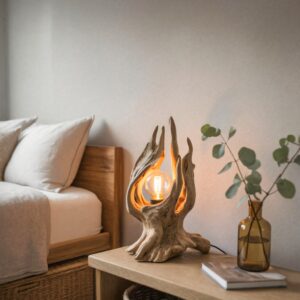
THE FIX: Match the lamp’s base material to a material already present in the room — even subtly. If the room has brass hardware, choose a brass table lamp. If it has natural wood furniture, choose a wooden table lamp or a rattan table lamp.
A rustic table lamp in a sleek minimalist room, or a modern black table lamp in a warm traditional space, creates visual friction that makes the room feel unresolved. The lamp does not have to match every piece of furniture — but it should share at least one design language cue with the room: the same material family, the same finish tone, or the same era of design.
A ceramic table lamp is the safest choice if you are unsure — ceramic bases are available in almost every glaze and color, and the material reads as neutral across traditional, transitional, and bohemian aesthetics. For a contemporary room, a black metal table lamp or a glass base table lamp maintains the architectural restraint the space requires. Our types of table lamps guide maps every major style to its natural room aesthetic.
Mistake 3: Getting the Shade Size Wrong
MISTAKE 3: THE SHADE IS TOO WIDE FOR THE BASE OR TOO NARROW TO BE FUNCTIONAL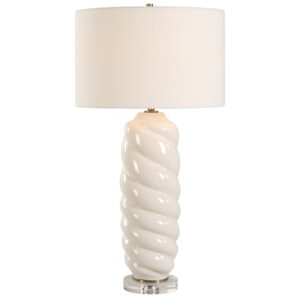
THE FIX: The bottom shade diameter should approximately equal the height of the base. The slant height should be roughly two-thirds of the base height. A shade that extends beyond the base’s widest point looks top-heavy and unstable.
Too-wide a shade on a mini table lamp base makes the lamp look like it is wearing a hat. A too-narrow shade on a tall ceramic table lamp base looks pinched and undersized. The shade and base need to exist in a proportional relationship — each reinforcing the other’s scale. For precise measurements, use our table lamp shade measurement guide before ordering any replacement shade.
Mistake 4: Choosing a Shade That Kills the Light Quality
MISTAKE 4: A DARK OR OPAQUE SHADE PRODUCES TOO LITTLE LIGHT FOR THE ROOM’S NEEDS
THE FIX: Match shade color and material to your lighting function. For reading and task light, use a white or cream shade. For ambient warmth, use a warm linen shade. For purely decorative accent, a darker or colored shade is acceptable — but not for primary room illumination.
This mistake appears most often when decorators fall in love with the appearance of a shade without considering what it does to the light output. A dark charcoal or navy shade on an otherwise beautiful brass table lamp can reduce light output by 60–70%, making the room feel dim and the lamp feel decorative-only. Green table lamps and light blue table lamps with colored shades work well as accent lamps alongside a brighter primary source — but should not be the sole light source in a dark room.
Stained glass table lamps and tiffany style table lamps with art glass shades are inherently low-output ambient lamps — beautiful and atmospheric, but best used alongside other light sources rather than as sole room illumination.
Mistake 5: Using the Wrong Bulb
MISTAKE 5: A COOL-WHITE OR OVERLY BRIGHT BULB DESTROYS THE LAMP’S INTENDED ATMOSPHERE
THE FIX: Use a warm-white LED bulb rated 2700K–3000K. This color temperature reproduces the golden warmth of incandescent light while running efficiently. For bedside reading, target 800 lumens. For living room ambient, target 1100+ lumens. Always check the fixture’s maximum wattage rating before buying a bulb.
This is one of the most common and most invisible table lamp mistakes. A 5000K daylight LED in a warm terracotta table lamp base produces a clinical, cold light that conflicts entirely with the material warmth of the fixture. A 2700K warm white LED, by contrast, enhances the amber tones of a copper table lamp, the richness of a bronze table lamp, and the glow of a crystal table lamp. Always choose the bulb with the same intention you chose the lamp.
Mistake 6: Pairing Lamps That Have Nothing in Common
MISTAKE 6: TWO LAMPS IN THE SAME ROOM SHARE NO VISUAL ATTRIBUTE — HEIGHT, MATERIAL, SHADE COLOR, OR FINISH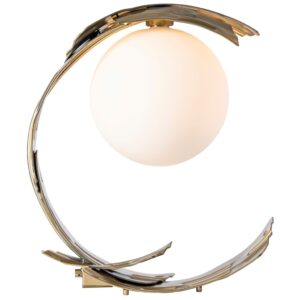
THE FIX: Lamps in the same room do not need to be identical, but they must share at least one attribute: the same shade color, the same base height, or the same material family. A pair of brass table lamps on identical nightstands creates symmetry; two mismatched lamps with nothing in common create visual noise.
For example, a wooden table lamp on one side of a bed and an antique crystal table lamp on the other — two completely different materials, eras, and aesthetics — creates a room that feels unresolved. A better pairing: a wooden table lamp and a rattan table lamp — both natural materials with organic warmth — that share a design language even if they are not identical.
Mistake 7: Choosing an Oversized Lamp for a Small Surface
MISTAKE 7: AN OVERSIZED TABLE LAMP DOMINATES THE SURFACE AND OVERWHELMS THE ROOM
THE FIX: Oversized table lamps (36 inches and above) are statement pieces designed for large sideboards, low consoles, and open-plan rooms where the scale is warranted. On a compact nightstand or small end table, they look imposing and block the surface.
The reverse is also true: a mini table lamp on a large sideboard looks lost — a decorative afterthought rather than a considered placement. Buffet table lamps and console table lamps in the 32–40 inch range exist precisely for large horizontal surfaces that need proportional lamp presence. Mini table lamps belong on compact nightstands, bookshelves, and accent surfaces where space is limited. Match the lamp size to the surface area available — not to the size of the room alone.
Mistake 8: Ignoring Lamp Placement Relative to Seating
MISTAKE 8: THE LAMP IS PLACED TOO FAR FROM THE SEATING AREA TO BE USEFUL — OR TOO CLOSE TO CREATE GLARE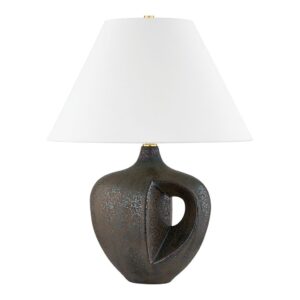
THE FIX: A bedside table lamp should sit within arm’s reach of the bed. A living room table lamp on an end table should sit at the same level as the sofa arm, 6–12 inches to the side of the seating position. Placing it too far away makes it ambient-only; too close makes it uncomfortably bright.
For a home office or reading corner, consider cordless table lamps for living room and desk use — rechargeable models that can be placed anywhere without being constrained by outlet location. This eliminates the compromise of choosing a suboptimal placement because the nearest outlet is in the wrong position.
The Aged Brass Metal Modern Accent Table Lamp ($339–$509) is designed for console and entryway placement — tall, architectural, and visible from a distance. Placing this lamp on a compact nightstand would be a scale and placement mistake simultaneously.
Mistake 9: Ignoring the Cord
MISTAKE 9: A VISIBLE CORD RUNNING ACROSS THE FLOOR OR DRAPED OVER FURNITURE UNDERMINES THE LAMP’S VISUAL IMPACT
THE FIX: Plan cord management before placing the lamp. Use a cord cover or cable channel for floor-level runs. Route the cord behind furniture wherever possible. For situations where cord management is genuinely impractical, choose cordless table lamps for complete placement freedom.
A beautifully chosen luxury table lamp with a trailing cord across a hardwood floor looks immediately unfinished. Table lamps with USB ports reduce the number of additional charging cords on a nightstand. Cordless table lamps for living room use eliminate the cord issue entirely for placements where outlets are inconvenient — particularly useful for buffet table lamps and dining table accent lamps.
Mistake 10: Buying Without Considering the Room’s Existing Lighting
MISTAKE 10: ADDING A TABLE LAMP WITHOUT THINKING ABOUT HOW IT INTERACTS WITH THE ROOM’S EXISTING OVERHEAD LIGHT
THE FIX: A table lamp works best as part of a layered lighting scheme — not as a replacement for overhead light, and not as a redundant addition to an already over-lit room. In a room with harsh overhead fluorescents, a warm table lamp adds much-needed warmth. In a room with no other light, one table lamp alone rarely provides enough general illumination.
The goal is light layering: overhead fixtures for general ambient fill, table lamps for warm human-scale pools of light at seated eye level, and floor lamps or wall lamps for accent and architectural fill. A floor and table lamp set in coordinated finishes is the most efficient way to achieve this layering without style inconsistency across lamp formats.
Browse our full table lamps collection — every product includes full specifications, including height, shade diameter, and material, so you can check all 10 of these factors before adding to cart. Our team is also available at info@exoticdecor.us Monday–Saturday, 10:00 AM–8:00 PM for personalized styling advice.
Frequently Asked Questions About Table Lamp Mistakes
What is the most common table lamp mistake people make?
The most common mistake is choosing a lamp that is the wrong height for the surface it sits on. A bedside table lamp should have a total height (base plus shade) of 24–28 inches, placing the shade bottom at eye level when seated in bed. A living room end table lamp should stand 28–34 inches total, placing the shade bottom at 58–64 inches from the floor. Lamps that are too short produce weak, pooled light at surface level; lamps that are too tall create glare at seated eye level. Checking the total height specification before purchasing eliminates this mistake entirely.
How do I avoid buying a table lamp that clashes with my room?
Match the lamp’s base material to a material already present in the room — in the furniture hardware, a mirror frame, or an accessory. A room with brass drawer pulls benefits from a brass table lamp or an aged brass finish. A room with natural wood furniture benefits from a wooden table lamp, rattan table lamp, or terracotta table lamp. If you are unsure, choose a ceramic table lamp — the most material-neutral choice available, compatible with almost every interior aesthetic from traditional to bohemian.
Can I mix different table lamp styles in the same room?
Yes — with one condition: the lamps should share at least one design attribute. Matching lamps on either side of a bed or sofa create the cleanest symmetry. Mismatched lamps can work well in eclectic and bohemian rooms, but they need a shared visual thread — the same shade color, the same approximate height, or the same material family. A wooden table lamp paired with a rattan table lamp works because both are organic, natural materials. A crystal table lamp paired with an industrial black metal lamp works only if the room’s eclectic design deliberately blends vintage and contemporary elements.
What bulb should I use to avoid the poor light quality?
Use a warm-white LED bulb rated 2700K–3000K. This color temperature produces the golden warmth associated with incandescent light and is the correct choice for almost all residential table lamp placements — bedside reading, living room ambient light, and decorative accent use. Avoid daylight LEDs (5000K–6500K) in table lamps — they produce a clinical, cool light that conflicts with the warm atmosphere most residential rooms require. US table lamps use a standard E26 medium-base socket at 120V, compatible with all standard LED bulb formats.