

Matching Bedside Table Lamps: Should They Always Match?
The question of whether matching bedside lamps are required is one of the most common bedroom decorating questions — and the answer is more nuanced than most style guides admit. The short version: they should always coordinate, but they do not always need to match. Matching and coordinating are different things, and the distinction determines whether your nightstand arrangement reads as intentional design or unresolved accident. At Exotic Decor USA, our bedside table lamps collection includes several lamps sold as coordinated pairs specifically for symmetrical bedroom placement — and this guide explains when to use them, when to intentionally mismatch, and the one rule that governs both approaches.
Matching vs Coordinating: The Distinction That Changes Everything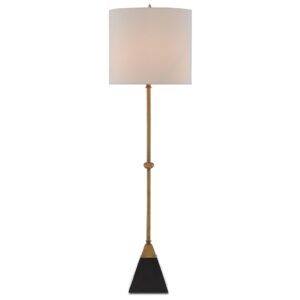
Interior designers distinguish between two approaches to bedside lamp placement:
- Matching: Both lamps are identical — same model, same finish, same shade. Creates perfect bilateral symmetry. The most formal and the most ordered outcome.
- Coordinating: Both lamps share at least one visual attribute — the same shade color, the same approximate height, or the same material family — but are not identical. Creates a visual connection without exact replication. The most flexible and most personal outcome.
- Unmatched: Both lamps have nothing in common. This almost always reads as an accident — the two lamps you happened to put there — rather than a design decision. The only exception is when a room’s aesthetic is deliberately assembled rather than designed, and even then, some attribute must be shared to read as intentional.
The rule that governs every bedroom: both lamps must share at least one visual attribute. That attribute can be the shade color, the base height, the material family, or the metallic hardware finish. One shared element is enough to create the visual connection that makes the arrangement read as designed rather than assembled.
When to Use Identical Matching Bedside Lamps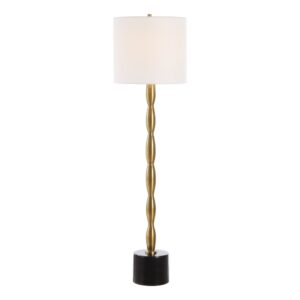
Identical matching bedside lamps are the right choice in these specific situations:
- Traditional or formal master bedrooms
- Shared bedrooms where both partners have equal nightstand claims
- Rooms with strong geometric symmetry
- When you want maximum visual calm
The Possini Euro Zeus Gold Leaf Modern Table Lamps ($319–$479) are listed as a coordinated pair and are specifically designed for this symmetrical placement — the gold leaf resin base and black drum shade create a dramatic, matched nightstand composition in a master bedroom or primary suite.
When Intentional Mismatching Works Better
Intentionally mismatched bedside lamps can be the superior choice in these situations:
- Bohemian, eclectic, or maximalist bedrooms
- Bedrooms with strongly asymmetric layouts
- Rooms that belong to two distinct aesthetic voices
- When one lamp is a meaningful object
The Rules for Beautiful Intentional Mismatching
Rule 1: Same Shade Color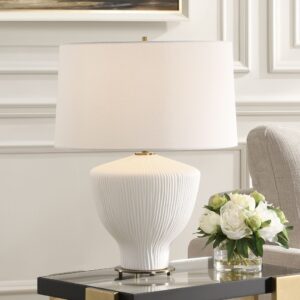
The single most powerful unifying attribute for mismatched lamps is an identical shade color. Two completely different ceramic table lamp bases — one in pale blue, one in warm terracotta — instantly read as a designed pair if both wear white drum shades at the same height. The shade is the dominant visual element when the lamp is illuminated; matching it across both lamps creates an immediate visual connection even when the bases are totally different.
The High Hammock Pale Blue Ceramic Table Lamp ($319–$479) and the Adobe Brown Chisel Ceramic Table Lamp ($269–$409) — paired with matching white drum shades at the same height — create a beautifully considered mismatched pair: two artisan ceramic lamps in complementary tones, unified by the shade.
Rule 2: Same Height
Height matching is the second most powerful unifying attribute. Two lamps at the same total height create visual symmetry even when the bases are entirely different materials and forms. A rattan table lamp and a glass base table lamp at the same 26-inch height read as a coordinated pair when placed on equal-height nightstands. The heights align, the shade bottoms align, and the lamps create a balanced horizontal plane that reads as intentional.
Always verify total height (base plus shade) in the product specifications — base height alone is insufficient for matching. Check our bedside table lamp height guide for the full calculation by bed and nightstand type.
Rule 3: Same Material Family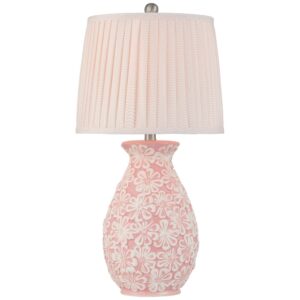
Two lamps from the same material family — both ceramic, both brass-hardware, both natural wood — read as coordinated even when their forms differ. A wooden table lamp with a rounded base and a wood base table lamp with a turned column form are visually distinct but materially related. A luxury table lamp in marble paired with an alabaster table lamp shares the stone material family. A rustic table lamp in raw ceramic paired with a brown table lamp in warm stoneware shares the earthy, tactile material language.
Matching vs Mismatching: Quick Decision Guide
| APPROACH | BEST FOR | VISUAL EFFECT | EXAMPLE |
| Identical matching | Traditional, formal, calming bedrooms | Perfect bilateral symmetry, resolved | Pair of brass crystal lamps with cream empire shades |
| Shared shade color | Eclectic, two-voice, personality-led rooms | United appearance despite different bases | Blue ceramic + terracotta base, both with white drums |
| Shared height | Asymmetric layouts, mixed-aesthetic rooms | Visual balance without visual sameness | Rattan lamp + glass base, both at 26 inches |
| Shared material family | Japandi, organic, natural material rooms | Material cohesion with form variety | Two different ceramic lamps in earth-tone glazes |
| Unmatched (avoid) | No strong case for intentional mismatching | Visual noise — reads as an accident | Two different lamps with different heights, shades, and materials |
Browse our table lamps for bedroom — several lamps in the collection are listed as coordinated pairs for direct matched nightstand placement. For the full style guide across every bedroom aesthetic, read our bedside table lamp style guide. Email info@exoticdecor.us Monday–Saturday, 10:00 AM–8:00 PM for help selecting a matching or coordinated lamp pair.
Frequently Asked Questions About Matching Bedside Lamps
Do bedside table lamps have to match?
No — bedside lamps do not have to be identical, but they must share at least one visual attribute to read as intentionally placed rather than accidentally assembled. That shared attribute can be the shade color (the most powerful unifier), the total lamp height, the base material family, or the metallic hardware finish. Identical matching creates perfect symmetry and is the right choice for traditional and formal bedrooms. Intentional coordinating creates personal, layered arrangements that suit eclectic, bohemian, and two-voice bedrooms.
What should I look for when buying two matching bedside lamps?
When buying identical matching bedside lamps, check: (1) total height — both lamps should be the same model to guarantee the same height, as base height alone can differ from total height due to shade variations; (2) finish consistency — matched lamps in a hand-applied finish (aged brass, hand-glazed ceramic) may vary slightly between production batches; look for lamps listed as a pair to guarantee a matching batch. (3) Shade uniformity — the shade color and material should be identical across both lamps, as fabric and glaze shades can vary between batches.
How do I make mismatched bedside lamps look intentional?
Three techniques make mismatched lamps look designed rather than accidental: (1) Use identical white or cream drum shades on both lamps — matching the shade instantly creates visual unity regardless of how different the bases are. (2) Choose lamps at the same total height — when both lamps create the same horizontal plane on the nightstands, the arrangement reads as balanced and considered. (3) Choose bases in the same material family — both ceramic, both brass-hardware, both natural textures — so the material language connects even when the forms differ.
Is it okay to have one lamp on one side of the bed?
Yes — a single bedside lamp is perfectly acceptable in solo sleeping rooms, studio apartments, and bedrooms where only one side of the bed is adjacent to a wall or surface. The single-lamp arrangement works best when the lamp is styled with two or three other objects on the nightstand surface to create a complete vignette rather than a solitary fixture. If the bed is accessed from both sides, a single lamp on one side will create asymmetry, which can be resolved by adding a wall-mounted sconce on the opposite side to provide light without requiring nightstand space.