

Tiffany Table Lamps: Purple Shades That Add Drama and Depth to Any Space
Tiffany table lamps in purple, violet, and amethyst are the most dramatic lamps available in American interior design — and also the most historically significant. The original Tiffany Studios pieces from the early twentieth century included some of the most coveted purple and amethyst glass shades ever produced, and the contemporary tiffany style table lamp market has kept that tradition alive for rooms that want jewel-toned, light-transforming drama rather than simple illumination. A purple stained glass table lamp does something no other lamp can: it casts colored light onto the surrounding surfaces, turning the pool of light beneath it into a second design element. At Exotic Decor USA, our table lamps collection includes artisan glass and jewel-toned pieces that capture this quality. This guide covers the full purple lamp spectrum — from lavender to deep violet to amethyst — and exactly how to use it.
The Purple Table Lamp Spectrum: Lavender to Deep Amethyst
Purple is not one color in the lamp world — it spans a wide range of shades, each creating a different atmosphere and suiting different room contexts:
- Lavender: The palest, most airy expression of purple — almost pink with a violet cast. A lavender glass base table lamp or a lavender-tinted ceramic lamp creates the softest possible purple note in a room. It suits romantic, transitional, and coastal bedrooms where a gentle color accent is appropriate. Pairs naturally with cream, warm white, and pale blush.
- Pale violet: A cooler, clearer pale purple — more blue than pink. Pale violet-stained glass in a tiffany style table lamp creates a cool, jewel-like quality that suits Scandi, contemporary, and quietly eclectic rooms. Its cool undertone makes it more compatible with grey and white palettes than lavender.
- Amethyst: The mid-purple, saturated, gemstone-quality, and historically the most prized purple shade in tiffany table lamps and art glass. Amethyst in a stained glass table lamp casts a warm purple light that transforms the room around it. Suits maximalist, art deco, bohemian, and jewel-toned rooms.
- Deep violet and plum: The darkest, most dramatic end of the spectrum. A deep violet lamp base in ceramic or a plum-toned antique crystal table lamp creates a richly moody, jewel-toned presence. Suits dark academic, traditional, and formal rooms where the intensity of color is a design intention rather than an accent.
Why Tiffany Table Lamps Are the Home of Purple in American Design
Louis Comfort Tiffany’s genius was the realisation that stained glass table lamps could do something that no other light fitting could: transform white light into color and project that color into the room. His purple and amethyst glass pieces — the Wisteria, the Grape, the Blackberry — created pools of colored light that turned the surface beneath the lamp into a secondary design element. A table tiffany style lamps piece in purple operates on the same principle today: the shade is not just a light diffuser — it is a color projection system.
Contemporary tiffany table lamps in the traditional workshop style use hand-cut glass pieces soldered in copper foil — the same technique as the original studio pieces. Quality varies enormously: genuine copper-foil work with hand-cut glass produces a lamp that changes character as the light angle shifts; lower-quality resin panels produce a flat, uniform color. When selecting a purple tiffany style table lamp, look for copper foil lines between glass pieces (visible on close inspection), irregular glass thickness across the shade, and color variation within individual glass pieces rather than uniform flat color.
Where Purple Table Lamps Work Best
The Maximalist or Jewel-Toned Living Room
A purple tiffany table lamp on a console table lamp position in a jewel-toned living room — rich emerald sofa, deep ochre walls, warm wood floors — creates the jewel-on-jewel relationship that maximalist design rewards. The amethyst purple completes the jewel-tone palette by adding the violet note that emerald and ochre lack. Position the lamp where it can cast its purple light onto a white or cream surface — a marble-topped console, a cream lampshade on an adjacent piece, or a white wall section — to maximise the colored light effect.
The Traditional or Art Deco Bedroom
In a traditional or art deco table lamp context — rich wood furniture, geometric hardware, velvet upholstery — a purple crystal table lamp or an amethyst stained glass piece adds the gemstone quality that an art deco room demands. The luxury table lamps category in American interior design has always included purple glass and crystal pieces precisely because the color communicates wealth and rarity — amethyst was historically one of the most valued gemstones, and its color carries that association into interior design.
For a traditional table lamp bedroom context with a purple accent: a pair of antique crystal table lamps with amethyst-tinted crystal drops flanking a bed creates the bilateral symmetry of a traditional primary suite while adding the purple jewel-tone that makes the room feel genuinely special rather than generically traditional. Pair with gold hardware and cream empire shades.
The Bohemian or Eclectic Room
In a bohemian or eclectic room where multiple colors, patterns, and textures coexist, a purple tiffany style table lamp participates in the room’s chromatic richness rather than competing with it. The stained glass shade — with its multiple colors, including purple, amber, green, and blue in the same piece — bridges the room’s many color families, creating a visual object that belongs to all of them simultaneously. A wicker table lamp or rattan table lamp elsewhere in the room provides the organic contrast that grounds the purple glass piece within the bohemian material palette.
The Dark Academic Study
A deep violet or plum ceramic table lamp or a purple-shaded stained glass table lamp on a reading desk in a dark academic study — dark green walls, walnut furniture, leather books — creates the most sophisticated purple lamp application. The purple sits at the junction of the warm red-purple of dark wood and the cool blue-green of forest-painted walls, harmonising both without committing to either. A brass table lamp base with a purple glass shade, or a deep amethyst ceramic with aged brass hardware, is the correct material combination for this context.
What to Pair with Purple Table Lamps: Room-by-Room Rules
- Pair with gold and aged brass hardware: Purple and gold are historically the royal color combination — in textiles, in heraldry, and in art glass. A purple tiffany table lamp or glass base table lamp beside gold table lamps elsewhere in the room creates the warm-metallic frame that makes purple read as jewel-toned rather than cold. Brass table lamp hardware on a purple ceramic or glass base is the most resolved combination.
- Use cream or ivory shades on purple bases: If using a purple ceramic or glass base with a fabric shade (rather than a Tiffany stained glass shade), always choose cream or ivory fabric rather than white. White beside purple can read as clinical; cream beside purple reads as jewel-toned and warm.
- Echo purple in one room element: A purple lamp should not be the only purple in the room — echo it in one object. A purple throw, a violet cushion, a lavender floral arrangement, or a purple book spine on the nightstand. The echo anchors the lamp as part of the room’s design language rather than an isolated purchase.
- Avoid pairing with cool grey and modern white: Purple lamps in tiffany table lamps style or deep ceramic are warm and rich — they fight against cool grey-and-white minimalist rooms. In a cool neutral room, use lavender rather than deep violet, and pair with warm metallic hardware to bridge the cold and warm tones.
Purple Table Lamp Spectrum: Quick Reference
| PURPLE SHADE | CHARACTER | BEST ROOM | PAIRS WITH | SHADE REC |
| Lavender | Soft, warm-pink purple, delicate | Romantic, transitional, coastal | Cream, blush, warm white, warm brass | Cream empire |
| Pale Violet | Cool, clear mid-purple | Scandi, contemporary, quiet eclectic | Grey, white oak, cool linen | White drum |
| Amethyst | Gemstone quality, saturated purple | Maximalist, art deco, jewel-toned | Emerald, gold, warm wood, velvet | Cream or stained glass shade |
| Deep Violet | Rich, moody, dramatically dark purple | Dark academic, formal traditional | Dark walnut, brass, leather | White or cream — no dark shade |
| Plum | Warm red-purple, closest to maroon | Eclectic, bohemian, maximalist | Rust, mustard, warm wood, rattan | Natural linen |
Purple-Adjacent Picks at Exotic Decor USA
Our collection does not include ready-stocked Tiffany purple glass lamps, but several pieces create the jewel-toned, dramatic atmosphere of the purple lamp aesthetic through their materials and construction:
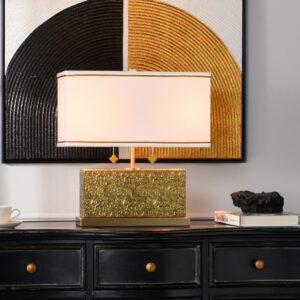
For the warmest jewel-toned statement in a maximalist or art deco room: the Possini Euro Zeus Gold Leaf Modern Table Lamps ($319–$479) — gold leaf resin with sculptural presence — pair with a violet or amethyst glass shade for the full purple-and-gold art deco effect.
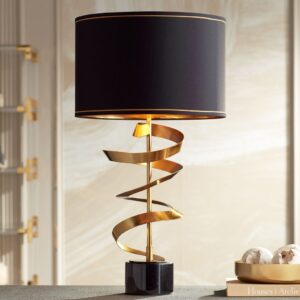
For an aged brass base that suits the brass-plus-purple combination recommended throughout this guide: the Aged Brass and Ceramic Affogato Table Lamp ($289–$439) — warm aged brass hardware with ceramic — provides the correct metallic base for a room styled around purple and gold.
For the full table lamps collection including artisan glass and jewel-toned ceramic finishes, browse by material at Exotic Decor USA. Email info@exoticdecor.us Monday–Saturday, 10:00 AM–8:00 PM for custom purple lamp sourcing assistance.
For complete bedroom lamp guidance, see our best table lamps for bedroom roundup. For jewel-toned bedroom lamp styling, read our master bedroom table lamp guide.
Frequently Asked Questions About Purple Table Lamps
What makes a Tiffany table lamp purple?
Tiffany table lamps in purple get their color from the stained glass shade. The glass itself is colored during manufacturing using metallic oxides — manganese and cobalt in combination produce violet and amethyst tones; cobalt alone produces blue-violet. In a genuine hand-crafted Tiffany style table lamp, individual glass pieces are hand-cut and soldered together with copper foil, creating a shade with multiple purple tones within a single piece. The variation in glass thickness across the shade means the purple changes intensity as light conditions change — this is the quality that distinguishes handcrafted stained glass from resin-panel alternatives.
What rooms suit a purple table lamp?
Purple table lamps suit maximalist and jewel-toned living rooms, art deco and traditional bedrooms, bohemian and eclectic rooms, and dark academic studies. They are not well-suited to minimalist, Scandi, or cool grey-dominant rooms where the warm purple tone creates visual tension rather than harmony. The specific shade of purple matters: lavender suits softer, more transitional rooms; amethyst suits jewel-toned and maximalist rooms; deep violet and plum suit rich, formal traditional rooms.
What colors go with a purple table lamp?
Gold and aged brass hardware are the most resolved pairing for any purple lamp — the purple-and-gold combination is historically royal and creates immediate visual authority. Emerald green and deep forest green are near-complementary to purple and create a rich, jewel-toned atmosphere. Warm cream and ivory provide the neutral backdrop that lets purple read as a deliberate accent. Warm walnut wood grounds purple naturally. Avoid cool grey, chrome hardware, and modern white in the same composition — purple reads as warm, and the cool elements create chromatic tension rather than contrast.
How do I use a purple lamp without overdoing it?
Use a single purple lamp as the sole chromatic accent in the room, or use a matched pair on nightstands for bilateral symmetry. Echo the purple in one room element only — a throw, a cushion, or a small decorative object. Keep the rest of the room in warm neutrals (cream, warm white, warm wood) or in complementary jewel tones (emerald, gold). Avoid purple in more than three elements in the same room — lamp, one echo object, and one distant accent is the correct ceiling. Beyond this, the room reads as a purple theme rather than a purple accent.