

Marble Sculpture for Home Interior Design: Classical Beauty in Every Room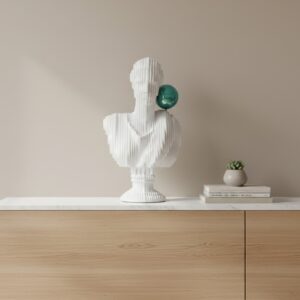
Marble sculpture for home interior design draws on the oldest continuous artistic tradition in Western culture. Greek sculptors understood 2,500 years ago what contemporary designers have rediscovered: marble’s translucency — the way light penetrates the surface before reflecting back — creates a quality of warmth that no other stone achieves. A marble figure in the right room doesn’t just sit there. It radiates. The Possini Euro Zeus Gold Leaf Modern Table Lamp ($319–$479) in gold leaf creates the warm formal lamp companion that marble demands: the two materials share the quality of resolved, unhurried permanence.
This guide covers how to choose marble sculpture for home interior design — which types of marble suit which rooms, how to source quality pieces, where to display them, and how to care for them. Browse our table lamp collection for lamp designs suited to classically inspired interiors.
Marble Sculpture for Home Interior Design: Room Matching
When choosing marble sculpture for home interior design, start with the room’s existing material palette. Marble’s cool, pale quality reads best against warm neutral backgrounds — aged ivory walls, warm wood furniture, linen and cotton fabric. Against cool grey or white walls, white marble disappears rather than contrasts. Greek marble sculpture in the classical tradition suits the most formal rooms: a living room with architectural detail, a library with dark wood shelving, an entry hall with stone or tile flooring. The Aged Brass and Ceramic Affogato Table Lamp ($289–$439) in warm aged brass creates the warm material counterpart that white marble sculpture needs to read clearly in a room.
White marble sculpture decor suits rooms where the palette is built around warm neutrals rather than cool whites. A marble bust in an all-white contemporary room creates a cool-on-cool composition that reads as clinical rather than classical. In a room with aged brass hardware, warm wood, and linen upholstery, the same bust reads as resolved and timeless. The Aged Brass Ceramic Granite Table Lamp ($239–$359) in warm ceramic granite creates the correct transitional lamp register for this kind of room.
Quality Signals in Marble Sculpture
A Carrara marble figurine sourced from a quality manufacturer has three visible quality signals. First, the surface finish — machine-polished marble has a glassy uniformity; hand-finished marble has slight variations in polish depth that catch light differently at different angles, giving the surface life. Second, the weight — marble is heavy. A quality marble piece feels significantly heavier than its size suggests. Third, the coolness to touch — real marble is always slightly cool at room temperature, regardless of the ambient heat.sculptural table lamps
Composite marble — crushed marble dust mixed with resin — is lighter, cheaper, and in some surface treatments visually indistinguishable from solid marble. It’s a legitimate material, but it cannot be hand-carved after casting, so the surface detail is always mold-determined rather than tool-determined. Good composite marble is a reasonable choice for decorative purposes. The Adorno Natural and Beige Table Lamp ($239–$359) in natural beige creates the quiet lamp for a room where the sculpture is the primary statement and the lamp exists to serve it.
Marble Bust for Home Display
A marble bust for home display reads most powerfully when positioned at standing eye level — 54 to 60 inches from the floor. On a console or pedestal at that height, the bust engages the viewer directly at eye level, which is the reading position for portrait sculpture throughout art history. Below that height, the figure looks down at you, which reads as wrong for a classical bust. The Aged Brass Ceramic Meadow Ombre Table Lamp ($289–$439) in warm aged brass and meadow ombre at the opposite end of the console creates the bilateral composition that a marble bust needs.
Marble sculpture for home interior design also works beautifully in a bathroom with quality finishes — a marble figurine on the vanity console beside brushed brass hardware creates a spa-quality composition. Use this position only with indoor-rated sealed marble; unsealed marble absorbs water and stains easily. The Aged Brass Dome Adjustable Desk Lamp ($269–$409) in aged brass dome desk lamp creates the adjustable light source that illuminates a vanity or dresser sculpture precisely.
Alabaster Sculpture for Home and Marble Care Tips
Alabaster sculpture for home is marble’s softer, more translucent cousin. Alabaster is calcite or gypsum — significantly softer than marble and more translucent, which means light passes through it further and the glow quality is more pronounced. Ancient Egyptian canopic jars and medieval European altar pieces used alabaster for exactly this quality. Alabaster suits indoor display only — it dissolves in water and cannot withstand any outdoor exposure. The Cobalt and Natural Brass Table Lamp ($269–$409) in cobalt glass at lamp scale echoes this quality of light passing through a semi-translucent material.
Marble sculpture care tips are simple: dust with a dry microfiber cloth, never use acidic cleaners (they etch the surface), never use abrasive cleaners. If the marble has developed a dull film, a paste of baking soda and water applied gently and rinsed thoroughly restores the polish without etching. Keep marble away from direct sunlight — extended UV exposure can cause yellowing in some marble types. Browse our floor lamp collection for the full range of lamp designs suited to classically inspired rooms.
Marble sculpture for home interior design requires one thing above all: patience with the matching process. The right piece at the right position at the right scale in the right room takes time to find. When it works, it works completely — the room feels as though it was designed around the sculpture, even if the sculpture arrived last. Browse our sculptural table lamps for the sculptural lamp designs that create the room’s second statement beside the marble first.
Frequently Asked Questions
What rooms suit marble sculpture for home interior design?
Formal and traditional living rooms, libraries, entry halls, and transitional rooms with warm neutral palettes suit marble sculpture best. White marble reads best against warm ivory, aged brass, and warm wood — not against cool white or grey walls, where it disappears rather than contrasts. A marble bust for home display works especially well in a library or study at standing eye level.
How do you identify quality marble sculpture?
Three quality signals: surface finish with slight variation in polish depth (hand-finished reads as alive); significant weight relative to size (real marble is dense); and slight coolness to touch at room temperature. Composite marble — crushed marble mixed with resin — is lighter and has uniform polish. Both are legitimate materials, but solid marble allows hand-carving after casting, giving superior surface detail.
What is the difference between marble and alabaster sculpture?
Marble is calcite or dolomite — hard, dense, and translucent to 2–3 mm. Alabaster is calcite or gypsum — significantly softer, more translucent, and more luminous in light. Alabaster suits indoor display only: it dissolves in water and cannot withstand outdoor exposure. Marble can handle occasional damp conditions if sealed. Both suit classical and formal interior styles, with alabaster giving a more ethereal, glowing quality.
How do you care for marble sculpture at home?
Dust with a dry microfiber cloth. Never use acidic cleaners — they permanently etch the surface. For dull film, a baking soda paste applied gently and rinsed thoroughly restores polish. Keep away from direct sunlight to prevent yellowing. Indoor marble needs no sealing for dry display conditions, but seal before using in a bathroom or humid room.