

Henry Moore Sculpture Garden Ideas for Home: Biomorphic Form and Outdoor Placement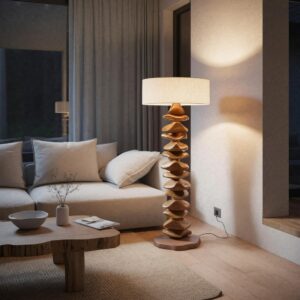
Henry Moore sculpture garden ideas for home begin with understanding what Moore (1898–1986) was trying to achieve: a sculpture that would enter into genuine dialogue with its landscape setting rather than being placed within it like furniture. Moore believed that the best outdoor sculpture should be seen against the sky rather than against a building, positioned to respond to the natural terrain around it rather than to impose on it. His large reclining figures, his upright connected forms, his family groups — all were designed to look like they emerged from the ground beneath them. The Bronze Accent Table Lamp ($239–$359) in warm bronze accent at the garden room table creates the material continuity between the warm bronze that Moore worked in and the adjacent indoor room.
This guide covers Henry Moore sculpture garden ideas for home — placement principles from Moore’s own practice, his most significant works, and how his biomorphic approach translates into practical home garden and interior decoration. Browse our floor lamp collection for lamp designs suited to garden rooms connected to Moore-tradition outdoor sculpture.
Henry Moore Sculpture Garden Ideas for Home: Placement Principles
Moore’s own accounts of sculpture placement provide the best principles for Henry Moore sculpture garden ideas for home. He believed that a sculpture should be large enough to command the landscape it occupies — not to overwhelm it, but to be in conversation with it at the appropriate scale. He preferred positions where the piece could be seen against open sky rather than against a wall or hedge, which he felt confined the sculpture’s visual presence. He also preferred natural daylight over artificial lighting for outdoor sculpture, believing that the changing light of day was part of the work’s ongoing experience.
Organic abstract sculpture garden installations in the Moore tradition use the sightline terminus principle combined with landscape framing: position the piece at the end of a garden axis, with natural planting on two or three sides that creates a partial frame without enclosing. The piece should read against the sky from the primary garden viewing position. The Adorno Natural and Beige Table Lamp ($239–$359) in warm natural beige at the covered garden table creates the lamp that anchors the viewing position from which a Moore-tradition garden sculpture is seen.
Henry Moore Reclining Figure and Mother and Child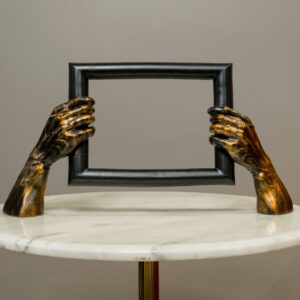
The Henry Moore reclining figure series (begun 1929, continued throughout his career in multiple scales and materials) is the work for which he is most recognized. Moore drew the reclining figure form from multiple sources: the Chacmool recumbent figures of pre-Columbian Mexico, which he encountered at the British Museum; Cézanne’s bathers; Matisse’s odalisques; and his own observation of the English landscape, which he experienced as a series of recumbent hills. The reclined horizontal form communicates permanence, rootedness, and an organic relationship with the earth.
Moore sculpture mother and child groups — another major series that ran throughout his career — communicate the relationship of sheltering and dependence through simplified biomorphic forms. Unlike the Renaissance Pietà tradition’s anatomical specificity, Moore’s figures are reduced to their essential spatial relationship: one form containing or surrounding another. For home display, a quality Moore-tradition mother and child reproduction in cast stone or bronze suits a garden position or a formal living room console. The Aged Brass Ceramic Meadow Ombre Table Lamp ($289–$439) in warm meadow ombre at the garden room table creates the warm lamp companion for a Moore-tradition organic sculpture in the adjacent garden.
Biomorphic Sculpture Ideas for Home and Yorkshire Sculpture Park
Henry Moore sculpture garden ideas for home draw directly from the Yorkshire Sculpture Park Moore legacy — the 500-acre West Yorkshire estate that displays the largest collection of Moore’s large-scale outdoor work in any single location. The park demonstrates that Moore’s sculptures suit wildly varying landscape conditions: open hillside, woodland path, formal garden, lakeside setting. The diversity of successful placements reveals his principle: it is not about the specific landscape type, but about the quality of the sky-to-sculpture relationship and the landscape’s ability to frame without confining.sculptural table lamps
Biomorphic sculpture ideas for home garden positions take Moore’s lesson most directly: choose a large cast stone or bronze organic form — a torso, a reclining figure, an abstract curved mass — and position it at the end of the garden’s primary sightline, where it can be seen against the sky from the main outdoor seating area. Moore large outdoor sculpture at home scale (24 to 36 inches) achieves the same quality of landscape dialogue at garden scale that his largest museum works achieve at park scale. The Mid Century Modern Green Ceramic Table Lamp ($339–$479) in sage green ceramic at the garden room table creates the botanical lamp for a home inspired by Moore’s natural form aesthetic.
Henry Moore Bronze Cast Sculpture for Indoor Display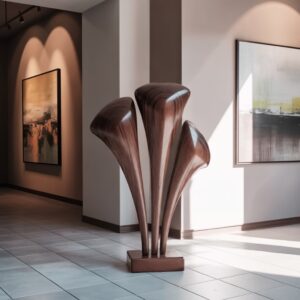
Henry Moore bronze cast sculpture for indoor home display works best in formal living rooms and studies at the 8 to 20-inch scale. The small working maquettes that Moore made before executing large-scale pieces are some of his most intimate and direct works — they carry the marks of making more clearly than the final polished bronzes, and their small scale suits domestic display positions that large cast works cannot occupy. Quality cold-cast reproductions of Moore maquette-scale works are available from the Henry Moore Foundation licensed reproduction program.
For interior display, a Moore-tradition organic bronze form requires side lighting from a warm lamp that creates the gradated shadow across the organic surface that reveals the work’s three-dimensional form. The quality of Moore’s surfaces — the texture of his thumbed clay translated into bronze — is only fully visible with correctly positioned directional light. Browse our table lamp collection for the lamp designs suited to formal living rooms and studies where a Moore-tradition bronze is the primary sculptural art statement.
Henry Moore sculpture garden ideas for home are available to any gardener with a 15-foot garden axis and a willingness to choose one great organic piece rather than many smaller decorative objects. Moore’s legacy is that outdoor sculpture and its landscape are in dialogue — not that one decorates the other. Browse our full lamp collection for the complete lamp collection.
Frequently Asked Questions
What is Henry Moore’s sculpture style?
Henry Moore’s sculpture style is biomorphic — forms that reference the human body and natural landscape while remaining abstract. His figures reduce the body to its essential spatial qualities: mass, hollowness, interior and exterior surface. He combined influences from pre-Columbian sculpture (Mexican Chacmool), Cézanne’s bathers, and his observation of the English landscape, which he experienced as a series of reclining forms. Moore was the primary 20th-century sculptor to make outdoor landscape placement central to a sculpture’s meaning.
How do you display a Moore-tradition sculpture in a garden?
Position the piece at the end of the garden’s primary sightline, where it can be seen against the sky from the main outdoor seating area. Allow natural planting on two or three sides to create partial framing without enclosing the piece. The sculpture should be large enough to command the space — at least 24 to 36 inches for a domestic garden primary position. Cast stone or cast bronze are the appropriate materials for fully exposed outdoor positions. Side lighting at night, not uplighting, suits most organic bronze garden forms.
What is the Yorkshire Sculpture Park Moore collection?
The Yorkshire Sculpture Park in West Yorkshire, England displays the largest collection of Henry Moore’s large-scale outdoor work in any single location — including works like Large Reclining Figure, Reclining Figure: Arch Leg, and the Three Piece Reclining Figure series. The park demonstrates that Moore’s sculptures succeed in widely varying landscape conditions: open hillside, woodland path, lakeside setting. It is one of the world’s most important outdoor sculpture venues and a significant destination for anyone interested in Moore’s garden placement principles.