

How to Display Sculpture at Home Like a Professional: Placement, Light, and Negative Space
Knowing how to display sculpture at home like a professional is knowing the same thing that gallery curators and museum installers know: placement is as important as the object itself. The right piece in the wrong position reads as decoration. The same piece in the right position with the right light reads as art. These are not matters of taste — they are learnable principles with consistent results. The Aged Brass Ceramic Meadow Ombre Table Lamp ($289–$439) in warm organic meadow ombre is the lamp at the anchor position of a professional-quality sculpture display — it creates the warm directional light that makes everything beside it read with more intention.
This guide covers the primary principles of professional sculpture display — sightline placement, lighting, pedestal selection, negative space, and grouping — with practical guidance translating each principle into home decoration decisions. Browse our table lamp collection for the lamp designs that anchor professional-quality sculpture display in any room.
How to Display Sculpture at Home Like a Professional: The Sightline Rule
The first and most important principle in how to display sculpture at home like a professional is the sightline rule: place the sculpture where it terminates a view from the room’s primary seated position. The piece should be the visual destination of the room’s natural sightline, not an object encountered while scanning a surface. Identify the primary chair or sofa position and the sightline from that position. The end of that sightline — the console at the far end of the room, the mantelpiece visible from the reading chair, the bookshelf at eye level from the desk — is the correct primary display position. The Adorno Natural and Beige Table Lamp ($239–$359) in natural beige at the opposite end of the primary console creates the bilateral composition that makes the sightline terminus position read as intentional.
Sculpture display techniques professional curators use always start with a cardboard mock-up — a box or folded card of the same dimensions as the proposed piece, placed at the proposed position and evaluated from all relevant viewing angles before the real piece is moved. This cardboard test takes five minutes and prevents weeks of living with a decision that read better in theory than in practice.sculptural table lamps
Lighting Sculpture at Home: The Side Light Principle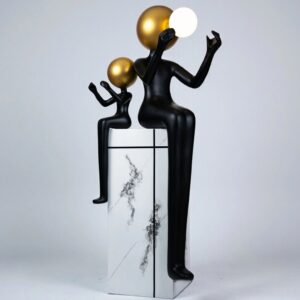
Lighting sculpture at home correctly is the single intervention that most dramatically improves how any piece reads. The professional principle: light the sculpture from the side, not from above. Overhead light (from a ceiling fixture) casts shadow directly downward, flattening the three-dimensional surface and eliminating the depth cues that make sculpture interesting. Side light from a lamp at approximately the same height as the sculpture’s primary mass creates shadow definition that reveals the surface texture, the depth of relief, and the quality of the casting or carving. The Bronze Accent Table Lamp ($239–$359) in warm bronze accent at the side lamp position creates this quality of revealing directional warmth.
Sculpture Pedestal Selection Guide
Knowing how to display sculpture at home like a professional includes knowing when a sculpture needs a pedestal and what height is correct. Sculpture pedestal selection guide for home display: a pedestal raises a piece to its most appropriate viewing height, creates a dedicated display territory that separates the piece from surrounding objects, and signals that the piece is primary art rather than decorative object. The correct pedestal height brings the sculpture’s primary visual mass — the head of a figure, the center of an abstract form — to standing eye level (60 to 66 inches from the floor) for a primary statement position, or to seated eye level (42 to 48 inches from floor) for a side table or smaller console display. The Possini Euro Zeus Gold Leaf Modern Table Lamp ($319–$479) in warm zeus gold leaf creates the lamp for the room where a primary statement pedestal sculpture is the organizing center.
Negative Space in Sculpture Display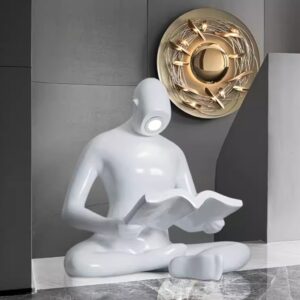
Negative space in sculpture display is the clear area around the piece that allows it to be seen completely rather than partially. Most amateur sculpture displays fail not because the pieces are wrong but because the pieces are too densely arranged — the collector adds one more object to a surface that was already correctly composed, and the addition makes everything read as clutter. Professional display removes rather than adds. The rule: a sculpture needs at least as much clear surface space on either side as the piece itself occupies. For a 12-inch piece, leave 12 inches of clear surface on both sides.table lamp collection
Sculpture grouping on a bookshelf follows the odd-number principle: three or five pieces create a composition with a clear center and two flanking elements; two or four create a symmetry without a focal point. Group pieces in graduated heights — tallest at the back, shortest at the front — to create depth and visual layering. The Aged Brass Ceramic Meadow Ombre Table Lamp ($289–$439) in warm meadow ombre at the side of the bookshelf composition creates the lamp anchor that completes the group.
How to display sculpture at home like a professional always comes back to the same principles: find the sightline terminus, light from the side, respect the negative space, and remove rather than add when in doubt. These four rules produce professional results in any room at any budget. Browse our full lamp collection for the complete lamp collection that anchors every display position.
Frequently Asked Questions
Where is the best position to display sculpture at home?
Place the sculpture where it terminates the room’s primary sightline from the main seated position — the end of the primary console, the mantelpiece visible from the reading chair, the bookshelf at eye level from the desk. The sightline terminus principle makes any piece read with authority from the room’s primary viewing angle. Use a cardboard mock-up of the same dimensions to evaluate position before moving the actual piece.
How do you light sculpture at home?
Light from the side — not from overhead. A lamp at approximately the same height as the sculpture’s primary visual mass, positioned to the side of the piece, creates shadow definition that reveals surface texture and depth. Overhead lighting from ceiling fixtures flattens sculpture surfaces and eliminates the depth cues that make three-dimensional art interesting. A dimmable lamp gives you control over light intensity to match the sculpture’s scale and the room’s ambient light level.
What is the correct pedestal height for sculpture?
For a primary statement position, the pedestal should bring the sculpture’s primary mass to standing eye level — approximately 60 to 66 inches from the floor for the center of the sculpture’s most important surface area. For a side table or smaller console display, bring the primary mass to seated eye level — 42 to 48 inches from the floor. These are starting points; adjust based on the specific piece’s proportions and the room’s ceiling height.
How do you group multiple sculptures on a shelf?
Use odd numbers — three or five pieces create a composition with a clear center and flanking elements. Vary heights: tallest at back, shortest at front. Leave at least as much clear surface space around the group as the group itself occupies. Maintain material consistency across the group — all warm materials or all cool materials. A lamp at one end of the shelf anchors the composition and creates the directional light that unifies the group.