

How to Repair Damaged Sculpture at Home: Ceramic, Bronze, Stone, and Resin
Knowing how to repair damaged sculpture at home saves pieces that would otherwise be discarded or sent to expensive professional conservators for work that a careful home restorer can achieve safely. Most common sculpture damage — a broken-off element, a chip in a ceramic glaze, a hairline crack in stone — is repairable with the right adhesive, the right filler, and the right surface treatment applied with patience. The Aged Brass and Ceramic Affogato Table Lamp ($289–$439) in warm aged brass and ceramic Affogato beside the repair workstation creates the warm, focused light that precise repair work requires.
This guide covers how to repair damaged sculpture at home across four material types — ceramic, bronze, stone, and resin — with guidance on when home repair is appropriate and when professional conservation is required. Browse our table lamp collection for the focused desk lamp designs best suited to detail repair work.
How to Repair Damaged Sculpture at Home: Ceramic and Porcelain
For ceramic sculpture repair at home, the two most common damage types are clean breaks (the piece has snapped at a joint or thin section) and chips (small areas of glaze or clay have broken away). Clean breaks in fired ceramic are the most repairable: clean both surfaces with acetone, apply a two-part epoxy adhesive formulated for ceramics and stone, and clamp or support the joint for the manufacturer’s recommended cure time (typically 24 to 72 hours). The repaired joint is strong but visible — color matching is the remaining challenge.sculptural table lamps
Color matching for ceramic glaze repair requires small amounts of artist’s acrylic paint mixed to match the glaze color, applied to the dried epoxy joint with a fine brush. Building up layers of thin paint allows gradual color matching. Seal the finished repair with a clear acrylic matte medium to match the adjacent glaze’s sheen level. No home repair of fired ceramic is invisible on close inspection — but a good color match reads correctly from a normal viewing distance. The Adorno Natural and Beige Table Lamp ($239–$359) in natural adorno beige creates the warm studio lamp for the patient detail work that ceramic repair requires.
Broken Bronze Sculpture Repair at Home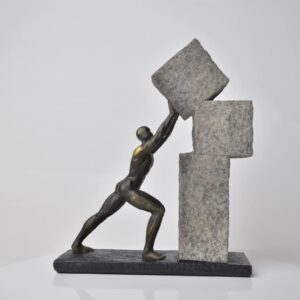
Broken bronze sculpture repair at home is possible for small breaks using metal adhesives and color matching — but the results are more limited than ceramic repair due to bronze’s material density and the visibility of any repair on the patina surface. For clean breaks in small bronze pieces (under 12 inches), a two-part metal epoxy (Devcon or J-B Weld) provides adequate structural strength for display purposes. Apply sparingly, clamp for the cure period, and clean excess with acetone before it cures. The Aged Brass Ceramic Granite Table Lamp ($239–$359) in warm granite ceramic beside the bronze repair station creates the warm directed light that makes patina color evaluation accurate.
Patina matching on a repaired bronze joint requires patience and experimentation. Apply bronze acrylic paint (available from artist supply stores) to the cured epoxy, building up to the base brown tone. Over this base, apply diluted black and umber glazes to match the patina’s depth variation. Seal with an oil-based varnish tinted to match the bronze’s sheen level. The repair will be visible on very close inspection but should read correctly at the normal display viewing distance of 18 to 36 inches.table lamp collection.
Epoxy Repair for Stone Sculpture and Resin
Knowing how to repair damaged sculpture at home in stone requires different adhesives than ceramic. Epoxy repair for stone sculpture uses two-part epoxy specifically formulated for stone and masonry — these products have the flexibility to accommodate stone’s slight thermal expansion and contraction, which standard epoxy does not. For hairline cracks in soapstone and alabaster, a thin cyanoacrylate (super glue) wicked into the crack by capillary action provides a near-invisible structural repair. Resin sculpture crack repair uses the same thin cyanoacrylate for hairline cracks, and two-part polyester filler for larger voids — these products are available from automotive repair suppliers.sculptural table lamps
How to Fill Chips in Sculpture Surfaces
How to fill chips in sculpture uses different fillers for different materials. For ceramic: two-part epoxy putty (Milliput or Magic Sculpt) fills chips and can be sanded and painted when cured. For bronze: metal-filled epoxy (such as Devcon Steel Putty) fills chips with a material that can be painted with bronze color. For stone: stone-colored epoxy putty matched to the stone’s color family. Mix all putty-type fillers to marble-homogeneous consistency, apply slightly proud of the surface, allow to cure fully, then sand flush with progressively finer grits.
The final color matching over filled chips uses the same acrylic glazing approach as joint repair — build up base color, then add depth variation with diluted darker tones. Always seal with the correct finish level: matte medium for unglazed ceramic or matte stone, satin medium for lightly polished surfaces, gloss for high-fired ceramic glaze. The Adobe Brown Chisel Ceramic Table Lamp ($269–$409) in warm adobe brown beside the repair completion display creates the warm lamp companion for a room that includes repaired and restored pieces alongside pristine works.
When to Consult a Professional Conservator
Sculpture restoration techniques at home have clear limits. Professional conservation is required for: pieces of significant financial value (any work where the repair cost is lower than the potential value loss from an amateur repair gone wrong), pieces with active deterioration that home methods cannot halt (active bronze disease, active stone flaking), and museum-quality works where any visible repair is unacceptable. The rule of thumb: if the piece is worth more than $5,000 or has irreplaceable historical significance, contact a conservator.sculptural table lamps
How to repair damaged sculpture at home is ultimately about knowing what is achievable and what is not. Most common damage is achievable. The goal is not invisibility — it is a repair that reads correctly at the normal display viewing distance, restores the structural integrity of the piece, and allows continued enjoyment of the work. Browse our full lamp collection for the lamp designs that illuminate finished and restored sculpture correctly.
Frequently Asked Questions
Can you repair a broken ceramic sculpture at home?
Yes, for most common breaks. Clean breaks in fired ceramic respond well to two-part epoxy adhesive formulated for ceramics and stone — apply to both surfaces, clamp for 24 to 72 hours, then color match with artist’s acrylic paint. The repair will be visible on very close inspection but reads correctly from normal viewing distances of 18 to 36 inches. For high-value or museum-quality ceramic, consult a professional conservator before any home repair attempt.
What adhesive is best for repairing sculpture?
For ceramic and porcelain: two-part epoxy formulated for ceramics and stone (E-6000 Craft or similar). For bronze: two-part metal epoxy (J-B Weld, Devcon). For stone: masonry-specific two-part epoxy with flexibility, or thin cyanoacrylate (super glue) for hairline cracks. For resin: thin cyanoacrylate for hairline cracks, two-part polyester filler for larger voids. Match the adhesive to the material — generic super glue alone has insufficient strength for structural sculpture repair.
How do you color match repaired areas on sculpture?
Use artist’s acrylic paint in thin layers, building up to the base color before adding depth variation with diluted darker tones. For ceramic glaze repair, mix multiple colors to match the glaze’s specific hue and value. For bronze repair, start with bronze acrylic as the base and glaze over it with diluted brown-black washes. Seal the finished repair with an acrylic medium at the correct sheen level: matte for unglazed surfaces, satin for lightly polished, gloss for high-fired glaze.
When should I take a sculpture to a professional conservator?
For any piece worth more than $5,000 where amateur repair could reduce its value. For any piece with active deterioration that home methods cannot halt — active bronze disease (bright green powdery active corrosion), active stone spalling, or active structural instability. For museum-quality works where invisible repair is required. For sculptural assemblages with complex multi-material construction. When in doubt, contact a conservator for an assessment — most will provide an initial opinion on whether home repair is appropriate without charge.