

Sculptural Floor Lamp: Where Art Meets Function in Your Home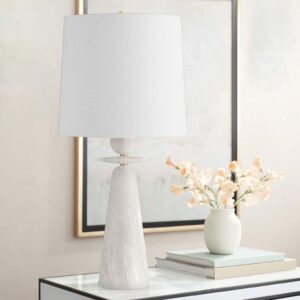
A standard floor lamp is a pole with a shade. It does its job — it makes light — but it does not contribute anything else to the room. A sculptural floor lamp is a different category entirely. It is a floor lamp whose base is designed as if it were a sculpture in its own right: an architectural form, a cast figure, a kinetic composition, a material statement. The shade is not a concession to function — it is the roof of a designed object. And the light sculpture the shade emits is not just illumination; it is the finishing quality of an object that earns its floor space the way a piece of furniture does. Browse our table lamps collection for the sculptural table lamp options that complete a room when a floor lamp anchors the space.
Most people shopping for a floor lamp are looking for something that makes light. The best floor lamp decision, though, is looking for something that makes light AND makes a statement. These are not the same decision, and the results are not the same room. A room anchored by a sculptural floor lamp has a vertical focal point — a designed object rising from the floor to five or six feet — that changes the room’s architecture in a way that no piece of furniture can replicate. The Aged Brass Metal Modern Accent Table Lamp ($339-$509) in aged brass metal is the table-scale equivalent of this principle: the base is the statement, and the light is the bonus.
What Makes a Floor Lamp Sculptural
The base is the primary design element of a sculptural floor lamp — not the shade. In a standard floor lamp, the shade is the visual center; the pole exists only to hold it up. In a sculptural floor lamp, the base is an artistic form that would be worth looking at even without the shade. The shade completes and refines the form; it does not create it. The Aged Gunmetal Fluted Table Lamp ($299-$449) in aged brass with fluted texture demonstrates the base-as-statement principle at table scale: the column is the art, and the shade sits on top of it.
Material quality is the second defining characteristic. A sculptural floor lamp in a matte black resin base looks different from one in polished brass, which looks different from one in marble. Each material has a different relationship with the room’s light, its furniture, and its palette. Resin is versatile and lightweight. Brass and bronze have warmth and traditional associations. Marble has weight and permanence. Concrete has an industrial honesty. The Cobalt and Natural Brass Table Lamp ($269-$409) in cobalt glass demonstrates the most dramatic material statement available at lamp scale: a material that is literally made of light, since glass transmits and refracts the light passing through it.
Key Sculptural Floor Lamp Styles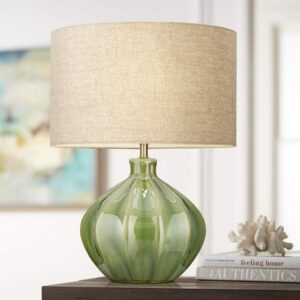
Arc floor lamps have the most dramatic presence of any floor lamp style — a horizontal arm that extends 4 to 6 feet outward from the base, positioning the shade directly above a seating area. The base must be heavy (marble or cast iron is typical) to prevent tipping. Arc floor lamps suit large living rooms with high ceilings and large sofas; in a small room, the horizontal reach overwhelms the space. The Aged Brass Ceramic Meadow Ombre Table Lamp ($289-$439) in warm ombre ceramic is the table lamp companion for a room with a dramatic arc floor lamp: its quiet warmth balances the arc’s drama.
Tripod floor lamps are the most casual and most architecturally versatile sculptural floor lamp style. Three spreading legs create a stable triangular base that suits both contemporary and mid-century modern rooms. The tripod form reads as light and airy — it does not visually block the floor space the way a solid column base does. The Mid Century Modern Green Ceramic Table Lamp ($339-$479) in mid-century modern green ceramic is the natural table lamp companion for a room with a tripod floor lamp: the same MCM material vocabulary.
Column and pillar floor lamps are the most architectural style — a single vertical form in stone, metal, wood, or resin that rises from a base to a capital where the shade attaches. Column floor lamps suit traditional, transitional, and formal contemporary rooms. The height of the column creates a strong vertical line that is particularly effective in rooms with high ceilings or large artwork on the walls. The Aarna Black Table Lamp ($269-$409) in a tall brass column form is the table-scale version of this architectural column principle.
Organic form floor lamps — bases that abstract art sculpture natural forms like branches, waves, figures, or botanical shapes — are the most artistic and the most style-specific. They suit eclectic, bohemian, and maximalist rooms where variety of form and reference is the design language. They pair naturally with other artistic objects: sculptural table lamps, art pottery, gallery wall sculpture art compositions. The Adeline Five Gold Flowers Bloom Metal Table Lamp ($269-$409) with its five gold petal forms is the table lamp equivalent of an organic form floor lamp: clearly artistically intentioned, formally distinctive.
Where to Place a Sculptural Floor Lamp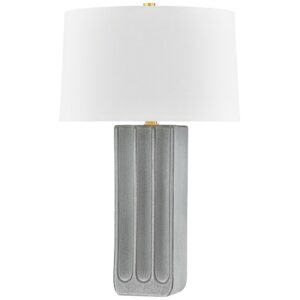
The primary position for a living room floor lamp is behind and to one side of the sofa — specifically at the corner end where the sofa meets the room edge. This position places the shade at approximately the right height for ambient light that washes across the seating area, and places the sculptural base at eye level from the opposite sofa position. It is also the position that makes the floor lamp most visible as a designed object rather than a functional fitting. The Aged Brass Ceramic Granite Table Lamp ($239-$359) in aged brass granite creates the warm secondary light that balances the floor lamp position from the end table on the opposite side.
A reading corner — an armchair with a small side table — is the second most effective position for a sculptural floor lamp. The floor lamp positions the light precisely over the reading surface, and the sculptural base creates the artistic focal point that a corner without a floor lamp entirely lacks. The armchair corner is often the most visible part of a living room from the entry; a sculptural floor lamp there creates the first design impression of the room. The Adorno Natural and Beige Table Lamp ($239-$359) on the side table beside the reading armchair completes the corner composition at surface level.
Browse our table lamps collection for artisan sculptural table lamps that layer with floor lamps. See our
Frequently Asked Questions
What is a sculptural floor lamp?
A sculptural floor lamp is a standing floor lamp whose base is designed as a sculptural object — an artistic form that is worth looking at independently of its function as a light source. The defining quality is the base: in a sculptural floor lamp, the base is the primary design statement, and the shade completes it. Materials include marble, brass, bronze, resin, concrete, and wood. Forms range from architectural columns to organic nature-inspired shapes to abstract geometric compositions.
Where should a floor lamp be placed in a living room?
The primary position is behind and to one side of the sofa, at the corner where the sofa meets the room edge. This places the shade at the right ambient height and makes the sculptural base visible from the opposite seating position. The secondary position is beside a reading armchair, where the floor lamp provides task lighting and anchors the corner composition. Avoid placing floor lamps behind furniture — the sculptural base should be visible.
How tall should a floor lamp be?
For a seated sofa position: the shade bottom should be at 55 to 65 inches from the floor, creating light at shoulder height for seated occupants. For a reading position beside an armchair: the shade bottom should be at 47 to 55 inches — slightly lower to direct light onto the reading surface. Total lamp height (base to shade top) typically ranges from 58 to 72 inches; choose based on your ceiling height and the furniture you are positioning it beside.
How do you coordinate a floor lamp with a table lamp?
Match the hardware finish across both lamps. If the floor lamp has a brass column, the table lamp should have brass hardware. If the floor lamp base is matte black, use a matte black or gunmetal table lamp. The shade material should be consistent: cream fabric shades on both, or white drum shades on both. Scale difference is correct and expected — the floor lamp should be taller; the table lamp should be proportioned to the surface it sits on. Different heights are part of the layered lighting composition.