

How to Style Different Sculpture Styles at Home Without Design Conflict
Learning how to style different sculpture styles at home is the difference between a room that looks curated and a room that looks collected. Most people who are serious about art accumulate pieces from different traditions over time — a classical bust from one trip, an abstract form from another collection, a deco figurine inherited from a relative. The challenge is making these different sculptural traditions coexist in a single room without creating visual confusion. The Adorno Natural and Beige Table Lamp ($239–$359) in warm natural beige is the lamp for this kind of eclectic composition: its warmth and restraint create material continuity across very different sculptural traditions.
This guide covers the practical rules for mixing sculpture styles successfully — what creates friction between styles, what creates harmony, and how to create a room that contains multiple artistic traditions while still reading as composed and intentional. Browse our table lamps collection for the full range of lamp designs suited to eclectic and mixed-style interiors.
The Material Harmony Rule: Mix Styles, Match Materials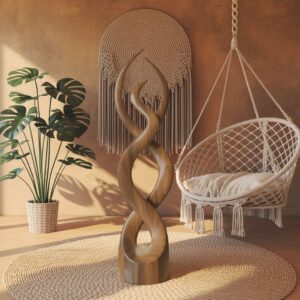
The most reliable rule for mixing different sculptural traditions in the same room is material continuity. Style differences are easy to reconcile when the materials are related; style differences become irreconcilable when the materials are also in conflict. A classical marble bust and a contemporary ceramic abstract form — very different styles — both read as coherent together when the surrounding room has a warm neutral palette, because both marble and ceramic belong to the same material family. A classical marble bust and a chrome art deco figurine in the same room creates material conflict that no amount of styling resolves. The Adobe Brown Chisel Ceramic Table Lamp ($269–$409) in earthy adobe brown creates this quality of warm material continuity: it belongs beside almost any sculpture from any tradition, because its earthy ceramic tone bridges sculptural materials that might otherwise conflict.
The color temperature rule is a corollary to the material rule: warm-toned sculptures (bronze, aged gold, warm marble, terracotta ceramic) belong together; cool-toned sculptures (chrome, brushed steel, pale white marble, pale grey ceramic) belong together. Mixing warm and cool tones in the same display creates visual tension that reads as accidental rather than intentional. Browse our floor lamp collection for lamp designs in warm earthy tones suited to rooms that mix traditional and contemporary sculpture traditions.
How to Style Different Sculpture Styles at Home: Display Strategy
The most effective strategy for a mixed-style sculpture room is to give each piece its own display territory — a dedicated surface or position where it reads on its own terms before being seen in relation to the others. A classical bust on the console, an abstract form on the bookshelf, a deco figurine on the mantelpiece: each occupies its own zone, and the room’s overall composition unites them through consistent material palette and lighting rather than through forcing them onto the same surface. The Aged Brass Ceramic Granite Table Lamp ($239–$359) in warm aged brass and granite ceramic creates the warm-zone lamp for the primary console position in this kind of distributed display strategy.
The scale calibration rule: when mixing sculpture styles from different traditions, keep the pieces at similar scales within each display position. A very large baroque figurine and a very small abstract form on the same surface creates a scale conflict that reads as disorganized. Either match them in size or give the size-contrast piece its own dedicated position where scale contrast is the deliberate design decision. The Aged Brass Ceramic Meadow Ombre Table Lamp ($289–$439) in warm ombre ceramic belongs at the lamp end of the primary console, creating the visual anchor that makes a mixed-style color temperature sculpture composition read as composed rather than accumulated.
For the complete guide to all sculpture display strategy styles — Greek classical, baroque, abstract, MCM, contemporary, art deco — and the design traditions each belongs to, see our sculpture styles guide.
Frequently Asked Questions
Can you mix different sculpture styles in the same room?
Yes, with the right strategy. The key rule is material harmony: mix styles freely when the materials are related (marble + ceramic, bronze + warm brass), and avoid mixing warm and cool material tones (bronze + chrome). Give each piece its own display territory — console, bookshelf, mantelpiece — rather than forcing different styles onto the same surface. Consistent lighting across all positions unifies different sculptural traditions into a coherent room.
What is the material harmony rule for mixing sculpture styles?
Style differences between sculptures are reconcilable when materials share a temperature — warm or cool. A classical marble bust and a contemporary ceramic abstract form read as coherent together because both belong to the warm material family. A classical marble bust and a chrome art deco figurine create unresolvable material conflict. When in doubt, keep all sculptures in a room within one material temperature: all warm (bronze, marble, ceramic) or all cool (chrome, steel, pale stone).
How do you display sculptures from different artistic periods?
Give each piece its own display zone — a dedicated surface or shelf position where it reads on its own terms before being seen in relation to the others. A classical piece on the console, an abstract on the bookshelf, a deco piece on the mantelpiece. Unify through consistent material palette and warm lamp lighting throughout, not by forcing different traditions onto the same surface. Keep scale consistent within each display position.