

How to Choose a Sculpture for Your Living Room: Style, Scale, and Material
Knowing how to choose a sculpture for your living room is the most useful practical design skill a homeowner can develop. The living room is where sculptural art has the most visual impact — it is the room seen most often, by the most people, from the most varied viewing positions. Getting the choice right transforms the room from furnished to designed. The Bronze Accent Table Lamp ($239–$359) in warm bronze accent demonstrates one correct choice at lamp scale: the material warmth, the scale relative to the surface, and the formal tradition all work together to communicate that someone made a considered decision here.
This guide covers how to choose a sculpture for your living room across the main decision variables — style matching, scale, material, subject, and placement — with practical guidance at each stage. Browse our table lamp collection for the sculptural lamp collection that represents these choices at functional art scale.
How to Choose a Sculpture for Your Living Room: Scale First
The most important rule in how to choose a sculpture for your living room is scale before anything else. The living room sculpture scale guide starts with the primary viewing distance: identify where you sit most often in the room and measure the distance to the proposed display surface. At 8 to 12 feet (typical from sofa to console), a piece 14 to 20 inches in its primary dimension reads correctly substantial. At 4 to 8 feet (typical from chair to side table), 8 to 14 inches reads correctly. Too small at either distance reads as accidental rather than intentional.
The surface scale rule: the sculpture should occupy approximately 20 to 30% of the surface width when viewed from the front. On a 48-inch console, a 10 to 14-inch sculpture is proportionally correct. A piece smaller than 20% of the surface width gets visually lost; a piece larger than 40% overwhelms the surface. The Possini Euro Zeus Gold Leaf Modern Table Lamp ($319–$479) in warm gold leaf zeus at the end of the console creates the counterweight composition that makes the sculpture beside it read correctly at any scale.
Sculpture Style Matching for Living Room Decor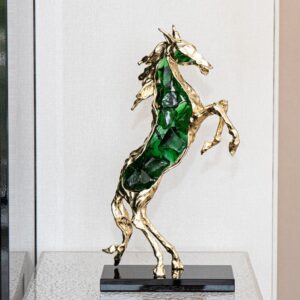
Sculpture style matching for living room decor follows the room’s existing design tradition. Traditional and formal rooms suit classical figurative sculpture in bronze, marble, or composite marble. Transitional rooms suit both classical-tradition figurative work and contemporary organic abstract pieces. Contemporary rooms suit abstract geometric or organic abstract sculpture in ceramic, metal, or resin. Farmhouse and organic modern rooms suit carved wood, earthenware, and cast stone. The piece’s formal tradition should create resonance rather than friction with the room’s existing design language.
Contemporary living room sculpture ideas for rooms that are transitional but aspiring toward contemporary: choose abstract organic forms in warm ceramic rather than rigid geometric metal. The organic form creates the abstract quality of contemporary work while the warm ceramic maintains the material temperature that the transitional room already has. The Aged Brass Ceramic Meadow Ombre Table Lamp ($289–$439) in warm meadow ombre ceramic is the lamp for this room — its organic ombre surface participates in the same material vocabulary as warm abstract ceramic sculpture.
Abstract vs Figurative for Living Room and Choosing Material
The decision on how to choose a sculpture for your living room between abstract vs figurative for living room use comes down to how much time you spend in the room and how you want to interact with the art. Abstract sculpture rewards sustained attention — it gives more the longer you look. Figurative sculpture communicates its content immediately but tends to give less with sustained looking. If you spend most evenings in your living room, abstract sculpture rewards the time investment more. If the living room is primarily for visitors and short-term use, figurative sculpture communicates more immediately to people who encounter it for the first time.sculptural table lamps
Choosing sculpture color and material for a living room requires matching the piece’s material temperature to the room’s dominant palette. Warm-palette rooms (aged brass, warm wood, warm ceramic, linen) suit bronze, warm ceramic, and terracotta sculpture. Cool-palette rooms (pale marble, chrome, grey linen, white lacquer) suit pale stone, stainless steel, and cool-toned ceramic. Mixing material temperatures creates the most common living room sculpture mistake. The Adeline Five Gold Flowers Bloom Metal Table Lamp ($269–$409) in gold-petal adeline belongs in a warm-palette room — the warm metal and upward energy suit a room organized around warm material richness.
Living Room Art Focal Point and Sofa Matching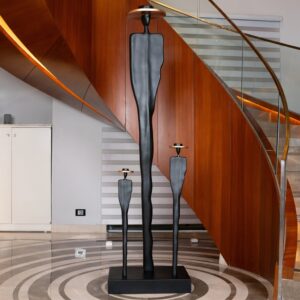
A living room art focal point sculpture earns its position by terminating the room’s primary sightline from the main sofa or seating group. Matching sculpture to sofa style is about material and formal register, not literal subject matching. A warm leather sofa suits warm-material sculpture (bronze, terracotta, warm wood). A contemporary linen sofa suits organic ceramic or abstract metal sculpture. A formal velvet sofa suits classical marble or fine bronze. The material temperature and formal register of the sofa’s design tradition should match the sculpture’s.
The complete how to choose a sculpture for your living room decision hierarchy: sightline terminus position → scale for that viewing distance → material temperature of the room → formal tradition that suits the design language → subject within that tradition. Address each decision in order and the final choice is almost always clear. Browse our floor lamp collection for the floor lamp collection that creates the viewing light for any primary living room sculpture.
How to choose a sculpture for your living room resolves to five sequential decisions: position, scale, material temperature, tradition, and subject. Make them in that order and the choice is always right. Skip to the subject before resolving the position and scale, and the choice is always at risk. Browse our full lamp collection for the lamp collection that completes the room.
Frequently Asked Questions
What size sculpture works best in a living room?
At the primary sofa-to-console viewing distance of 8 to 12 feet, a piece 14 to 20 inches in its primary dimension reads correctly substantial. The sculpture should occupy 20 to 30% of the surface width when viewed from the front — on a 48-inch console, 10 to 14 inches is proportionally correct. Always scale to the primary viewing distance, not to the surface, and always err larger rather than smaller. A slightly too-large piece reads as confident; a slightly too-small piece reads as accidental.
Should I choose abstract or figurative sculpture for my living room?
Abstract sculpture rewards sustained attention — it gives more with longer looking. Choose abstract if you spend significant time in the living room and want art that develops over time. Figurative sculpture communicates immediately and tends to give less with sustained looking. Choose figurative for rooms used primarily for visitors and short-term social interaction, where immediate communication matters more. The most sophisticated collections have one of each at different positions in the room.
How do I match sculpture style to my living room furniture?
Match material temperature: warm leather furniture suits bronze and warm ceramic sculpture; contemporary linen suits organic ceramic or abstract metal; formal velvet suits classical marble or fine bronze. Match formal register: the sculpture’s design tradition should create resonance with the furniture’s design tradition rather than friction. A Rodin-tradition bronze beside traditional furniture creates resonance. The same bronze beside contemporary minimalist furniture creates productive friction if that is the intended effect.