

Knowing how to choose a table lamp is one of those skills that transforms a room from “almost finished” to completely pulled together. A table lamp does far more than provide light — it defines the scale of a surface, introduces material texture, and often serves as the most visible decorative object in a room. Get it wrong and the whole space can feel off. Get it right, and a single lamp can anchor an entire design. At Exotic Decor USA, our table lamps collection spans 689+ artisan-crafted styles — and this guide gives you the framework to choose confidently from any of them.
There are five key decisions involved in choosing a table lamp: style, size, material, shade, and placement. Work through each one in order and you will arrive at a lamp that works perfectly for your space, your room’s aesthetic, and your practical needs.
Step 1: Match the Lamp Style to Your Room’s Aesthetic
The table lamp base is the most design-expressive component of the fixture — it communicates the style of your room before the switch is even turned on. The starting point for any lamp selection is your room’s dominant interior aesthetic. Here is how the major lamp styles map to the most common room themes:
Traditional and Transitional Rooms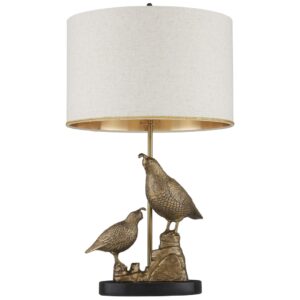
Traditional rooms suit ceramic table lamps, brass table lamps, tiffany table lamps, and traditional table lamps in classic column or urn forms. Transitional rooms — the broad middle ground between traditional and contemporary — work beautifully with aged brass, warm ceramic, and bronze table lamps. The Aged Brass and Ceramic Affogato Table Lamp ($289–$439) is a standout for transitional spaces — its ceramic body and aged brass hardware bridge old and new effortlessly.
Contemporary and Modern Rooms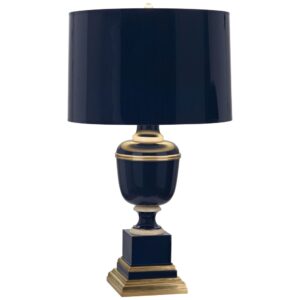
Contemporary rooms demand clean lines and material restraint. A modern black table lamp in matte gunmetal or aged black suits industrial, Scandinavian, and urban-loft aesthetics. Gold table lamps and black and gold table lamps work in maximalist-contemporary and Hollywood Regency rooms. The Aged Gunmetal Fluted Table Lamp ($299–$449) and the Aarna Black Table Lamp ($269–$409) are both strong contemporary choices with architectural silhouettes that work equally well beside a minimalist sofa or a statement bed.
Bohemian, Coastal, and Rustic Rooms
Organic, natural, and artisan aesthetics call for rattan table lamps, wicker table lamps, rustic table lamps, terracotta table lamps, and coastal table lamps with natural rope and driftwood elements. Wooden table lamps and wood base table lamps suit Japandi and biophilic rooms. For the coastal niche, nautical table lamps with rope wrapping and sea-glass tones create an immediate beach-house atmosphere. The Adorno Natural and Beige Table Lamp ($239–$359) captures the organic aesthetic beautifully — natural texture, quiet palette, artisan character.
Step 2: Get the Size and Height Right
Scale is the most common mistake in table lamp selection. A lamp that is too small looks lost and provides inadequate light; a lamp that is too tall overwhelms the surface it sits on. The golden rule: the bottom of the lamp shade should sit at approximately eye level from a seated position. Here is what that means by room type:
Bedside Table Lamps
For a bedroom nightstand, aim for a total lamp height of 24–28 inches (base plus shade). This places the shade bottom at roughly eye level when you are sitting up in bed — ideal for reading and for the warm ambient glow that makes a bedroom feel like a retreat. A mini table lamp works well on very compact nightstands where a full-size lamp would dominate the surface.
Living Room and Console Table Lamps
For end tables beside a sofa or armchair, the shade bottom should sit at 58–64 inches from the floor, which typically means a lamp of 28–34 inches total height when placed on a standard 26–30 inch side table. Console table lamps in the hallway or entryway furniture tend to run taller — 30–36 inches — since they are viewed standing and from a distance. For added visual drama, table lamps tall in the 34–40 inch range work well on low sideboards and buffet table lamps flanking a dining room console. The Aged Brass Metal Modern Accent Table Lamp ($339–$509) is built precisely for this placement — tall, architectural, and commanding.
Oversized Table Lamps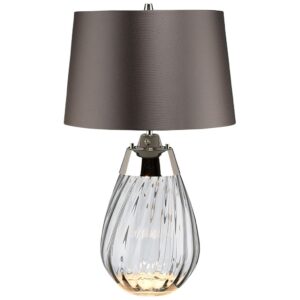
Oversized table lamps — those exceeding 34 inches in total height — are a deliberate design statement. They work on large sideboards, in corners with no other furniture, or as anchor pieces in open-plan living areas. Use them intentionally: one oversized lamp as a focal point, balanced with smaller fixtures elsewhere in the room.
Step 3: Choose the Right Material for Your Space
The material of the table lamp base introduces a specific tactile and visual quality to the room. Think of it as a material statement — what does the room need more of?
| MATERIAL | BEST FOR / ROOM STYLES |
| Ceramic / Terracotta | Earthy, artisan, warm — suit traditional, bohemian, coastal, and transitional rooms. The most material-versatile choice. |
| Brass / Bronze / Copper | Formal and warm — suit traditional, glam, and transitional rooms. Aged finishes are more casual; polished finishes are more formal. |
| Crystal / Glass / Mercury Glass | Glamorous and light-refracting — suit Hollywood Regency, maximalist, and quiet luxury rooms. Antique crystal table lamps are particularly sought-after. |
| Marble / Travertine / Stone | Luxurious and weighty — suit contemporary luxury, minimalist, and quiet luxury rooms. Each piece is unique due to natural stone variation. |
| Wood / Rattan / Wicker | Warm and organic — suit Japandi, Scandi, farmhouse, and biophilic rooms. A wood table lamp brings natural calm to any surface. |
| Metal (Black / Gunmetal / Silver) | Sleek and architectural — suits industrial, contemporary, and minimalist rooms. A black metal table lamp anchors a room with quiet authority. |
| Concrete / Stone / Alabaster | Raw and considered — suit brutalist, wabi-sabi, and modern industrial rooms. Alabaster and travertine table lamps add a warm, translucent quality. |
A useful shortcut: choose a base material that is already present somewhere else in the room — whether in the hardware of the furniture, the texture of a rug, or the finish of a mirror. This creates quite cohesion without matching everything exactly.
Step 4: Choose the Right Shade for Your Light Needs
The shade controls both the quality of light and the lamp’s visual weight. Key decisions:
- Shade colour: White and cream shades produce the brightest, cleanest light and work in almost any room. A green table lamp shade casts a warm, verdant glow ideal for library and study settings. A light blue lamp shade creates a calm, cool atmosphere for bedrooms.
- Shade shape: Drum shades spread light evenly in all directions; empire shades direct light downward for reading; bell shades produce a warm pool of light at the surface level.
- Shade material: Fabric shades soften and diffuse light; a stained glass table lamp shade projects colour; a paper table lamp shade creates a Japanese-style diffused glow.
- Shade size: The shade diameter should be roughly equal to twice the height of the base. Too narrow and the base looks heavy; too wide and the shade overwhelms.
Step 5: Consider Placement and Practical Needs
Before finalizing your choice, run through these practical considerations:
- Power access: Standard plug-in table lamps need a nearby outlet. If your outlet is far from the intended placement, consider cordless table lamps for living room use — rechargeable LED models eliminate the cord entirely.
- USB charging: A table lamp with a USB port is a smart choice for bedside and home office placement, charging devices without needing an extra outlet.
- Dimmability: Choose a lamp with a dimmer-compatible socket if you want adjustable ambiance — particularly important for bedroom and living room lamps.
- Bulb type: US table lamps use an E26 medium-base socket at 120V. We recommend warm-white LED bulbs rated 2700K–3000K for a cozy, golden glow. Target 800 lumens for bedside reading, 1100+ lumens for a living room or desk lamp.
- Floor and table lamp sets: If you need to light a full room, consider purchasing matching floor and table lamp sets — a coordinated approach that ensures visual continuity across different lamp heights.
Table Lamp Buying Checklist
Use this before you buy:
| CHECK | WHAT TO CONFIRM |
| Style match | Does the base material and silhouette suit the room’s dominant aesthetic? |
| Size and height | Will the shade bottom sit at eye level from the seated position? |
| Material choice | Does the base material echo or complement materials already in the room? |
| Shade suitability | Does the shade shape and colour suit your light need — reading, ambient, or accent? |
| Power source | Is there an accessible outlet, or do you need a cordless or USB-equipped model? |
| Bulb compatibility | Does the socket accept your preferred E26 LED bulb at the right wattage? |
| Scale with furniture | Is the lamp proportional to the surface and the room — not too small, not overwhelming? |
Browse the full table lamps collection at Exotic Decor USA — 689+ artisan styles across every material, finish, and price point from $239 to $509. All orders ship free across the United States via DHL, FedEx, or UPS with 1–2 business days processing. For standing alternatives, our floor lamps and wall lamps collections apply the same curatorial standard to different formats. Need help deciding? Email info@exoticdecor.us Monday–Saturday, 10:00 AM–8:00 PM.
Frequently Asked Questions About Choosing Table Lamps
What size table lamp do I need for a bedside nightstand?
For a standard bedside nightstand, choose a table lamp with a total height (base plus shade) of 24–28 inches. This places the bottom of the shade at roughly eye level when you are sitting up in bed — ideal for reading without glare. If your nightstand is unusually low (under 20 inches), scale down to a 22–24 inch lamp. If it is taller than 30 inches, a lamp up to 30 inches total height still works well. When in doubt, err toward a taller lamp rather than a shorter one — it will cast more useful light.
How do I choose between a ceramic, brass, and wood table lamp?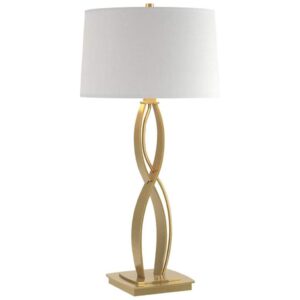
Choose based on what material the room needs more of. A ceramic table lamp suits traditional, transitional, bohemian, and coastal rooms — it is the most versatile option. A brass table lamp suits formal traditional, glamour, and Old-World interiors, particularly when paired with warm textile tones. A wood table lamp suits Japandi, Scandi, organic modern, and farmhouse rooms where natural materials are the design language. If you are unsure, choose a material already present somewhere in the room — in the furniture hardware, a mirror frame, or a rug pattern — and echo it in the lamp.
Should a table lamp match on both sides of a bed or sofa?
It depends on your design intent. Matching lamps on either side of a bed or sofa create symmetry and a sense of order — a classic approach in traditional and transitional interiors. Mismatched lamps in complementary styles — for example, a brass lamp on one side and a ceramic lamp of a similar height on the other — are increasingly popular in eclectic and modern bohemian rooms. The key is that the lamps share at least one attribute: the same height, the same shade colour, or the same material family. Completely random mismatching creates visual noise rather than intentional design.
Can I use a table lamp outdoors?
Standard indoor table lamps are not rated for outdoor use. For covered patios, screened porches, or outdoor dining tables, you need a fixture with an IP (Ingress Protection) outdoor or damp-location rating. Cordless table lamps with rechargeable LED batteries are a popular solution for outdoor tables — they require no power outlet and are typically weather-resistant in covered outdoor conditions. Never use an indoor-rated lamp in a rain-exposed location, regardless of how short the exposure.
What is the best type of bulb for a table lamp?
For most table lamps, a warm-white LED bulb rated between 2700K and 3000K is the best choice — this colour temperature closely mimics the golden warmth of incandescent light while running at a fraction of the energy cost. Aim for 800 lumens for bedside reading, or 1100 lumens or more for a living room or desk lamp. US table lamps use a standard E26 medium-base socket at 120V. Always check the lamp’s maximum wattage rating before selecting a bulb — most fixtures are rated for a maximum of 40W to 150W, depending on the socket type.