

How to Layer Lighting in a Room: Table Lamps and the Three-Layer Method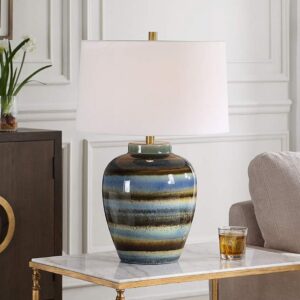
The most transformative lighting upgrade you can make to any room costs nothing except the correct lamp placement: layering. Layered lighting means creating at least three distinct light sources at three different heights fulfilling three different functions — ambient, task, and accent. Most American rooms are lit exclusively with overhead recessed lights or a single ceiling fixture, creating a flat, shadowless quality interior designers call the hospital effect. Table lamps fix this: they create the mid-level ambient layer that makes a room feel like a home. The Zeus Gold Leaf Table Lamp ($319) in warm gold leaf Zeus creates the primary mid-level statement for a living room — the tall base and warm shade create the quality recessed lights alone cannot achieve.
This guide explains how to layer lighting in a room using table lamps, floor lamps, and ceiling fixtures as a complete system. Browse our lamp collection for the lamp collection.
The Three Lighting Layers
Ambient (the base level of illumination making the room functional — ceiling fixtures, recessed lights, or a prominent floor lamp), task (directed illumination for a specific activity — reading, cooking, working at a desk), and accent (the decorative and mood-setting layer — a lamp with a beautiful shade, a picture light, a shelf LED strip). Table lamps serve primarily as ambient and accent light. When you have three or more table lamps in a room at different positions, all at roughly the same brightness, you have achieved the layered lighting effect. The Meadow Ombre Table Lamp ($289) in warm meadow ceramic is the ambient layer lamp — warm, present, and resolved without drawing attention to itself.
Bedroom Lighting Layers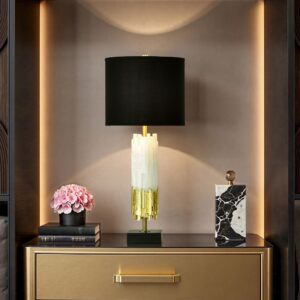
The bedroom is where layered lighting matters most — it has to serve multiple light needs in the same space. The layers: an overhead ceiling fixture or recessed lights (ambient layer), bedside table lamps (task layer for reading, ambient layer for relaxation), and accent sources (a shelf light, a vanity light, a floor lamp in the reading corner). The mistake most bedrooms make is relying on the overhead fixture alone — the result is flat, unmodulated, and inadequate for any task that is not simply seeing where you are walking. The Pale Blue Ceramic Table Lamp ($319) in warm pale blue ceramic creates the bedside ambient layer — restful color temperature and correct nightstand scale.
Controlling Layered Lighting
Layered lighting works best when each layer is independently controllable — overhead lights on a wall switch with a dimmer, table lamps into smart plugs or individual lamp dimmers. The most effective layered rooms can be set to three configurations: full ambient (all layers on), relaxed ambient (overhead off, table lamps and floor lamps only), and night mode (a single low-brightness lamp). The Adobe Brown Chisel Ceramic Lamp ($269) in warm adobe ceramic is the all-day lamp — warm enough for night mode, present enough for relaxed ambient. Browse the
Browse the full lamp collection for the complete collection of table and floor lamps designed for layered use.
Frequently Asked Questions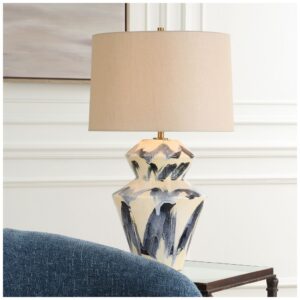
What are the three layers of lighting?
The three lighting layers: ambient (the base level for general room function — ceiling fixtures, recessed lights, floor lamps), task (directed illumination for a specific activity — reading lamps, desk lamps, vanity lights), and accent (decorative and mood-setting — a beautiful table lamp shade, a picture light, a shelf LED strip). Most rooms only have ambient. Adding task and accent layers creates the depth and warmth that makes a room feel designed rather than merely lit.
How many table lamps do I need for layered lighting?
Two to four table lamps at different positions in a room creates effective layered lighting. One per sofa end table, one on a console or side table, and one in a corner or on a bookshelf. When all are lit simultaneously, they create an even, multi-directional ambient field. The goal is three or more light sources at different positions and heights — no single source dominates.
What is the hospital effect in home lighting?
The hospital effect describes the flat, shadowless illumination created by a room lit exclusively from overhead. Without mid-level and low-level light sources, the room has no depth, no warm shadows, and no visual interest in the vertical plane. It is perfectly functional but feels institutional rather than domestic. Table lamps and floor lamps at 24 to 36 inches from the floor create exactly the quality that makes a room feel inhabited.