

Modern Sculpture Art Movements for Home Collectors: From Expressionism to Minimalism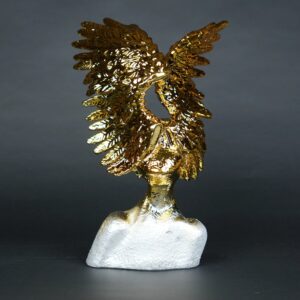
Understanding modern sculpture art movements for home collectors is understanding the vocabulary of every contemporary art object you will encounter — from the organic ceramic on a design store shelf to the welded steel sculpture in a gallery to the abstract lamp base in a luxury hotel lobby. The 20th century produced more distinct formal vocabularies for three-dimensional art than any previous era. Knowing which movement a piece belongs to tells you immediately what formal problems it is solving and which rooms and material contexts it suits. The Aarna Black Table Lamp ($269–$409) in matte black aarna is the lamp for the contemporary movement tradition — minimal form, maximal presence.
This guide covers the main modern sculpture art movements for home collectors — constructivism, surrealism, abstract expressionism, minimalism, and mid-century modern — explaining what each movement valued formally and how those values translate into home decoration choices. Browse our table lamp collection for lamp designs whose formal vocabulary connects to these movements.
Modern Sculpture Art Movements for Home Collectors: Constructivism
Modern sculpture art movements for home collectors begin with constructivism (Russia, 1915–1930) — the first movement to declare that sculpture should be made of industrial materials using industrial processes, and that its subject should be space and structure rather than the human figure. Naum Gabo’s transparent plastic constructions, Tatlin’s proposed Monument to the Third International — these works established the principle that sculpture could be about the organization of space rather than the representation of objects.
Constructivist sculpture ideas for home decoration have their most accessible expression in geometric metal wall sculpture — the industrial material, the construction-visible structure, the space-organizing composition. Any laser-cut steel wall panel or welded geometric sculptural form descends, however distantly, from this tradition. The Aged Gunmetal Fluted Table Lamp ($299–$449) in aged gunmetal with its architectural fluted column belongs beside constructivist-tradition metal sculpture: both are about structure and material, made visible.
Surrealist Sculpture and Abstract Expressionism for Home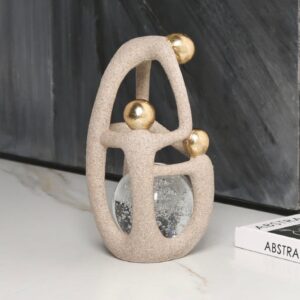
Surrealist sculpture for home decoration uses unexpected material combinations and irrational spatial relationships to create psychological unease, humor, or revelation. Meret Oppenheim’s fur-covered teacup, Salvador Dalí’s melting clock sculptures, Alberto Giacometti’s early surrealist objects — these works operate in domestic spaces particularly powerfully because the domestic space is where surrealism’s disruption of ordinary expectation is most noticed. A surrealist-tradition object in a home makes the familiar feel strange in a way that feels enriching rather than threatening.
Abstract expressionist sculpture differs from abstract expressionist painting in one significant way: the three-dimensional nature of sculpture allows the work to occupy space physically rather than representing space pictorially. David Smith’s welded steel constructions, John Chamberlain’s crushed car-body sculptures — these works create emotional intensity through material scale and physical presence that painting can only approximate. The Aged Brass Metal Modern Accent Table Lamp ($339–$509) in slim modern accent brass creates the contemporary lamp for a room where abstract expressionist tradition sculpture is the primary art statement.
Minimalist Sculpture Movement and Mid-Century Modern
Modern sculpture art movements for home collectors reach their most accessible residential application in minimalism and mid-century modern. The minimalist sculpture movement (1960s, primarily New York) — Donald Judd, Carl Andre, Dan Flavin — declared that sculpture should be nothing more than what it literally is: industrial materials, industrially produced, arranged in simple geometric progressions. No representation, no expression, no illusion. The beauty of minimalist sculpture for home collectors is its self-evidence: a perfect aluminum cube or a stack of identical steel plates in the right room requires no explanation.sculptural table lamps
Mid century modern sculpture movement produced the most domestically accessible abstract sculpture tradition in art history — organic forms, natural materials, human scale, domestic intent. Alexander Calder’s mobiles, Noguchi’s stone sculptures, Bertoia’s wire forms were all designed to live in houses with people, not in galleries awaiting observation. 20th century sculpture styles most visible in contemporary home decoration are predominantly mid-century modern tradition. The Aged Black Table Lamp ($269–$409) in dark aged black creates the minimal domestic companion for MCM organic sculpture: dark, quiet, completely resolved.
Art Movements Home Decor Guide: Choosing Your Tradition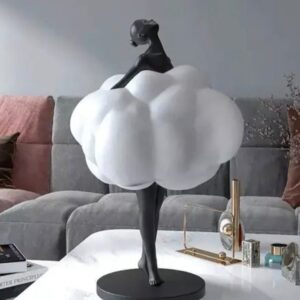
Art movements home decor guide for collectors selecting sculpture: match the movement to the room’s existing design tradition. A constructivist metal wall piece suits an industrial or contemporary room. A surrealist object suits an eclectic room that already contains unexpected material juxtapositions. A minimalist sculpture suits a Japandi or contemporary room where restraint is the organizing principle. A mid-century modern organic form suits the widest range of rooms because MCM’s domestic intent was always residential.
The most sophisticated collectors choose across movements deliberately, creating a room whose sculptural collection represents multiple formal conversations rather than a single tradition. The lamp in such a room must itself be formally resolved enough to participate rather than simply function. Browse our floor lamp collection for the floor and table lamp designs suited to collector’s rooms in every modernist tradition.
Modern sculpture art movements for home collectors provide a complete map of formal possibilities — from the constructivist principle that sculpture should be about structure, to the minimalist principle that sculpture should be nothing more than what it is, to the mid-century principle that sculpture should live with you. Each is right in the context it was created for. Browse our full lamp collection for the complete lamp collection.
Frequently Asked Questions
What are the main modern sculpture art movements?
The main modern sculpture art movements relevant to home collectors are: constructivism (1915–1930 Russia — industrial materials, structure over representation), surrealism (1920s–1940s — irrational juxtapositions, psychological disruption), abstract expressionism (1940s–1950s — emotional intensity through material scale and physical presence), minimalism (1960s — nothing more than what the object literally is), and mid-century modern (1940s–1970s — organic forms, natural materials, domestic intent). Each has a specific room context where it reads most powerfully.
What modern sculpture suits a minimalist home?
The minimalist sculpture movement produced the most appropriate art for minimalist homes. Donald Judd’s stacked identical units, Carl Andre’s metal floor plates, and their contemporaries established forms that communicate maximum effect with minimum means. For home collectors at accessible price points, any single-material, single-color form in resolved geometric proportions participates in this tradition. The critical display principle: even more generous negative space than usual, a completely clear surface except for the one piece, and a receding lamp that does not compete.
What is the difference between constructivist and minimalist sculpture?
Constructivism (early 20th century) used industrial materials to represent ideal spatial and social structures — it believed sculpture could model a better world. Minimalism (1960s) removed any representational or symbolic content entirely, reducing sculpture to its literal material and dimensional properties. Constructivist work tends to be more dynamic and spatially complex. Minimalist work tends to be simpler in geometry but more intellectually radical in its refusal of any content beyond the object’s literal existence.