

Sconce Lamp Shades: Types, Styles, and How to Choose
Sconce lamp shades are the single most impactful upgrade you can make to a wall light — and the single most overlooked. A bare bulb or a factory-fitted shade that does not suit the sconce’s base can undermine even the most beautifully designed fixture. The right sconce lamp shade controls the quality of light, defines the visual weight of the fixture on the wall, and communicates the room’s design aesthetic at eye level, where the shade is impossible to ignore. At Exotic Decor USA, understanding shade selection applies equally to our table lamps collection and our wall lamps collection — the same principles govern both, and this guide gives you the complete framework.
What Is a Sconce Lamp Shade?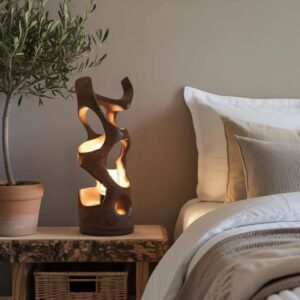
A sconce lamp shade is the shade component of a wall-mounted light fixture — the material element that surrounds the bulb on a wall sconce. Unlike table lamp shades, which sit on a harp or fitter attached to the socket of a freestanding base, sconce lamp shades are often designed specifically for the wall-mount format and use different fitter types. The most common configurations are:
- Clip-on shades: Attach directly to the bulb, requiring no harp or separate fitter hardware. Most common on smaller sconces and bathroom vanity lights.
- Candelabra-base shades: Designed for E12 candelabra sockets, typically smaller than E26 table lamp sockets. These are the most common on traditional and formal wall sconces.
- Spider fitter shades: Use the same harp-and-saddle system as most table lamp shades — compatible with sconces that have a harp fitting.
- Drum or cylinder shades on a ring fitter: Many modern wall sconces use a ring fitter (without a harp) that supports a drum shade directly around the socket.
Before purchasing any replacement sconce lamp shade, identify your sconce’s fitter type. A mismatched fitter means the shade will not attach securely, regardless of whether the measurements are correct.
The 8 Major Sconce Lamp Shade Types
- EMPIRE SCONCE SHADE
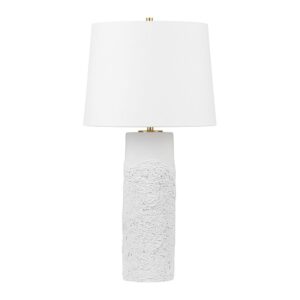
The empire shape tapers from a smaller top diameter to a significantly wider bottom. It directs light downward and slightly outward, making it the most functional shade for reading sconces, bedside wall lights, and hallway fixtures. Empire shades suit traditional and transitional sconces with formal metal bases in brass, bronze, or antique nickel.
BEST FOR: Traditional hallways, bedroom bedside sconces, formal living room wall lights, brass and bronze sconce bases
Empire shades on brass table lamps and traditional table lamps use exactly the same proportional rules as empire shades on sconces — the shade tapers to produce directional, focused light. The same selection logic applies in both contexts: wider bottom for more light spread, narrower for more focused output.
- DRUM SCONCE SHADE
Drum shades have equal or near-equal top and bottom diameters, producing a cylindrical form. They spread light evenly in all directions from the shade opening — both up and down — creating a softer, more diffused ambient effect than empire shades. Drum shades suit contemporary, minimalist, and Scandinavian wall sconces.
BEST FOR: Contemporary living rooms, modern bedrooms, minimalist hallways, Scandi and Japandi interiors
- BELL SCONCE SHADE
Bell shades curve outward from a narrow top to a wider bottom, then curve back inward at the lower rim — producing the soft, rounded silhouette that characterizes traditional and country-house aesthetics. They suit sconces with rustic, farmhouse, or vintage bases and produce a warm, broadly diffused light.
BEST FOR: Farmhouse rooms, cottage-core and country-house interiors, rustic and traditional bedrooms
- HALF-SHADE (BACK-PLATE) SCONCE SHADE
Half shades are designed specifically for wall mounting — they are a full shade shape cut in half or backed with a flat plate that sits flush against the wall. This format eliminates the gap between the shade and the wall that a full round shade would create in a wall-mounted application. Half shades are the correct format for close-to-wall sconces where a full drum or empire shade would project too far into the room.
BEST FOR: Close-to-wall bathroom vanity sconces, hallway lights with minimal projection, hotel-style bedroom sconces
- CAGE AND OPEN METAL SHADE
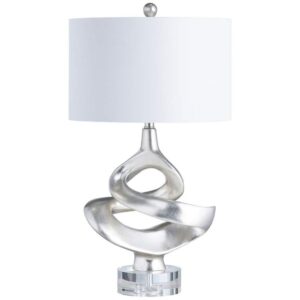
Cage shades are open metal frameworks — typically in black, gunmetal, or brass — that hold the bulb exposed within a geometric structure. They produce hard, directional light with visible shadow patterns from the cage metalwork. They suit industrial, urban-modern, and dark academic wall sconces with minimal or exposed hardware bases.
BEST FOR: Industrial loft rooms, urban contemporary spaces, dark academic interiors, masculine home offices
A cage shade on a modern black table lamp base communicates the same design language as a cage sconce shade on the wall — pairing both in the same room creates a cohesive industrial aesthetic without requiring any other design decisions to justify the choice. The Aged Gunmetal Fluted Table Lamp ($299–$449) is an effective companion to a cage sconce wall light in the same room.
- FABRIC DRUM WITH DIFFUSER
Many modern sconce shades combine a fabric drum exterior with an inner diffuser panel — typically frosted acrylic or white fabric — that spreads the bulb’s light evenly across the entire shade surface. This produces a glare-free, soft ambient output ideal for bedrooms and living rooms where the sconce is at or near eye level.
BEST FOR: Master bedrooms, guest rooms, reading nooks, living rooms where wall sconces are primary ambient light sources
- STAINED GLASS AND ART GLASS SCONCE SHADE
Stained glass sconce shades project coloured light across the surrounding wall — creating atmospheric, jewel-toned pools of colour that define the room. They suit traditional, eclectic, and maximalist wall sconce designs. The same principles governing table lamp stained glass shades apply: they are primarily atmospheric accent fixtures rather than task or reading lights.
BEST FOR: Traditional and eclectic rooms, libraries, studies, maximalist living rooms, decorative accent sconces
A stained glass table lamp and a stained glass sconce in the same room — particularly in tiffany table lamps and table tiffany style lamps — create a richly consistent art glass aesthetic. Our table lamps collection includes several Tiffany-style pieces that coordinate naturally with art glass wall sconces.
- LINEN AND NATURAL WEAVE SCONCE SHADE
Natural linen, jute, and loosely woven fabric sconce shades allow some light to diffuse through the weave itself, creating a warm, textured ambient glow rather than a hard directional output. They suit bohemian, coastal, organic modern, and Japandi interiors and pair naturally with rattan or wooden sconce bases.
BEST FOR: Bohemian bedrooms, coastal living rooms, organic modern interiors, Japandi and wabi-sabi rooms
A linen sconce shade pairs naturally with a rattan table lamp, a wooden table lamp, or a terracotta table lamp in the same room — the natural material language of the sconce shade and the table lamp base creates cohesion without requiring any other design decisions.
How to Choose the Right Sconce Lamp Shade
Step 1: Identify the Fitter Type
Before anything else, identify your sconce’s fitter type — clip-on, candelabra ring, spider-on-harp, or drum ring. Check the manufacturer’s documentation or the socket hardware directly. A clip-on shade attaches to the bulb; a candelabra ring shade attaches to a small threaded ring on the socket; a spider shade requires a harp and saddle; a ring-fitter drum shade attaches directly around the socket rim. Buying the wrong fitter type means returning the shade regardless of how well it suits the sconce aesthetically.
Step 2: Measure the Three Key Dimensions
Every sconce lamp shade requires three measurements — exactly as with table lamp shades: (1) top diameter — width across the top opening; (2) bottom diameter — width across the bottom opening; (3) slant height — measured along the sloping side from the top outer edge to the bottom outer edge. For half-shades and back-plate shades, also measure the depth (projection from the wall). The bottom diameter should not exceed the width of the sconce arm at the point where the shade attaches. For full details on shade measurement, read our table lamp shade measurement guide — the same methodology applies to sconce shades.
Step 3: Match the Shade Style to the Sconce Base and Room
The shade style must suit the sconce base’s design language. A cage shade does not suit a formal brass table lamp base — and it does not suit a formal brass sconce base either. An empire shade in cream linen does not suit an industrial cage sconce base. Apply the same style-matching principles you would use when pairing a shade with a ceramic table lamp — the material and silhouette of the shade must reinforce, not contradict, the base’s design language.
Step 4: Consider the Wall and Room Position
Sconces are typically at or near eye level — making the shade’s appearance and light direction more immediately visible than a table lamp on a surface. A shade that looks fine from above on a table lamp may feel intrusive or glaring at eye level on a wall sconce. In bedrooms where sconces are at seated eye level, use diffuser-backed fabric shades or empire shades that direct light downward, away from direct line-of-sight. In hallways and entryways, a half-shade or drum shade that directs light outward without projecting too far from the wall keeps the space open.
Table Lamp Shade vs Sconce Lamp Shade: Key Differences
| FACTOR | SCONCE SHADE | TABLE LAMP SHADE |
| Fitter types | Clip-on, candelabra ring, ring fitter, half-back plate | Spider on harp, uno, clip-on |
| Viewed from | Standing or seated eye level — always prominent | Surface level — viewed from above when seated |
| Most common shapes | Empire, half-shade, drum, cage | Drum, empire, bell, square |
| Light direction concern | Avoid directing light at eye level; prefer downward or diffused | Eye-level shade bottom is the key height rule |
| Projection from the wall | Half-shades limit projection; full shades project further | Not applicable — sits on a surface |
| Style visibility | High — at eye level on the wall, constantly visible | Medium — on a surface, viewed as part of a vignette |
For table lamps that coordinate naturally with your wall sconce scheme, browse our full table lamps collection — every artisan lamp in our range is chosen for its ability to function as part of a layered lighting scheme alongside wall sconces and floor lamps. Our dedicated wall lamps collection covers sconces across every finish and style category referenced in this guide. For personalized shade and sconce recommendations, email info@exoticdecor.us Monday–Saturday, 10:00 AM–8:00 PM.
Frequently Asked Questions About Sconce Lamp Shades
Are sconce lamp shades interchangeable with table lamp shades?
Not always — it depends on the fitter type. Some sconces use a standard spider fitter on a harp, which is compatible with most table lamp shades. Others use a clip-on fitter (attaches to the bulb), a candelabra ring fitter (for E12 sockets), or a drum ring fitter (a ring that attaches directly to the socket rim). Table lamp shades typically use spider fitters or uno fitters — both of which may or may not match a given sconce’s hardware. Always check the fitter type on your sconce before purchasing any replacement shade, whether designed for table lamps or wall sconces.
What size should a sconce lamp shade be?
For most residential wall sconces, the shade bottom diameter should be 4–8 inches wide, and the slant height should be 4–7 inches. Smaller sconces in bathrooms and hallways typically use a 4–5 inch shade; larger statement sconces in living rooms and bedrooms can accommodate shades up to 8–10 inches wide. The shade should not project further from the wall than the sconce arm extends — this prevents the shade from appearing to float in the room disconnected from its base. For close-to-wall sconces, use a half-shade that sits flush against the wall surface.
Can I use any table lamp shade on a wall sconce?
You can use a table lamp shade on a wall sconce only if the fitter types are compatible and the shade size is appropriate for the sconce’s arm length and socket position. Most table lamp shades are designed for a harp-and-spider fitter, which requires a harp fitted to the sconce socket. If your wall sconce has a harp, a compatible table lamp shade can often work well. If the sconce uses a candelabra socket (E12) or a clip-on attachment, standard table lamp shades in spider or uno fitter format will not fit.
How do I coordinate sconce lamp shades with table lamps in the same room?
Match at least one design attribute between the sconce shade and the table lamp shade: the same fabric type (both linen, both cotton), the same shade colour (both white, both cream), or the same shade shape (both empire, both drum). You do not need identical shades on both fixtures — but they should share a visual family. A cream linen sconce shade beside a cream linen table lamp shade creates room-wide consistency. A contrasting but complementary combination — a white drum sconce shade beside a green ceramic table lamp — creates intentional variety without visual conflict.