

Sculpture Materials for Home Decor Guide: Bronze, Marble, Wood, and More
This sculpture materials for home decor guide covers every material you will encounter when choosing art for your home. Material is the first decision in sculpture — before subject, before style, before size. It determines how long the piece lasts, how it ages, what rooms it suits, and what light does to its surface. Choosing the right material for the right room is the fastest way to make a sculpture look placed rather than purchased. Our sculptural table lamp collection are designed around the same principle: the material of a lamp base shapes the entire character of the room it sits in.
Each material in this guide has distinct properties — visual, tactile, structural, and atmospheric. Bronze carries historical weight. Marble holds light differently than any other stone. Wood brings warmth that no synthetic can replicate. This piece walks through each major sculpture material, explains what it communicates, and matches it to the rooms and display positions where it works best. See our full lamp collection for lamp designs that pair naturally with each material category.
Sculpture Materials for Home Decor Guide: The Major Categories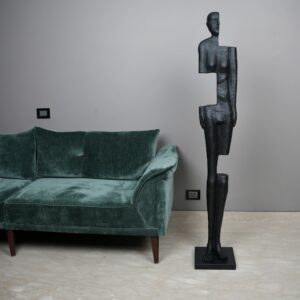
Any sculpture materials for home decor guide worth reading starts with one truth: every material has a temperature. Bronze and dark metals run warm. Marble and pale stone run cool. Aged wood runs warm. Painted resin can go either way. When the sculpture’s material temperature matches the room’s dominant palette, the piece settles in. When it conflicts, even a beautiful sculpture reads as out of place. The Bronze Accent Table Lamp ($239–$359) in warm bronze creates exactly this material temperature match beside a warm-toned room.
Bronze Sculpture Material
Bronze sculpture material is the standard for permanence in Western art. The lost-wax casting process captures surface detail at a level no other technique matches — individual feathers, muscle striations, the texture of bark. Bronze develops a patina over time that most collectors consider an enhancement rather than a flaw. It suits traditional, transitional, and formal rooms. The Aged Gunmetal Fluted Table Lamp ($299–$449) in aged gunmetal shares bronze’s dark metallic warmth and creates a natural companion at lamp scale.
Bronze is also the most outdoor-appropriate of all fine sculpture materials. It weathers to a green-brown patina in garden settings and integrates into the landscape over time. For formal display indoors, clean with a dry microfiber cloth and apply a thin coat of paste wax annually to stabilize the existing patina. The Aged Black Table Lamp ($269–$409) in matte black creates the receding lamp presence that lets a dark bronze sculpture command the surface beside it.
Marble Sculpture Material
Marble sculpture material has defined classical art for 2,500 years. Its translucency — the way light penetrates 2–3 mm before reflecting back — gives marble figures a quality of warmth that no other stone achieves. Carrara marble from Tuscany remains the benchmark; it is what Michelangelo used for the David and the Pietà. White marble suits formal, classical, and transitional rooms where the palette is warm neutral. The Possini Euro Zeus Gold Leaf Modern Table Lamp ($319–$479) in gold leaf is the statement lamp that a marble piece deserves beside it: the warm gold creates the complementary formal register.
Marble sculpture is not suitable for outdoor exposure in freeze-thaw climates. Indoors, keep it away from humidity and direct heat sources. Dust regularly with a dry cloth. Never use acidic cleaners — they etch the surface permanently. The Aged Brass and Ceramic Affogato Table Lamp ($289–$439) in warm aged brass and ceramic Affogato creates the correct warm formal companion for white or grey marble sculpture on a transitional console.
Wooden Sculpture for Home Decor
Wooden sculpture for home is the warmest of all sculpture materials — the grain of the wood is part of the art, and the natural color range of different hardwoods gives the carver a palette before the first cut. Hand-carved wooden sculpture from artisan traditions — Indonesian teak, African soapstone-effect carving, Scandinavian pine — carries the visible trace of human making that no factory piece replicates. Wood suits farmhouse, organic modern, coastal, and Japandi rooms naturally. The Adobe Brown Chisel Ceramic Table Lamp ($269–$409) in earthy adobe brown shares wooden sculpture’s warm, tactile quality in lamp form.
Keep carved wooden sculpture away from humidity extremes and direct heat vents. Oils in the wood can dry out in very low humidity, causing cracking. A light coat of natural beeswax annually protects most hardwood sculptures without altering their appearance. Browse our table lamp collection for lamp designs that suit the warm, organic rooms where wooden sculpture works best.
Ceramic Sculpture Material for Home
Ceramic sculpture material covers the widest range of any sculpture medium — from delicate hand-painted porcelain to chunky earthenware folk art to precise matte stoneware forms. Fired clay can take almost any glaze, any surface texture, and any color, making ceramic the most versatile sculpture material for interior decoration. It suits every room style except the most formal traditional, where the warmth of ceramic reads as too casual beside marble and bronze. The Aged Brass Ceramic Meadow Ombre Table Lamp ($289–$439) in warm ombre ceramic demonstrates this versatility: the material moves between organic modern and transitional rooms with equal ease.
Ceramic is the most affordable accessible sculpture material at every price point. Museum-quality ceramic sculpture from studio artists commands four to five figures; decorative ceramic forms start under $50. The quality signals to look for: even glaze application, consistent wall thickness, a base that sits flat without wobbling, and a surface that does not feel chalky or powdery. The Aged Brass Ceramic Granite Table Lamp ($239–$359) in granite-textured ceramic creates the same quality of honest ceramic material in a lamp — surface quality you can see and feel.
Stone Sculpture Material for Garden and Home
Stone sculpture material — limestone, sandstone, cast stone, alabaster, soapstone — covers a range from the very hard to the carvable. Cast stone is the most practical for home garden use: it is concrete-based, weatherproof, and develops the same moss and lichen patina as natural stone over time. Alabaster is the most translucent and most delicate, suitable only for indoor display in a stable humidity environment. Soapstone is the most accessible for hand carving and the softest to work. The Adorno Natural and Beige Table Lamp ($239–$359) in natural beige creates the quiet, unhurried lamp companion that stone sculpture in any form deserves beside it.
Cast stone and natural stone suit garden positions where bronze is too expensive. They improve with age outdoors, unlike painted resin or most ceramic, which degrades in freeze-thaw conditions. Position garden stone sculpture at the end of a sightline — a path, a lawn axis, a border terminus — not in the middle of open space. Browse our floor lamp collection for floor lamp designs that connect garden sculpture aesthetics to covered outdoor rooms.
Glass Sculpture for Home and Contemporary Art
Glass sculpture for home is the most light-interactive of all sculpture materials. Hand-blown glass from studio artists creates pieces that change appearance throughout the day as ambient light shifts — absorbing and refracting different wavelengths at different times. Cobalt, aquamarine, amber, and emerald glass sculptures create pools of colored light on surrounding surfaces. They suit contemporary, coastal, and eclectic rooms where visual surprise and color are part of the design language. The Cobalt and Natural Brass Table Lamp ($269–$409) in cobalt glass and natural brass puts this light-interactive quality at lamp scale beside a glass sculpture.
Cast Iron and Resin Sculpture for Home Decor
Cast iron sculpture decor has a raw, industrial quality that distinguishes it from all other metals. The surface is porous and non-reflective, absorbing light rather than reflecting it. Cast iron is heavy — a 12-inch figure weighs several times its resin equivalent — and that weight is part of its authority. It suits industrial, contemporary, and farmhouse rooms where raw material and honest construction are the design vocabulary. The Aged Brass Metal Modern Accent Table Lamp ($339–$509) in slim aged brass modern accent creates the architectural lamp companion that suits cast iron sculpture in a contemporary industrial room.
Resin sculpture material offers the visual quality of bronze, marble, or stone at a fraction of the cost. High-quality polyresin with cold-paint finishing is indistinguishable from bronze at a normal viewing distance. Resin is the most practical material for large-scale sculpture pieces where shipping weight is a concern. It also suits rooms where children or pets make a truly fragile material inadvisable. The Aged Brass Dome Adjustable Desk Lamp ($269–$409) with its adjustable arm desk lamp suits the study where resin reproductions of famous works sit beside reference books.
How to Choose Sculpture Material for Your Room
How to choose sculpture material comes down to three questions: What is the room’s existing material temperature? What display position does the piece occupy? And what is the piece expected to do over time — age gracefully outdoors or remain unchanged indoors? Match those three answers to the material properties in this guide and the right choice becomes clear. Every sculpture material in this sculpture materials for home decor guide has a room it belongs in — the goal is simply to find that match.table lamp collection
Frequently Asked Questions
What sculpture material lasts longest outdoors?
Bronze is the most durable outdoor sculpture material — it weathers to a protective patina that stabilizes the surface against further corrosion. Cast stone and stainless steel are close seconds. Avoid untreated iron (rusts through), most ceramics (freeze-thaw damage), and standard resin (UV degradation). For covered outdoor positions, cast stone and powder-coated iron are excellent, lower-cost alternatives to bronze.
What is the best sculpture material for a living room?
Ceramic and bronze are the most versatile living room sculpture materials. Ceramic suits almost every room style from farmhouse to contemporary; bronze suits traditional, transitional, and formal rooms. The key is matching the material’s color temperature to the room — warm materials (bronze, ceramic, wood) in warm rooms; cool materials (marble, steel, pale stone) in cooler-toned rooms.
Is resin sculpture good quality?
High-quality polyresin sculpture is excellent value. A well-finished resin piece with cold-paint surface treatment reads as bronze or stone at normal viewing distances. Look for even weight distribution, a base that sits flat, no visible mold lines, and a surface finish that does not chip or flake. Resin is particularly useful for larger pieces where weight or cost makes real bronze impractical.
How do you care for wooden sculpture at home?
Keep wooden sculpture away from humidity extremes, direct heat vents, and prolonged direct sunlight. Dust regularly with a dry microfiber cloth. Apply a thin coat of natural beeswax or furniture oil annually to prevent the wood’s natural oils from drying out. Avoid water-based cleaners on unfinished or lightly finished wood — they raise the grain and can cause warping over time.
What sculpture material suits minimalist rooms?
Matte black metal, pale marble, and minimal ceramic forms suit minimalist rooms best. The material should have low visual noise — no complex surface textures, no multiple materials, no decorative finish. A single color, a single material, a resolved form: these are the minimalist sculpture material standards. Stone and ceramic in pale neutral glazes are the most accessible choices.