

Table Lamp Color Guide: How to Match Lamps to Your Room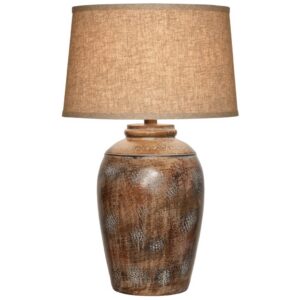
How to choose table lamp color is one of the most practically useful decorating tools because it resolves one of the most common decorating questions — how do I know which lamp color for room works in my room? The answer is not about matching (the table lamp color guide to the wall color or furniture color), but about coordinating (the lamp’s material temperature and color family to the room’s existing palette). The Aged Brass Ceramic Affogato Table Lamp ($289) in warm affogato aged brass and ceramic demonstrates coordination rather than matching — the warm brass and warm ceramic belong in any room with a warm-neutral palette without needing to match any specific element.
Browse our lamp collection for matching table lamps to room in every color and finish family.
Matching Lamp Color to Room Color Temperature
The most reliable table lamp color guide principle is material temperature matching: warm lamps in warm rooms, cool lamps in cool rooms. Warm rooms have walls in cream, warm white, warm grey, warm beige, or warm taupe; floors in honey wood, terracotta, or warm stone; furniture in warm-toned upholstery (cream, warm beige, camel). Cool rooms have walls in cool grey, blue-white, or cool white; floors in cool stone, dark grey, or cool marble; furniture in cool-toned upholstery (grey, blue-grey, charcoal). The Adorno Natural Beige Table Lamp ($239) in warm adorno natural beige is the warm-temperature lamp that coordinates with any warm-palette room — it belongs in warm rooms without requiring further deliberation.
Lamp Colors for White and Neutral Walls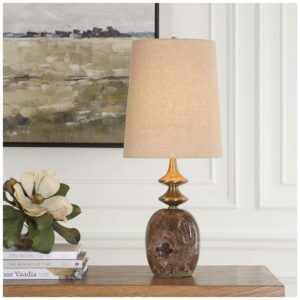
White and neutral walls are the most common wall color in US homes, and they provide the widest latitude for table lamp color ideas for choice. On warm white walls (walls with cream or ivory undertones), warm lamp colors — aged brass, warm ceramic, warm bronze, warm gold — create the most resolved result. On cool white walls (walls with grey or blue undertones), cool lamp colors — matte white, pale grey, cool glass, chrome hardware — create the most resolved result. The Pale Blue Ceramic Table Lamp ($319) in pale blue hammock ceramic creates the one cool-accent exception that suits both warm and cool white walls — the pale, lightened blue reads as nearly neutral in many light conditions.
Bold Color Lamps: When and How to Use Them
Bold color lamps — cobalt blue, forest green, terracotta, deep burgundy — create the strongest color accent in a room and require the most deliberate placement. The rule: use a bold color lamp as the room’s primary color accent, and connect it to at least one other element of the same color family. A cobalt lamp reads as an isolated intruder in a room with no other blue. The same cobalt lamp reads as the anchor of a blue accent theme in a room that has blue throw pillows, a blue-and-white print, and a blue ceramic vase. The Cobalt and Natural Brass Table Lamp ($269) in warm cobalt and brass demonstrates how a bold blue glass lamp reads as part of a coherent palette when brass accents connect the lamp to the rest of the room.
Browse the complete collection for table lamps in every color family — warm neutrals, cool neutrals, bold colors, and metallics.
Frequently Asked Questions
How do I choose a table lamp color for my room?
Use the material temperature principle: warm lamps in warm rooms (cream walls, honey wood, warm upholstery), cool lamps in cool rooms (grey walls, cool stone, charcoal upholstery). For neutral or white walls, which are the most common in US homes, both warm and cool lamp colors work — but warm neutrals (aged brass, warm ceramic) suit warm white walls, and cool neutrals (matte white, pale grey) suit cool white walls. When in doubt, a warm neutral ceramic lamp in aged brass works in the widest range of rooms.
Should a table lamp match the furniture or the walls?
A best table lamp color for living room should coordinate with the room’s overall material temperature rather than match any specific element. Coordination means belonging to the same temperature family (warm or cool) and roughly the same color value range (light, mid, or dark) as the dominant elements of the room. A direct match — the lamp color exactly matching the wall color — creates a visually flat result because the lamp disappears against the same-color background. Coordination creates more visual interest.
Can I use a colored table lamp in a neutral room?
Yes — a single bold color lamp (cobalt, forest green, terracotta) in a neutral room creates the primary color accent of the entire composition. The rule is to connect the lamp color to at least one other element of the same color family in the room — a throw pillow, a print, a ceramic accessory. A bold color lamp standing completely alone in a room full of neutrals reads as an afterthought rather than as a deliberate design decision.