

How to Style a Table Lamp: Vignettes, Consoles, and Surface Compositions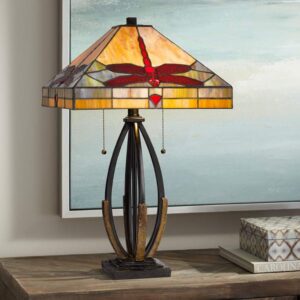
How to style a table lamp is about more than the lamp itself — it is about the surface composition that the lamp anchors and the vignette it creates with the objects surrounding it. A table lamp styling ideas alone on a surface is a light source. A table lamp vignette with a small stack of books, a ceramic bowl, and a single stem in a bud vase is a vignette — a small, composed scene that makes the room feel inhabited and considered. The Aged Brass Ceramic Affogato Table Lamp ($289) in warm affogato aged brass is the lamp whose form and material quality make it the ideal vignette anchor — the warm brass and ceramic belong in a composed surface arrangement.
Browse our lamp collection for lamp styles suited to every vignette and surface composition.
The Vignette Rule: Objects at Three Heights
The most reliable vignette rule for a table lamp arrangement surface composition: arrange objects at three distinct heights — tall (the lamp itself, plus perhaps a tall candlestick or a print leaning against the wall), medium (a vase of appropriate height, a plant, a stack of books with a small object on top), and low (a small ceramic bowl, a tray, a short candle). The three-height rule creates visual interest and depth without complexity. The lamp’s shade should be at the top height; its base should be visible within the middle height range. The Adorno Natural Beige Table Lamp ($239) in warm natural beige Adorno with its slim column and clean proportions creates the most versatile tall element for a three-height vignette.
How to Style a Table Lamp on an End Table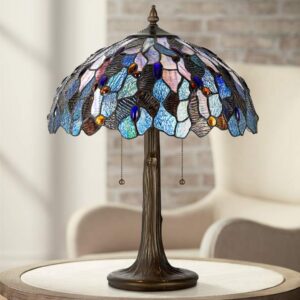
End table styling with a lamp: the lamp should occupy no more than one-third of the end table surface area (measured from above). The remaining surface area should contain a maximum of two or three additional objects — a coaster set, a single book, a small plant, a remote control in a decorative holder. An end table that is too crowded with objects makes the lamp look lost among competing visual interest. The lamp should always be the tallest and most prominent element on the end table. The Adobe Brown Chisel Ceramic Lamp ($269) in warm adobe brown chisel ceramic creates the end table anchor lamp — the bold earthy base makes it immediately the dominant visual element on any end table surface.
Styling Table Lamps on Console Tables
Console table styling with a lamp follows the gallery wall principle: the lamp creates the primary vertical element, and all other objects on the surface should be arranged asymmetrically, at varied heights, creating a composed but not rigid arrangement. On a console behind a sofa, one lamp at one end and a mirror or art leaning at the other creates the most relaxed and contemporary console composition. Two matching lamps at either end with a centered arrangement creates the most formal composition. The Zeus Gold Leaf Table Lamp ($319) in warm zeus gold leaf is the console table lamp styling for the formal composition — the gold leaf base creates a formal statement that anchors a symmetrical arrangement.
Browse the full collection for the complete collection of console table lamp styling suited to every surface composition.
Frequently Asked Questions
How do I style a table lamp on an end table?
The lamp should occupy no more than one-third of the end table surface area (measured from above). The remaining surface should contain a maximum of two or three additional objects — a coaster set, a single book, a small plant. An end table crowded with objects makes the lamp look lost among competing visual interest. The lamp should always be the tallest and most prominent element on the end table.
What is a vignette in home decor?
A vignette is a small, composed scene on a surface — a deliberately arranged group of objects that together tell a visual story or create a cohesive aesthetic impression. A table lamp vignette typically includes the lamp as the primary tall element, plus two or three secondary objects at medium and low heights (a stack of books, a small plant, a ceramic bowl, a tray). The three-height principle creates visual interest and depth without complexity or clutter.
How many objects should be on a surface with a table lamp?
For an end table, a maximum of two or three additional objects beyond the lamp itself. For a console table, up to four or five objects at varied heights. The rule of odd numbers (three or five objects total including the lamp) creates more visual interest than even numbers. Leave breathing room between objects — a crowded surface makes even a beautiful lamp and beautiful objects look cluttered. Negative space is part of the composition.