

Table Lamp Shades: Types, Sizes, and How to Choose the Right One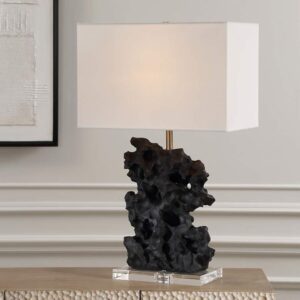
Table lamp shades are the most underestimated lamp component — and the one that most dramatically affects light quality. The same ceramic base with a drum shade versus an empire shade produces a completely different light effect, silhouette, and room mood. The Aged Brass Ceramic Affogato Table Lamp ($289) in aged brass and ceramic Affogato comes with a shade whose proportions are calibrated for the base — the advantage of buying a complete types of lamp shades over assembling base and shade separately.
Browse the lamp collection for the complete lamp collection with proportionally calibrated shade-and-base pairings.
Table Lamp Shade Types
The drum lamp shade is the most popular in contemporary US homes — a cylinder with equal top and bottom diameter, creating a broad even column of light going up and down equally. Drum shades suit contemporary, transitional, and modern traditional rooms. The empire lamp shade is the traditional standard — a truncated cone with smaller top than bottom, directing more light downward. Empire shades suit traditional, transitional, and farmhouse rooms. The coolie or pagoda shade is a flattened cone with a wide, shallow profile. The bell shade is an empire with curved sides — a softer silhouette. The square shade creates the most architectural contemporary look. The Modern Accent Table Lamp ($339) in slim modern brass accent demonstrates how a clean drum lamp shade suits an architectural lamp base.
Table Lamp Shade Materials
Fabric shades are most common — in linen, cotton, silk, and synthetic blends. Linen shades produce the warmest, most organic light quality — the natural fiber transmits a warm golden light with a slight texture that reads as craft quality. Cotton shades are most uniform — they transmit light evenly. Silk shades produce the most lustrous and formal light. Paper shades create warm diffused light suited to Japandi and organic modern rooms. Glass shades are the most dramatic — they focus light downward and create a concentrated pool. The Cobalt and Natural Brass Table Lamp ($269) in cobalt glass and brass creates this effect at its most beautiful — colored glass both restricts and colors the transmitted light.
How to Match a Lamp Shade to a Lamp Base
Three rules: the shade bottom diameter should be slightly wider than the widest point of the base, the shade height should be roughly equal to two-thirds of the base height, and the shade material should complement the base material in texture rather than compete. A matte ceramic base reads best with a natural linen shade. A polished or lacquered base reads best with a silk or polished cotton shade. A raw or textured base reads best with a textured fabric shade. The Adobe Brown Chisel Ceramic Lamp ($269) in warm adobe brown chisel ceramic demonstrates the base-material principle — a slightly textured linen shade complements the chisel marks without visual competition.
Browse the complete lamp collection for complete lamp designs where shade and base proportions are already calibrated.
Frequently Asked Questions
What is the most popular lamp shade shape?
The drum shade is the most popular in contemporary US homes — a cylinder with equal top and bottom diameter creating a broad even column of light. It suits the widest range of interior styles and works with most lamp base forms. The empire lamp shade (truncated cone with smaller top than bottom) is second most popular and more traditional in feel.
How do I know if a lamp shade is the right size?
Three checks: the shade bottom diameter should be slightly wider than the widest point of the base; the shade height should be roughly equal to two-thirds of the base height; the shade bottom should overlap the base by 1 to 2 inches. If the shade passes all three checks, it is the right size.
What shade material creates the warmest light?
Natural linen shades create the warmest, most organic light quality — the natural fiber transmits a golden warmth that is especially beautiful with warm-white LED bulbs at 2700K. Cotton is the second warmest. Silk creates a lustrous slightly cooler quality suited to formal traditional rooms. Paper creates a diffused warm light suited to Japandi and organic modern rooms.