

Traditional Table Lamps: Classic and Antique Styles for Every Room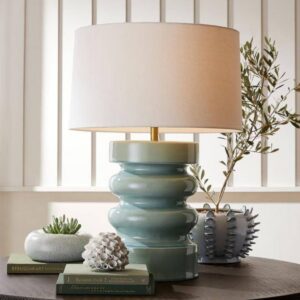
Traditional table lamps are the most historically substantial of all lamp categories because they draw from the entire history of domestic lighting — from the oil lamps of antiquity through the candlestick traditions of the medieval period, the porcelain column lamps of the 18th century, and the brass and crystal traditions of the 19th. A traditional table lamp is not merely old-fashioned — it is connected to a design vocabulary that has been refined over centuries and continues to function because it is based on proportional and material principles that are genuinely correct. The Zeus Gold Leaf Table Lamp ($319) in warm zeus gold leaf is the traditional table lamp in its most formal and contemporary interpretation — the gold leaf base and the resolved formal proportions connect to the centuries of decorative lamp tradition.
Browse our traditional lamp collection for the complete traditional and transitional lamp collection.
Traditional Table Lamp Forms
The canonical traditional table lamp forms: the column lamp (a cylindrical or tapered column on a circular base, usually in brass, bronze, or ceramic), the urn lamp (a classical urn form in ceramic, crystal, or brass, on a stepped base), the candlestick lamp (a slender, tall form derived from the candlestick tradition, usually in brass or silver), and the jar lamp (a rounded vessel form in ceramic or glass, usually in glazed earthenware or painted porcelain). The Bronze Accent Table Lamp ($239) in warm bronze accent creates the traditional lamp in its most accessible and versatile form — the bronze column and the clean proportions suit traditional rooms without being formally demanding.
Traditional Table Lamps in Transitional Rooms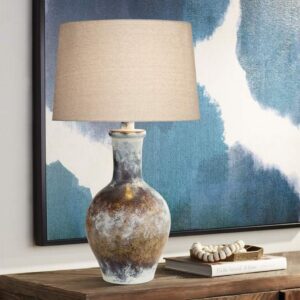
Traditional lamp forms translate most naturally into contemporary homes through the transitional room aesthetic — rooms that combine traditional furniture forms (a Chesterfield sofa, a trestle dining table, a classic bookcase) with contemporary materials and colors. In a transitional room, a traditional lamp form in a contemporary material (an urn form in a matte sage green ceramic rather than a painted porcelain, a column lamp in aged brass rather than polished brass) creates the most resolved hybrid. The Aged Brass Ceramic Granite Table Lamp ($239) in warm granite ceramic with aged brass creates this hybrid — a column lamp form with the traditional proportions of a classical lamp, but in the warm matte ceramic and aged brass of contemporary production.
Pairing Traditional Table Lamps with Antique Furniture
Traditional table lamps work most naturally with antique and period furniture — a brass column lamp on a Georgian side table, a porcelain urn lamp on a mahogany console, a bronze candlestick lamp on a Victorian bedside table. The material connection between the lamp and the furniture creates a period coherence that no contemporary lamp on the same furniture can achieve. The Adeline Gold Flowers Bloom Lamp ($269) in warm adeline five-petal gold creates the transitional bridge piece — a lamp with enough traditional warmth and formality to suit antique furniture while being contemporary enough to avoid a period pastiche.
Browse our complete collection for all traditional and transitional table lamps with free worldwide delivery.
Frequently Asked Questions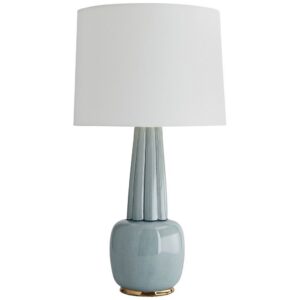
What are the main types of traditional table lamps?
The four canonical traditional table lamp forms: column lamp (cylindrical or tapered column in brass, bronze, or ceramic), urn lamp (classical urn form in ceramic, crystal, or brass on a stepped base), candlestick lamp (slender tall form derived from the candlestick tradition), and jar lamp (rounded vessel in glazed earthenware or painted porcelain). The column and urn are the most common in US homes; the candlestick and jar are more specialized choices for period-specific rooms.
Do traditional table lamps work in modern homes?
Traditional lamp forms translate naturally into contemporary homes through the transitional aesthetic. A traditional form in a contemporary material — an urn in matte sage green ceramic rather than painted porcelain, a column in aged brass rather than polished brass — creates the most resolved result in a modern home. The traditional form provides proportional correctness; the contemporary material provides visual freshness. This combination suits transitional rooms better than either a purely traditional lamp or a purely contemporary one.
What shade should a traditional table lamp have?
Traditional table lamps look most resolved with an empire shade (a truncated cone with smaller top than bottom) or a softly shaped bell shade, both in natural linen or warm cream cotton. The empire shade is the historically correct shade for most traditional lamp forms and creates the warmest and most period-authentic lamp composition. A drum shade on a traditional base creates a transitional effect. Avoid very contemporary shade shapes (very flat coolie, very rigid geometric) on traditional bases — the style mismatch reads as unresolved.