

Types of Sculpture Styles for Home Decor: A Complete Style Guide
Understanding the types of sculpture styles for home decor is the fastest shortcut to a room that looks designed rather than assembled. Most people choose sculptures by subject — a horse, a bird, an abstract form — without considering the artistic style those forms belong to. Style is the deeper decision. A Greek classical figure in a contemporary minimalist room creates friction. A raw welded iron abstract in a formal traditional room creates confusion. Match the sculpture’s style to the room’s existing design language and the piece settles into the space as though it was always there. Our sculptural table lamp collection applies this same principle: every lamp base belongs to a recognizable design tradition, and that tradition is part of what makes it work.
This guide covers the six most important sculpture styles in home decor — classical Greek, baroque, Renaissance, abstract, contemporary, and mid-century modern — explains what defines each one formally and historically, and translates those definitions into practical room-matching guidance. By the end, you’ll be able to look at any types of sculpture styles for home decor and immediately understand which design tradition it belongs to, which room styles it suits, and how to display it to maximum effect. The living room lamp collection collection at Exotic Decor USA is built around these same traditions — lamps designed with an understanding of how their form and material sit within the room’s broader aesthetic language.
Types of Sculpture Styles for Home Decor: Classical Greek and Roman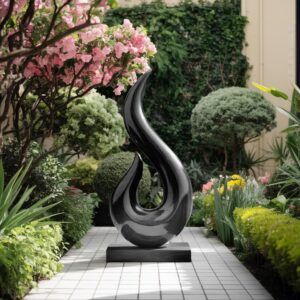
Classical Greek sculpture, developed between roughly 480 and 323 BC, established the formal vocabulary that Western figurative art has built on ever since. Its defining characteristics are idealized proportion (the human figure shown at its mathematical best rather than its observed reality), contrapposto (the weight-shift posture that gives standing figures life and movement), and a surface finish in marble that approaches translucency. Greek sculpture communicates calm authority, resolved perfection, and the sense that the figure depicted has transcended ordinary human limitation. The aesthetic demands of classical sculpture translate directly into interior design: rooms that suit Greek-tradition figurative works favor formal scale, warm neutral materials, and the discipline to include only what earns its place. The Possini Euro Zeus Gold Leaf Modern Table Lamp ($319–$479) in gold leaf is the lamp for this tradition — its formal weight and statement presence belong in the same room as classical-inspired figurative art.
Roman sculpture borrowed the Greek formal tradition and added psychological realism: portrait busts that capture not an ideal but a specific individual — the wrinkles, the tension in the jaw, the particular intelligence or authority of a real person. Roman portrait sculpture suits the same design contexts as Greek work (traditional, transitional, formal rooms with warm neutral palettes) but adds a quality of personhood that Greek idealism deliberately avoided. A Roman portrait bust on a console or library shelf brings the same warm intellectual authority that a well-chosen lamp does — both communicate that the person who lives here has considered opinions. The Aged Brass and Ceramic Affogato Table Lamp ($289–$439) in aged brass and ceramic belongs on the console beside a classical portrait form: the warm brass creates the same material register as antique bronze.
Baroque and Renaissance Sculpture Styles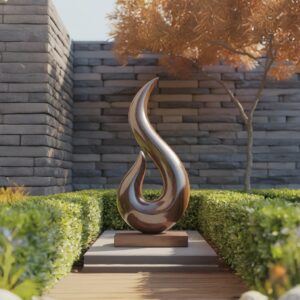
Baroque sculpture — the tradition of Bernini, working in Rome in the early 17th century — takes Renaissance technical mastery and pushes it toward drama, movement, and emotional intensity. Where Greek sculpture is still and resolved, baroque sculpture seems to move. Bernini’s Apollo and Daphne catches a figure mid-transformation; his Ecstasy of Saint Teresa shows a figure in the throes of spiritual experience so intense it reads as physical. The defining formal qualities of the baroque are flowing drapery, figures caught in motion, and the integration of multiple materials (marble, bronze, gilded wood, painted stone) into a single overwhelming composition. Baroque sculpture suits warm, rich interiors — rooms with layers of material, gold accents, and deliberate dramatic lighting. The Aged Brass Ceramic Meadow Ombre Table Lamp ($289–$439) in warm ombre ceramic captures this quality of rich material warmth: it suits the same room as a baroque figurine or a reproduction of a Bernini group.
Renaissance sculpture occupies the ground between Greek classical restraint and baroque drama. Michelangelo’s David is the perfect example: physically perfect like a Greek figure, but psychologically complex in a way Greek idealism never attempted. The Renaissance adds narrative — a specific moment, a specific psychological state — to the Greek formal foundation. Renaissance-tradition sculpture suits traditional and transitional rooms where both formal dignity and human character are valued. The warm aged brass and ceramic of the Aged Brass Ceramic Granite Table Lamp ($239–$359) creates the lamp register that best complements a Renaissance-inspired figurative piece: neither too cold nor too theatrical, just warm and resolved.
Abstract Sculpture Style for Modern Interiors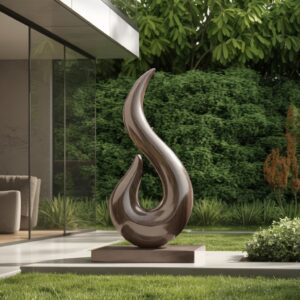
Abstract sculpture style abandoned the requirement to represent recognizable subjects and asked instead: what can three-dimensional form do when freed from representation? Brancusi’s Bird in Space reduces a bird to a single ascending bronze ovoid. Giacometti’s figures reduce a human to an anxious elongated wire. Moore’s reclining forms treat the body as landscape and interior space as material. Abstract sculpture suits contemporary, minimalist, and Japandi interiors where the design language prioritizes form over subject matter. The most important thing about displaying abstract sculpture is generous negative space: an abstract form needs room to breathe, room to cast shadow, room for the viewer to move around it without visual clutter competing for attention. The Aarna Black Table Lamp ($269–$409) in matte black gives abstract sculpture precisely this quality of composed restraint at lamp scale.
Contemporary sculpture styles encompass everything created since roughly 1960, united not by a shared formal approach but by a shared willingness to question what sculpture is for. Conceptual sculpture prioritizes idea over form. Site-specific work is inseparable from its location. Installation sculpture occupies architectural space rather than sitting on a pedestal. For home decor, the most relevant contemporary approaches are welded metal sculpture, ceramic studio work, and cast resin forms that use material in unexpected ways. These suit contemporary and industrial rooms where raw material and honest construction are the design vocabulary. The Aged Gunmetal Fluted Table Lamp ($299–$449) in aged gunmetal with its architectural fluted column is the lamp for this design context: its dark metallic honesty belongs beside a contemporary welded metal sculpture.
Mid-Century Modern Sculpture Aesthetic
Mid-century modern sculpture (roughly 1940–1970) found a middle ground between pure abstraction and representational art: organic forms that reference natural subjects — the human figure, animals, plant life — without depicting them literally. Alexander Calder’s mobiles, Isamu Noguchi’s stone sculptures, Harry Bertoia’s wire forms — all are recognizably influenced by natural forms while remaining fully abstract. MCM sculpture suits mid-century modern rooms (obviously) but also works well in contemporary, Japandi, and organic modern interiors where the design language values natural inspiration and honest material. The Aged Brass Metal Modern Accent Table Lamp ($339–$509) in slim aged brass with clean architectural lines is the definitive MCM lamp: its proportions and finish are from exactly the same design tradition as Noguchi, Bertoia, and the great mid-century studio designers.
How to Match Sculpture Style to Your Room
Matching sculpture style to a room starts with identifying the room’s existing design tradition. Traditional and formal rooms suit classical, baroque, and Renaissance sculpture. Contemporary and minimalist rooms suit abstract and contemporary work. Farmhouse and organic modern rooms suit carved wood, ceramic, and MCM organic forms. Coastal rooms suit nature-inspired abstract forms — ceramic birds, glass forms, drift-carved wood. The key practical rule: when in doubt, match material rather than style. A bronze figurine in any tradition reads as coherent with a warm brass lamp. A ceramic form in any tradition reads as coherent with a ceramic lamp. Material continuity compensates for style friction. Use the Aged Brass Dome Adjustable Desk Lamp ($269–$409) beside a primary sculpture piece — its adjustable arm lets you direct light precisely across the sculpture’s surface to reveal its texture.
The single most useful practical rule for displaying any sculpture style is side lighting. Sculpture — abstract, classical, baroque, or contemporary — reads at its best when lit from the side at approximately the height of the sculpture’s primary visual mass. Side light creates the shadow definition that reveals surface texture and three-dimensional form. Light from directly above flattens the surface; light from directly below reads as theatrical rather than natural. A lamp positioned to the side of a sculpture, at a distance of 18 to 30 inches, creates the conditions in which any style of sculptural work reads at its most expressive. The warm, directional glow of the Bronze Accent Table Lamp ($239–$359) in bronze accent is the natural lighting companion for any warm-material sculpture — it creates exactly this quality of revealing side light.
Every sculpture style in this guide — Greek classical, baroque, Renaissance, abstract, contemporary, mid-century modern — is a different answer to the same question: what can three-dimensional form do to make us feel something? A room that understands the types of sculpture styles for home decor and chooses its art accordingly has a quality that no amount of decoration can replicate. Browse our full table lamp collection for lamp designs built from these same design traditions — each one a formal object that earns its place by understanding its own aesthetic history.
Frequently Asked Questions
What are the main types of sculpture styles?
The main sculpture styles found in home decor are classical Greek and Roman (idealized proportion, marble, contrapposto), Renaissance (classical technique with psychological depth), baroque (drama, movement, rich materials), abstract (non-representational, form and material as subject), mid-century modern (organic forms referencing nature while remaining abstract), and contemporary (conceptual, installation, mixed material). Each suits different interior design traditions.
How do I choose a sculpture style for my home?
Start with your room’s existing design tradition: traditional and formal rooms suit classical, baroque, and Renaissance sculpture; contemporary and minimalist rooms suit abstract and contemporary work; farmhouse and organic modern rooms suit MCM organic forms and carved wood. When in doubt, match material rather than style — a bronze sculpture in any tradition reads coherently with a warm brass lamp, and a ceramic sculpture in any tradition reads coherently with a ceramic lamp.
What is abstract sculpture style?
Abstract sculpture style refers to three-dimensional art that does not represent a recognizable subject. It began in the early 20th century with artists like Brancusi, Giacometti, and Arp, who asked what sculpture could do when freed from the requirement to depict the world literally. Abstract sculpture focuses on form, material, texture, and negative space as its subject matter. It suits contemporary, minimalist, and Japandi interiors with generous negative space and restrained material palettes.
What lamp style works with classical sculpture?
Classical Greek and Roman sculpture suits warm, formal lamp designs with aged brass or bronze hardware and simple, resolved forms. A lamp with excessive decorative detail competes with the sculpture’s own formal resolution; a lamp that is too minimal reads as incongruous against the sculpture’s material warmth. The ideal is a lamp that shares the sculpture’s material temperature — warm brass, warm gold, aged bronze — with proportions that match the scale of the surface they share.