

How to Style a Table Lamp: Interior Designer Tips
Knowing how to style a table lamp is what separates a lamp that merely lights a room from one that defines it. A table lamp is never just a light source — it is a decorative object, a material statement, and an anchor for everything arranged around it. Interior designers spend as much time considering what surrounds a lamp as they do choosing the lamp itself. The surface arrangement, the objects on either side, the relationship to the wall behind — all of these determine whether a lamp reads as intentional design or incidental placement. At Exotic Decor USA, our table lamps collection spans 689+ artisan styles — and this guide gives you the exact framework designers use to style every one of them to maximum effect.
Designer Rule 1: Get the Height Right First
Before any styling consideration, the lamp must be the right height for its surface and the seated eye level of anyone using the room. The shade bottom at seated eye level is the non-negotiable starting point — approximately 58–64 inches from the floor for a living room end table lamp, and 24–28 inches above the mattress for a bedroom nightstand lamp.
Styling decisions made around a lamp at the wrong height will never look right because the proportion is fundamentally off. Get the height correct first — then style around it. Our table lamp height guide covers the exact measurements for every room type.
Designer Rule 2: Use the Triangle Principle
The triangle principle is the most universally applied rule in professional vignette styling — and table lamp styling is a vignette exercise. When you place objects around a lamp on a surface, arrange them so their heights create a triangular shape when viewed from the side: one tall element (the lamp), one medium element, one low element. This creates visual movement — the eye travels up, across, and down — and prevents the flat, static look of objects all at the same height.
For a brass table lamp ($289–$439) on a living room end table, the triangle might be: the lamp (tall), a medium-height vase with a single stem (medium), and a small sculpture or stack of two books (low). The three elements create depth and intentionality without cluttering the surface.
Designer Rule 3: Always Arrange in Odd Numbers
Designers consistently arrange objects in groups of three or five, never two or four. Even numbers create symmetry between the paired objects themselves, which draws attention to the grouping and away from the lamp. Odd numbers create tension — the eye never settles on a balanced pair, so it keeps moving through the arrangement. For a table lamp base on a console or sideboard, the formula is typically: lamp + two supporting objects. For a nightstand lamp with limited surface space: lamp + one small object (a clock, a small plant, a folded eyeglass case).
The Adobe Brown Chisel Ceramic Table Lamp ($269–$409) on a nightstand is a natural anchor for a three-element arrangement: the lamp, a slim vase with dried pampas grass or eucalyptus, and a small stack of books or a coaster pad. Three objects, three heights, one coherent surface.
Designer Rule 4: Echo the Lamp’s Material Elsewhere on the Surface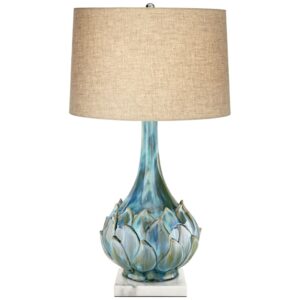
Material repetition is the technique that makes a styled surface feel intentional rather than assembled. The rule: echo the lamp’s dominant material at least once more on the same surface — not identically, but in spirit. A ceramic table lamp pairs naturally with a small ceramic bowl or a hand-thrown clay vase. A brass table lamp is reinforced by a brass picture frame, brass bookends, or a small brass figurine. A wooden table lamp echoes beautifully beside a driftwood candle holder or a raw-edge wooden coaster.
This is why the Aged Brass Metal Modern Accent Table Lamp ($339–$509) works so well on a console table with brass-hardware furniture nearby — the lamp does not just sit on the surface, it participates in a material conversation happening across the whole room.
Styling Table Lamps Room by Room
Bedroom: The Nightstand Vignette
The bedroom nightstand is the most personal and most viewed surface in any home. A well-styled nightstand lamp creates the first and last impression of the day. The formula: lamp + one functional object + one beautiful object. The functional object is something you actually use — a clock, a water carafe, a phone charging pad, or a table lamp with USB port that charges devices without a separate charger cluttering the surface. The beautiful object is something purely decorative — a small vase, a crystal, a meaningful trinket, a single book with a beautiful spine.
For a light blue table lamp or a pale blue ceramic table lamp in a coastal or serene bedroom, echo the blue with a sea glass object or a small ceramic dish in the same blue family. For a warm terracotta table lamp in a bohemian bedroom: pair it with a small clay pot of trailing pothos and a linen-covered journal. The lamp’s material guides every other object choice.
Living Room: End Table and Console Styling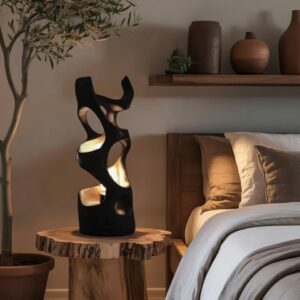
In a living room, a table lamp on an end table beside a sofa is both a practical light source and a permanent decorative composition. The triangle principle applies here most strongly because the surface is large enough to support multiple objects without crowding. A standard composition for a living room end table: lamp (tall) + vase with a plant or stem (medium) + small sculpture or art object (low).
For console table lamps in an entryway or hallway, the approach shifts — console tables are longer surfaces viewed in passing rather than seated. A pair of table lamps tall at either end of a console, creates symmetry and bookends the surface. Between them: a mirror, a piece of art, or a sculptural object. The lamps become architectural elements rather than accent pieces.
For buffet table lamps on a sideboard or credenza: use the same bookending approach, or a single oversized lamp centered on the sideboard with lower objects flanking it symmetrically. The Possini Euro Zeus Gold Leaf Modern Table Lamps ($319–$479) work as a natural bookending pair — dramatic gold leaf bases that command a sideboard without requiring any additional styling objects to complete the arrangement.
Home Office: The Desk Lamp Arrangement
A home office table lamp is primarily functional — but it is also always visible in video calls and photographs, which makes its styling matter. Keep the desk surface uncluttered: the lamp, a pen cup in a complementary material, and one small plant or a single art object. Avoid symmetrical desk arrangements — they feel corporate rather than personal. An industrial table lamp on the back left corner of a desk with a small succulent on the right creates a balanced asymmetry that feels designer-intentional rather than staged.
The Aged Gunmetal Fluted Table Lamp ($299–$449) suits this placement exactly — its architectural gunmetal column reads as considered and professional without being corporate or neutral.
Designer Rule 6: Use Color Strategically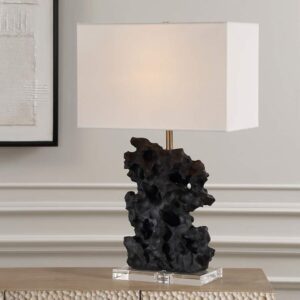
A lamp’s color — both the base and the shade — introduces a chromatic note to the surface. The design choices are: harmonize (choose a lamp color that blends with the room’s existing palette) or contrast (choose a lamp color that deliberately stands out against a neutral backdrop).
Harmonizing works best in rooms that already have a strong color identity — a green ceramic table lamp or green table lamps in a forest-toned room, a gold table lamp in a room with brass hardware, a marble table lamp in a room with white stone surfaces. Contrasting works best in neutral rooms — a modern black table lamp against an all-cream room, a black and gold table lamp on a pale grey console, or an art deco table lamp in a richly geometric form in an otherwise quiet, minimalist space.
For the highest design impact with minimum effort: choose a lamp that is one shade darker or richer than the dominant room color. In a pale neutral room, a terracotta table lamp or a rustic table lamp in warm brown adds depth without competing. In a mid-tone room, a crystal table lamp or antique crystal table lamp in transparent glass reads as light and airy rather than adding chromatic weight.
Table Lamp Styling Pairings: Quick Reference
| ROOM STYLE | LAMP TYPE | SHADE COLOR | WHAT TO PAIR WITH IT |
| Traditional | Brass or crystal table lamp | White or cream fabric | Silver-framed photo, leather-bound books, and floral arrangement |
| Contemporary | Modern black or glass base | White drum shade | Geometric sculpture, matte ceramic bowl, single stem in clear glass |
| Bohemian | Terracotta or rattan table lamp | Cream or natural linen | Air plant, woven coaster, small crystal cluster |
| Coastal | Light blue or ceramic lamp | White or pale blue | Driftwood piece, white shells, a botanical print |
| Art Deco | Black and gold or sculptural | Black shade or white empire | Mirrored tray, marble paperweight, geometric vase |
| Japandi / Wabi-Sabi | Wooden or concrete lamp | Paper or natural linen | Rough ceramic bud vase, pebbles, dried twig arrangement |
| Maximalist | Tiffany style or stained glass | Already colored glass | Mercury glass objects, velvet ribbon, layered books with colored spines |
| Farmhouse / Rustic | Rustic or lantern table lamp | Burlap or cream cotton | Small galvanized tin with greenery, worn leather journal |
Five Styling Errors That Undercut Even a Beautiful Lamp
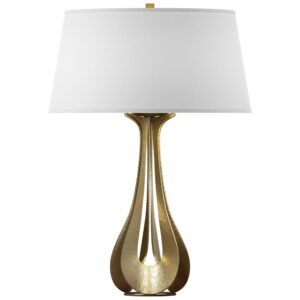
- Over-crowding the surface
- All objects are at the same height
- Ignoring the wall behind the lamp
- Placing the lamp too close to the wall’s edge
- Choosing a lamp that does not suit the surface’s scale
Every lamp in our table lamps collection is chosen for its ability to function as both a light source and a decorative composition anchor. For a standing version of these same styling principles, our floor lamps collection applies the triangle and material-echo rules at a larger vertical scale. Email info@exoticdecor.us Monday–Saturday, 10:00 AM–8:00 PM for personalized lamp and styling advice for any room.
Frequently Asked Questions About Styling Table Lamps
What should I put next to a table lamp?
Use the triangle principle: arrange objects at three different heights — the lamp is the tall element, a medium object (a vase with a stem, a small plant, or a sculptural object) is the middle element, and a low object (a stack of books, a small dish, or a decorative object) anchors the base. Echo the lamp’s material at least once in one of the accompanying objects. Keep the total number of objects to three or five — odd numbers create visual movement; even numbers create visual stagnation.
How do I style a table lamp on a console table?
Console table lamps work best in one of two arrangements: (1) A pair of table lamps at either end of the console, bookending the surface and creating symmetry. Between them: a mirror, artwork, or a central sculptural object. (2) A single lamp positioned one-third from one end of the console (not centered), with a taller object such as a vase or plant on the opposite end, and lower objects across the middle. Both approaches suit console tables in entryways, hallways, and behind sofas in open-plan living rooms.
Should both bedside table lamps be identical?
Not necessarily, but they should share at least one design attribute — the same shade color, the same base height, or the same material family. Matching lamps create classical symmetry and are the easiest approach to a resolved bedside arrangement. Mismatched lamps with a shared attribute — for example, a ceramic lamp on one side and a glass base lamp on the other, both with white drum shades at the same height — create an intentionally eclectic look that suits bohemian, maximalist, and global-aesthetic bedrooms. Fully mismatched lamps with nothing in common create visual confusion rather than intentional design.
How do I make my table lamp look more expensive?
Three techniques consistently elevate a table lamp’s perceived quality: (1) Swap the shade for a better one — a linen or cotton shade in white or ivory reads as higher quality than a thin synthetic alternative, and it is often the fastest upgrade available. (2) Style it with quality objects — the items surrounding a lamp affect how expensive the lamp itself looks. A cheap lamp beside quality books, a ceramic vase, and a well-chosen picture frame reads as more considered than an expensive lamp beside nothing. (3) Choose the right height — a lamp at the correct eye level for its placement looks intentional and professional; the same lamp at the wrong height looks like an afterthought, regardless of its price.