

Bernini Sculptures: The Baroque Master Who Made Marble Move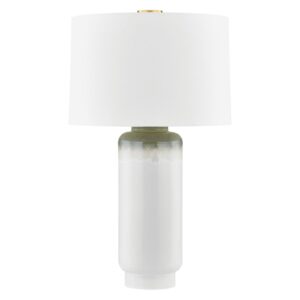
Gian Lorenzo Bernini was 25 years old when he made Apollo and Daphne, and the marble he was working with behaves in ways that marble sculpture has no business behaving. The bark growing up Daphne’s transforming body has the actual texture of bark. Her hair is lifting in the wind of her running. Her hands are becoming leaves. Bernini sculptures don’t look like stone — they look like everything except stone: fabric, bark, flesh, fire, water, the moment of miraculous transformation frozen mid-motion. This is the defining quality of Bernini’s genius and the reason his works remain the most frequently visited sculptures in Rome. The Aged Brass Ceramic Meadow Ombre Table Lamp ($289–$439) in aged brass and meadow ombre ceramic creates the warm, organically rich lamp presence that Bernini’s baroque drama naturally invites as a room companion.
This piece covers the key Bernini sculptures — Apollo and Daphne, the Ecstasy of Saint Teresa, David (Bernini’s version), the Baldacchino — explains what Bernini achieved technically and artistically, and explores how baroque design principles translate into a contemporary interior that has the warmth and drama of the world’s greatest baroque spaces. Browse our table lamps collection for lamp designs with the warmth and formal presence to inhabit such a room.
Apollo and Daphne: Bernini’s Most Famous Marble Group
Apollo and Daphne (1622–1625) is the most technically astonishing of Bernini’s marble groups. The myth depicts the moment when Daphne, pursued by Apollo, calls to her father the river god to save her, and is transformed into a laurel tree. Bernini chose the exact moment of transformation — one hand already becoming bark, the other sprouting leaves, hair lifting in the speed of running — and made marble do all of this simultaneously. The figure is also compositionally brilliant: it reads completely differently from every viewing angle, offering a new spatial relationship and a new formal surprise with each step around the base. The Possini Euro Zeus Gold Leaf Modern Table Lamp ($319–$479) in warm gold leaf creates the kind of formal statement that belongs beside a primary art piece in a room organized around baroque Italian values.
All of Bernini’s major marble groups — Apollo and Daphne, The Rape of Persephone, David, Aeneas and Anchises — are housed in the Borghese Gallery in Rome, which limits admission to 360 people per two-hour session. This restriction means you must book months in advance for popular dates, but it also means that when you are inside, you see Bernini’s work without crowds. It is the finest two hours available in any museum in the world. The warm, weighty presence of the Bronze Accent Table Lamp ($239–$359) in aged bronze accent belongs in the room where you study for that trip.
Bernini Sculptures: The Ecstasy of Saint Teresa
The Ecstasy of Saint Teresa (1647–1652) in the Santa Maria della Vittoria church in Rome is Bernini’s theological and artistic climax. Teresa of Ávila described her mystical experience of divine love as physically overwhelming — as though an angel was driving a golden arrow through her heart. Bernini made this visible: Teresa reclines, apparently swooning, while an angel prepares to strike, and from above, gilded bronze rays fall like supernatural light. Everything in the composition — the carved marble cloud, the floating figures, the architectural frame with real windows on either side — is designed to create a single overwhelming experience of transcendence. This is baroque sculpture design at its absolute summit. The Aged Brass and Ceramic Affogato Table Lamp ($289–$439) with its warm aged brass and ceramic brings this quality of warm, encompassing light to a contemporary room.
Bernini’s Design Legacy for Contemporary Interiors
Baroque interior design — which Bernini effectively defined in Rome in the 17th century — is characterized by warmth, drama, movement, and the integration of multiple art forms (architecture, sculpture, painting, decorative arts) into a single overwhelming experience. A contemporary room that applies baroque principles doesn’t try to recreate 17th-century Rome: it applies the same values — warmth of materials, scale of objects, drama of composition — with contemporary restraint. One deeply warm lamp. One art object with genuine presence. Clear surfaces that emphasize the drama of the chosen objects. Browse our sculptural table lamps for the sculptural table lamps designed with this quality of formal drama.
For the complete guide to famous sculptures from Bernini to Rodin to Kapoor and what they mean for home design, see our famous sculptures guide.
Frequently Asked Questions
What are the most famous Bernini sculptures?
The most famous Bernini sculptures are Apollo and Daphne (1622–1625), the Ecstasy of Saint Teresa (1647–1652), The Rape of Persephone (1621–1622), David (1623–1624), and the Baldacchino in St. Peter’s Basilica (1623–1634). The marble groups — Apollo and Daphne, Persephone, Aeneas and Anchises — are all in the Borghese Gallery in Rome and require advance booking. The Ecstasy of Saint Teresa is in the Santa Maria della Vittoria church, freely accessible.
Where can I see Bernini sculptures in Rome?
The primary collection of Bernini’s marble groups is in the Borghese Gallery (Galleria Borghese), which requires booking months in advance and limits admission to 360 people per two-hour session — making it an intimate, exceptional experience. The Ecstasy of Saint Teresa is in the Santa Maria della Vittoria church (free entry). The Baldacchino is in St. Peter’s Basilica. The Fountain of the Four Rivers is in the Piazza Navona. Bernini’s architecture and sculptural contributions are throughout central Rome.
How did Bernini make marble look like fabric?
Bernini achieved the appearance of fabric in marble through extraordinary precision of surface carving. Fabric reads as fabric because of the way it falls in folds, catches light differently on raised and recessed surfaces, and implies movement and weight. Bernini carved these qualities — the precise depth and angle of each fold, the precise graduation of surface texture — with a degree of skill that has never been matched. He also had an intuitive understanding of how light would fall across a surface at any particular angle and could plan each chisel mark to maximize that effect.
What is Bernini’s most famous work?
Apollo and Daphne in the Borghese Gallery is probably Bernini’s most technically astonishing single work, and the Ecstasy of Saint Teresa in Santa Maria della Vittoria is his most complete architectural and sculptural integration. The Baldacchino in St. Peter’s is his most ambitious commission. Different critics prioritize different works, but the Borghese Gallery marble groups — particularly Apollo and Daphne — are the works most consistently described as the summit of his achievement.