

The Veiled Virgin Sculpture: Giovanni Strazza’s Impossible Marble Masterpiece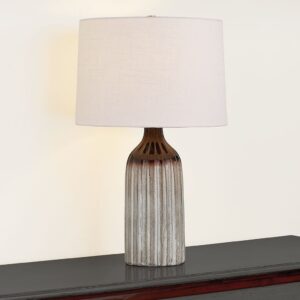
Of all the famous sculptures in existence, none stops people in their tracks quite as immediately as the Veiled Virgin. Giovanni Strazza’s 1856 marble sculpture of the Virgin Mary shows a face covered by a marble veil so precisely carved that the face beneath is clearly visible — the features, the expression, the quality of the skin — through stone that in every other respect is simply stone. People see photographs of the veiled virgin sculpture and assume they are looking at a photograph of fabric, not marble. The impossible material fact is that this is one solid block of Carrara marble, and yet the veil appears to be a different substance entirely. This is the summit of what marble carving can achieve: making stone behave like something it is not. The Aged Brass and Ceramic Affogato Table Lamp ($289–$439) in aged brass and warm ceramic captures the same quality of surface warmth that makes Strazza’s marble feel like it breathes.
This piece covers the history and location of the Veiled Virgin, the technical method that made the veil possible, the tradition of veiled sculpture that Strazza was working within, and what this extraordinary piece teaches about material, light, and the relationship between surface and depth. Browse our sculptural table lamps for lamp designs that bring a similar quality of material warmth to your interior.
Where Is the Veiled Virgin and Who Made It?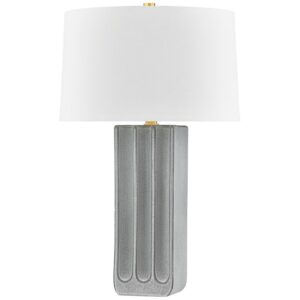
The veiled virgin sculpture is housed in the Episcopal Palace in St. John’s, Newfoundland, Canada — a location that surprises most people, given that Strazza was Italian and the piece was made in Rome. It was acquired by Bishop Thomas Mullock and brought to Newfoundland around 1856, where it has remained ever since, accessible to visitors at the diocesan museum. Giovanni Strazza was a Milanese sculptor working in the mid-19th century, trained in the Italian academic tradition that placed marble carving technical skill above all other sculptural values. The Veiled Virgin was not widely known outside Canada until around 2015, when photographs circulated globally and created an immediate, visceral public response. The Aged Brass Ceramic Granite Table Lamp ($239–$359) in warm aged brass and granite ceramic creates the formally resolved lamp presence that classical Italian academic sculpture deserves as a companion piece.
The Technique Behind the Veiled Virgin Sculpture
The veiling technique that Strazza used was not entirely without precedent — the tradition of marble veiling sculpture dates to at least the 17th century, with notable earlier examples including works by Antonio Corradini and Raffaele Monti. What Strazza achieved in the Veiled Virgin was a refinement of this tradition to an extraordinary degree of precision. The method requires carving the veil as an integral part of the marble block, not as a separate piece: the sculptor must calculate the thickness of the veil layer precisely enough to allow the features beneath to read clearly while maintaining enough material above to sustain the illusion of fabric. Too thick and the face disappears; too thin and the marble breaks. The Adorno Natural and Beige Table Lamp ($239–$359) in natural beige creates the quiet, precise lamp presence that suits a room organized around an object of this kind of technical mastery.
Veiled Virgin Sculpture: Light, Surface, and Translucency
The veiled virgin sculpture works most powerfully in certain light conditions — specifically, in raking side light that catches the veil’s surface texture and allows the face beneath to emerge from shadow. This is also the principle that governs how to light any sculpture effectively in a home: from the side, at a slight angle, so that the light creates shadow definition in the surface texture rather than washing it out from above. A lamp placed to the side of a sculpture at approximately the height of the sculpture’s primary features creates the conditions in which any three-dimensional form reads at its best. The Possini Euro Zeus Gold Leaf Modern Table Lamp ($319–$479) in gold leaf creates the warm directional light that reveals surface texture in a sculpture or decorative object — the exact quality the Veiled Virgin requires.
Browse our table lamps collection for the full collection of sculptural table and floor lamps that create the warm, directional light best suited to displaying sculpture alongside other fine objects.
For the complete guide to the world’s most famous sculptures and their design legacy, see our famous sculptures guide.
Frequently Asked Questions
Where is the Veiled Virgin sculpture?
The Veiled Virgin is housed in the Episcopal Palace (now the diocesan museum) in St. John’s, Newfoundland, Canada. It was brought to Newfoundland by Bishop Thomas Mullock around 1856 and has remained there ever since. The piece was largely unknown outside Canada until photographs circulated globally around 2015, after which it gained worldwide recognition as one of the most technically astonishing sculptures ever created.
Who made the Veiled Virgin sculpture?
The Veiled Virgin was made by Giovanni Strazza, a Milanese sculptor working in Rome in the mid-19th century. Strazza was trained in the Italian academic tradition and worked primarily on religious and mythological subjects. While other works by Strazza exist, the Veiled Virgin is by far his most significant surviving piece and the work for which he is remembered.
How did Strazza carve the veil?
Strazza carved the veil as an integral part of the same marble block as the face beneath — not as a separate piece attached afterward. The technique requires calculating the precise thickness of the veil layer: thick enough to sustain the illusion of fabric, thin enough to allow the features beneath to read through it. The veil must also be carved with surface texture that implies fabric weave without any actual separate threads. This is achieved through extremely fine graduated chisel work at the surface, creating the illusion of a different material in the same stone.
What is the tradition of veiled sculpture?
Veiled sculpture — the representation of a veil or fabric so thin and precise that features or forms beneath it are visible through the stone — has a tradition in Italian sculpture dating to at least the 17th century. Notable earlier examples include works by Antonio Corradini (Modesty, 1752, and a veiled Christ figure) and Raffaele Monti. The tradition demands extraordinary technical skill and is considered one of the most difficult challenges in marble carving. Strazza’s Veiled Virgin is the most widely recognized surviving example.