

Ceramic Sculpture Ideas for Home Decoration: Glaze, Form, and Studio Quality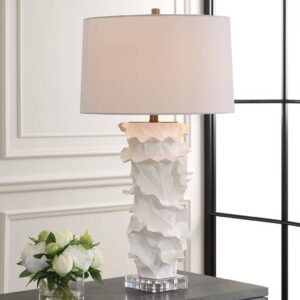
Ceramic sculpture ideas for home decoration cover more formal ground than any other sculpture material. Fired clay can take any color, any surface texture, any form from the strictly geometric to the expressively organic. It suits every interior style except the most formal classical, and even there, quality porcelain has a tradition reaching back to 18th-century European collecting. The Aged Brass Ceramic Granite Table Lamp ($239–$359) in warm granite-textured ceramic demonstrates what the material does when handled with design intention: the surface texture creates visual interest that changes with light, and the warm brass hardware creates material continuity with a warm-toned room.
This guide walks through the main ceramic sculpture ideas for home decoration by ceramic type and room context. Browse our table lamp collection for ceramic lamp designs that pair naturally with ceramic sculptural objects.
Ceramic Sculpture Ideas for Home Decoration: By Ceramic Type
The best ceramic sculpture ideas for home decoration start with understanding the ceramic type. Stoneware sculpture for home is the most durable and most versatile — fired at high temperature, stoneware is dense, non-porous, and suitable for both indoor and some covered outdoor positions. Its surface ranges from rough and textural to smooth and silky, making it equally at home in farmhouse and contemporary settings. The Aged Brass and Ceramic Affogato Table Lamp ($289–$439) in warm affogato aged brass creates the formal brass counterpart for a stoneware sculpture in a transitional room.
Earthenware sculpture decor is fired at lower temperatures and tends toward warmer colors — terracotta, ochre, dark brown — and more porous surfaces. It has the longest folk art tradition of any ceramic type: terracotta animals, earthenware figures, and painted clay objects from every culture and era are earthenware. Earthenware suits farmhouse, Mediterranean, and globally sourced rooms. The Adobe Brown Chisel Ceramic Table Lamp ($269–$409) in earthy adobe brown chisel shares the same warm terracotta register as traditional earthenware sculpture.
Glazed Ceramic Figurine and Surface Quality
A glazed ceramic figurine’s quality is readable in its surface finish. A quality glaze application has consistent depth, no crawling or pinholing, and a surface that catches light evenly without flat spots. Reactive glazes — those that change color and pattern during firing based on kiln atmosphere — have an additional quality signal: no two pieces are identical, which makes each one genuinely unique. The Cobalt and Natural Brass Table Lamp ($269–$409) in cobalt glass and natural brass shares this quality of a unique light-interactive surface that changes with ambient conditions.
Ceramic Animal Sculpture Ideas for Every Room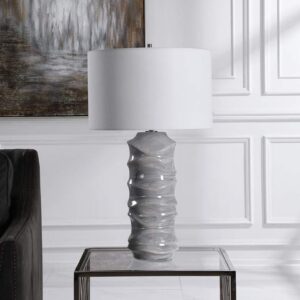
Ceramic animal sculpture ideas are the widest and most room-versatile category of ceramic sculpture. A matte white ceramic owl on a Scandinavian bookshelf. A terracotta rabbit at the edge of a kitchen windowsill. A stoneware horse on a transitional console. The subject is always recognizable, the material is always warm, and the specific ceramic treatment is what determines the style register. A rough hand-built ceramic animal reads as studio craft; a smooth precision-glazed ceramic animal reads as decorative design. Browse our sculptural table lamps for table lamp designs suited to the widest range of ceramic room contexts.
Handmade Ceramic Sculpture and Display Principles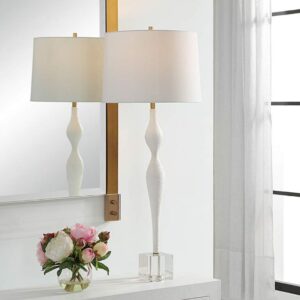
Handmade ceramic sculpture — pieces thrown on a wheel, hand-built by coil or slab, or pinched — has a quality signal that no mold-produced piece replicates: the visible mark of the maker. Slight irregularities in the wall thickness, the fingerprints visible in unglazed areas, the particular quality of a hand-pulled lip or edge — these communicate human presence in a way that mold-cast ceramics structurally cannot. This is the quality that separates studio ceramic art from decorative ceramic objects. The Mid Century Modern Green Ceramic Table Lamp ($339–$479) in sage green ceramic has this same quality of honest material and visible craft.
Ceramic sculpture for shelf display works best when the piece has at least 4 inches of clear surface on either side. Ceramic’s warmth and variety of surface effects can hold its own against surrounding objects, but it needs visual breathing room to read as art rather than as one item in a collection. Group ceramic pieces in odd numbers — three, five — if you want multiple pieces on a shelf. The High Hammock Pale Blue Ceramic Table Lamp ($319–$479) in pale blue is the coastal shelf lamp for a ceramic sculpture composition in an aqua or pale ceramic palette.
Ceramic sculpture ideas for home decoration reward the investment of attention. A piece chosen for its specific glaze, its particular texture, or its maker’s identifiable style brings more to a room than a generic decorative object at any price point. The Ceramic lamp collection for our full range of ceramic lamp designs is a good starting point for building the room that ceramic sculpture deserves.
Frequently Asked Questions
What types of ceramic sculpture suit home decoration?
Stoneware suits the widest range of rooms — durable, versatile, available in every surface treatment. Earthenware suits farmhouse and globally sourced rooms with its warm terracotta palette. Porcelain suits formal and delicate settings. Studio ceramics (wheel-thrown, hand-built) have the highest quality ceiling and suit rooms where the making process is part of the art’s value.
How do you display ceramic sculpture at home?
Give each piece at least 4 inches of clear surface on either side. Group multiple ceramic pieces in odd numbers — three or five — on shelves. Ceramic sculpture for shelf display reads best when lit from the side, not from directly above. A lamp at the end of the shelf, positioned to cast light across the ceramic’s surface, reveals glaze texture and form better than overhead lighting.
How can you tell if ceramic sculpture is handmade?
Look for slight irregularities in wall thickness, visible fingerprints or tool marks in unglazed areas, and small natural variations in the glaze surface that no two pieces replicate. Mold-produced ceramics have perfectly uniform walls and glaze surfaces with no variation. Handmade ceramic sculpture shows the maker’s presence in details that molds structurally cannot replicate.
What lamp suits a ceramic sculpture display?
A lamp whose material shares a quality with the ceramic sculpture — warm brass hardware beside warm stoneware, ceramic lamp base beside a ceramic sculpture, natural materials beside earthenware. Avoid highly industrial or polished metal lamps beside handmade studio ceramics, as the material contrast undermines both objects. The lamp should illuminate the ceramic from the side to reveal surface texture.