

Floor and Table Lamp Sets: How to Match Your Living Room Lighting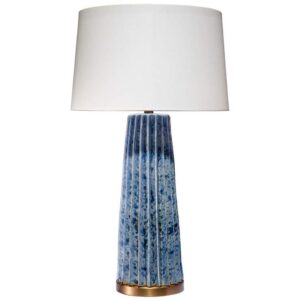
Floor and table lamp sets — coordinated lamps in matching finishes — are the most reliable way to create a designed, resolved living room lighting plan. A random assortment of lamps in different finishes, shade colors, and material families creates visual noise that prevents even a well-furnished room from reading as intentionally designed. Conversely, a thoughtfully coordinated set of floor table lamps and table lamps in matching or complementary finishes creates the visual coherence that elevates furniture into an interior. At Exotic Decor USA, our table lamps collection and our floor lamps collection are designed to coordinate — and this guide gives you the rules to build any matching set correctly.
Why Lamp Coordination Matters More Than Individual Quality
A beautiful lamp in isolation provides less design value than two simpler lamps that visually belong together. The reason: the living room is a composition, not a collection of individual objects. Every object in the room contributes to or detracts from the overall composition — and lamps, which occupy vertical space and emit light, are among the most visually active objects in the room. When floor and table lamp sets share key visual attributes, they create a lighting layer that reads as one resolved design decision. When they do not, they read as multiple separate, competing decisions.
The four coordination attributes that must align across all lamps in a room — or that must be deliberately varied in a controlled way — are hardware finish, shade color, shade form, and material family. A lamp set that aligns on all four reads as a designed set. A set that aligns on three reads as coordinated but varied. A set that aligns on fewer than two reads as assembled rather than designed.
The Four Matching Rules for Floor and Table Lamp Sets
Rule 1: Hardware Finish Must Match (or Be Deliberately Varied)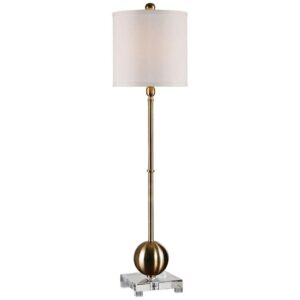
The hardware finish — the metallic or non-metallic fittings on the lamp socket, base trim, and shade frame — is the most visible coordinating element between a floor lamp and a table lamp. A brass table lamp beside a floor lamp with chrome hardware creates chromatic tension rather than cohesion. The rule: all warm metallic hardware (aged brass, polished brass, antique gold, bronze) together, or all cool/dark hardware (matte black, gunmetal, chrome, nickel) together. A black and gold table lamp on the end table with a pure gold floor lamp beside it is the one permitted exception — both share the gold-black DNA and read as intentionally contrasted rather than accidentally mixed.
- Warm metallic coordination: Aged brass floor lamp + lamps brass table hardware on end table lamps. Bronze table lamps can complement aged brass (similar warm tone, darker). Copper table lamp hardware belongs to the warm metallic family.
- Cool/dark coordination: Gunmetal floor lamp + modern black table lamp end lamps. Black metal table lamp on end table + black floor lamp base. All black table lamps in a room create a composed, dark-hardware scheme.
- Silver coordination: Silver table lamp hardware + silver floor lamp trim. A mercury glass table lamp base beside a chrome or silver floor lamp creates a cool, luminous coordinated set.
Rule 2: Shade Color Must Match Exactly
Shade color is the most visible coordination element because it determines the color of the light the lamp emits. All cream shades together emit warm amber-tinted light; all white shades emit clean warm-white light. Mixing one cream shade with two white shades in the same room creates a light quality inconsistency that is immediately noticeable when multiple lamps are on simultaneously. The rule: all shades in the room must be the same color — all white, all cream, or all natural linen. No exceptions.
Rule 3: Shade Form May Vary by Function
Unlike shade color, shade form — empire (tapered) versus drum (cylindrical) — may vary by functional role. A floor lamp used for ambient room lighting suits a drum shade (omnidirectional diffusion). A table lamp used for reading suits an empire shade (directional downward light). This is the one permitted coordination variation: shade form can differ between floor and table lamps if each is performing a different functional role.
Rule 4: Material Family Must Be Compatible
A ceramic table lamp, based on the end table beside a raw concrete floor lamp, creates material tension — warm organic versus cold industrial. The floor lamp’s material must belong to the same material temperature as the table lamps. A wood table lamp beside a rattan floor lamp: both organic, both warm — compatible. A marble table lamps end table lamp, and a polished brass floor lamp: both precious, both formal — compatible. A ceramic table lamps artisan piece beside a hand-blown glass floor lamp: both handcrafted, both organic — compatible.
Floor and Table Lamp Set Combinations by Living Room Style
Traditional Living Room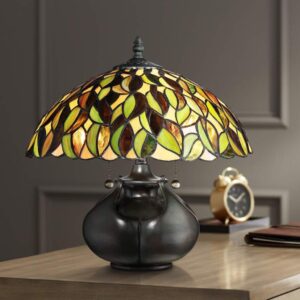
Traditional floor and table lamp sets: A polished or aged brass floor lamp in a torchiere or arc form beside crystal table lamps or traditional table lamps in brass with ceramic bases. Cream empire shades throughout. The floor lamp can be a tiffany table lamps-style floor lamp — a Tiffany floor shade above a brass pole — if the end table lamps share the brass hardware and warm shade color.
Contemporary and Minimalist Living Room
Contemporary floor and table lamp sets: A gunmetal or matte black arc floor lamp behind the sofa, beside black table lamps with white drum shades on end tables. For a warmer contemporary set: a slim brushed brass floor lamp beside gold table lamps or brass table lamp end table pieces in the same brushed finish with white drum shades throughout.
The Aarna Black Table Lamp ($269–$409), as the end table lamp beside a matte black arc floor lamp, creates the most resolved contemporary lamp set — same finish, same shade color (white drum), same material family (ceramic or metal). Both pieces benefit from the other’s presence.
Coastal and Organic Modern Living Room
Coastal floor and table lamp sets: A rattan table lamp or wicker table lamp on the end table beside a rattan or bamboo floor lamp creates the most naturally coordinated coastal set — matching material rather than matching hardware finish. Coastal table lamps in pale ceramic beside a natural-finish floor lamp with a white linen shade suit the organic modern living room, where the lamp materials echo the room’s natural textile and wood palette. Cordless table lamps for living room, compact pieces at the coffee table create a third lighting layer in the coastal living room without additional floor lamp positions.
Maximalist and Eclectic Living Room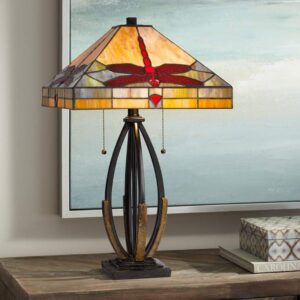
Maximalist floor and table lamp sets: The maximalist living room permits the widest variation in the set, but the coordination rules still apply. A marble table lamps end table pair beside a sculptural gold floor lamp: both communicate material luxury. A stained glass table lamp Tiffany piece beside a Tiffany floor lamp: matching period aesthetic. The Possini Euro Zeus Gold Leaf Modern Table Lamps ($319–$479), beside a gold arc floor lamp, create the full maximalist living room gold lamp set — two distinct lamp pieces in the same gold leaf material family.
Matching Reference: Floor and Table Lamp Sets by Style
| STYLE | FLOOR LAMP | TABLE LAMP | SHADE MATCH | HARDWARE |
| Traditional | Brass torchiere or uplight | Crystal or ceramic brass lamp | Cream Empire both | Aged or polished brass |
| Contemporary | Black arc floor lamp | Matte black ceramic end lamp | White drum both | Matte black throughout |
| Warm Contemporary | Brushed brass arc lamp | Brass ceramic column lamp | White drum both | Brushed brass throughout |
| Coastal | Rattan or bamboo pole lamp | Rattan or pale ceramic lamp | White or linen both | Natural hardware throughout |
| Organic Modern | Natural wood floor lamp | Wood or ceramic end lamp | Natural linen both | Warm natural hardware |
| Maximalist | Gold sculptural floor lamp | Gold leaf or marble end lamp | Cream empire or none | Gold or gilded brass |
Browse our full table lamps for living rooms and our floor lamps collection at Exotic Decor USA. For complete living room lamp guidance, see our cordless table lamps for living room pillar guide. Email info@exoticdecor.us Monday–Saturday, 10:00 AM–8:00 PM for personalized lamp set recommendations.
Frequently Asked Questions About Floor and Table Lamp Sets
Do floor and table lamps need to match in a living room?
Floor and table lamps do not need to be identical, but they must coordinate on at least two of the four key attributes: hardware finish, shade color, shade form, and material family. The most important coordination element is shade color — all lamps in the same room should have the same shade color (all white, all cream, or all linen) because mixed shade colors create inconsistent light quality when multiple lamps are on simultaneously. Hardware finish is the second most important: all warm metallic (brass, bronze, gold) or all cool/dark (black, gunmetal, chrome) throughout the room.
Can I mix brass and black lamp finishes in the same living room?
Yes — with a deliberate strategy. The most effective approach: use black as the primary finish for the majority of lamps (two black end table lamps, one black floor lamp) and introduce one brass piece as a deliberate accent (a brass console lamp or a brass-hardware table lamp at one end table). The brass reads as the warm exception against the cool-dominant set. The reverse also works: three brass lamps with one black accent. What does not work: two brass and two black in equal proportions — this reads as indecision rather than design.
What is the best position for a floor lamp relative to table lamps?
In a living room seating arrangement, a floor lamp typically goes in one of three positions: behind and to one side of the sofa (for ambient room lighting), in a reading corner beside an armchair (for task lighting), or beside a console against the wall (for architectural accent lighting). The table lamps go on the end tables at the sofa arms. The floor lamp and table lamps together create a layered lighting plan — the floor lamp handles the upper zone and ambient room light; the table lamps handle the mid-zone seated reading light.
How do I choose a floor lamp to match a table lamp I already own?
Identify the three key attributes of your existing table lamp: hardware finish (brass, black, chrome, etc.), shade color (white, cream, linen), and material family (ceramic, metal, wood, glass). Then match all three when selecting a floor lamp. Hardware finish and shade color are non-negotiable — they must match exactly. Material family can be compatible rather than identical: a ceramic table lamp can work with a metal floor lamp if both are in the same warm or cool material temperature. Bring a photo of your existing lamp to any lamp retailer consultation to facilitate exact finish matching.