

Luxury Table Lamps for Dark Living Rooms: How to Brighten Any Space
Luxury table lamps — in crystal, mercury glass, alabaster, polished brass, and gold leaf — are not just the most beautiful lamps in a living room. They are also the most effective tools for brightening a dark one. The reason lies in material physics: luxury lamp materials are light-active rather than light-passive. A crystal table lamp does not just emit light from its bulb — it refracts, scatters, and amplifies that light through its prismatic body, projecting luminous patterns onto the walls and ceiling. At Exotic Decor USA, our luxury table lamps collection includes several pieces specifically suited to dark living rooms. This guide covers which materials work best, where to place them, and how many lamps a dark room actually needs.
Why Dark Living Rooms Need Different Lamps Than Bright Ones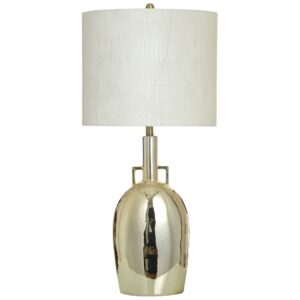
A living room reads as dark when it has one or more of these characteristics: north-facing windows (no direct sunlight), dark wall colors, dark flooring, heavy drapery, limited natural light, or minimal lamp positions. The instinct is to add more lamp positions — and this is correct. But the specific lamps chosen for a dark room must work harder than lamps in a well-lit space, because every lumen and every reflection matters. The principles:
- Maximize lumen output: Choose lamps with white or cream shades rather than colored shades — white fabric transmits the full LED output without absorption or tinting. A white drum shade transmits approximately 90% of the bulb output; a dark or colored shade can absorb 50% or more.
- Maximize reflection: Choose lamp bases in reflective materials — polished brass, gold,
- Use three lamp positions minimum: A dark living room with one lamp is still dark with one lamp. The standard two end table lamps plus one console lamp is the minimum lighting plan for any living room; a dark room needs this plus at least one additional floor lamp or reading corner lamp to create adequate light coverage.
- Place lamps near reflective surfaces: A lamp beside a mirror doubles its effective output through reflection. A console lamp flanking a large mirror on a dark wall creates four times the visual brightness — the lamp, its mirror reflection, the light projected onto the wall, and the reflected light from that projection.
The Best Lamp Materials for Dark Living Rooms
Crystal Table Lamps: Maximum Light Refraction
A crystal table lamp or antique crystal table lamps pair is the most effective light-amplifying lamp material available. Hand-cut crystal refracts warm LED light into prismatic patterns — each facet deflects a portion of the light outward in a different direction, creating the effect of many small light sources rather than one central one. The prismatic light patterns projected onto the surrounding walls and ceiling visually expand the room by distributing light across surfaces that the lamp cannot directly illuminate.
In a dark navy or forest green living room, a crystal table lamps pair on end tables beside a pale cream sofa creates the most dramatic brightening effect — the crystal light patterns read as jewels against the dark walls, creating visual interest rather than just illuminating them.
Mercury Glass: Omnidirectional Reflection
A mercury glass table lamp — silvered from within with a mirrored finish — reflects warm light back into the room from every angle. Unlike a crystal lamp that refracts light in fixed prismatic directions, a mercury glass base reflects the entire surrounding room — the sofa, the other lamps, the window, the ceiling — creating the optical impression of a much larger, brighter space. A glass base table lamp in mercury or antique mirror finish is the most space-expanding lamp material available.
Gold and Polished Brass: Warm Amplification
A gold table lamps base in polished gold leaf or brass table lamp in highly polished brass reflects warm light with a golden cast — the warmest and most flattering of all reflective materials. Where mercury glass reflects cool and neutrally, polished gold reflects warmly, creating a golden ambient glow around the lamp position that reads as inviting rather than clinical. In a dark living room with warm-toned wood furniture and cream upholstery, a lamps brass table pair in polished brass beside a white-shaded floor lamp creates the most welcoming dark-room lighting solution available.
The Possini Euro Zeus Gold Leaf Modern Table Lamps ($319–$479) — gold leaf resin with maximum reflective surface — is one of the most effective dark-room brightening lamps in our collection. The sculptural gold leaf body creates a warm golden glow around itself, visually pushing back the surrounding darkness.
Alabaster: Warm Glowing Diffusion
An alabaster table lamp — in natural translucent alabaster stone — is the only lamp material that glows from within when lit. When warm LED light passes through alabaster, the stone translucently diffuses it into a warm honey-amber glow. Unlike metal or glass materials that reflect light externally, alabaster becomes a secondary light source in itself — it is not a lamp with a base that happens to be decorative, it is a glowing stone object that also provides illumination. In a dark living room, an alabaster lamp on an end table creates a warm, organic glow that reads as warm candlelight rather than artificial lighting.
Silver and Mirror: Cool Expansion
A silver table lamp or silver table lamps pair in polished silver or chrome creates a cool, crisp reflective quality that suits dark rooms with cool palettes — grey walls, cool white furniture, dark floors. Where gold expands a dark room warmly, silver expands it crisply. A silver lamp beside a large mirror on a dark wall creates the maximum cool-expansion effect — the silver lamp, the mirror reflection, and the projected cool light create a clean, spa-adjacent quality that prevents a cool dark room from feeling oppressive.
How Many Lamps Does a Dark Living Room Need?
The standard living room lighting plan (two end table lamps, one console lamp, one floor lamp) is the minimum for a dark room. A dark living room typically needs:
- Three table lamp positions: Two end table lamps at the sofa ends, plus one
- One to two floor lamps: At least one
- One cordless accent lamp: A
Luxury Lamp Materials for Dark Rooms: Reference Guide
| MATERIAL | HOW IT BRIGHTENS | LIGHT QUALITY | BEST DARK ROOM |
| Crystal | Prismatic refraction — scatter light in all directions | Multi-directional, jewel-like | Dark formal rooms, navy/forest walls |
| Mercury Glass | Omnidirectional mirror reflection — expands perceived space | Cool, expansive, glamorous | Dark contemporary, grey-dominant rooms |
| Polished Gold | Warm reflective amplification — golden glow cast | Warm, rich, inviting | Dark, warm rooms, walnut furniture |
| Alabaster | Translucent glow — becomes secondary light source | Honey-warm, organic, diffuse | Dark organic rooms, earthy palettes |
| Silver/Chrome | Cool mirror reflection — crisp space expansion | Cool, clean, precise | Dark cool rooms, grey/white palettes |
| Marble (white) | Light surface reflection — bounces lamp light upward | Neutral, clean, formal | Dark formal rooms, dark stone floors |
Browse our luxury table lamps for dark living rooms at Exotic Decor USA. For complete living room lamp placement guidance, see our cordless table lamps for living room pillar guide. Email info@exoticdecor.us Monday–Saturday, 10:00 AM–8:00 PM for personalized dark-room lamp recommendations.
Frequently Asked Questions About Lamps for Dark Living Rooms
How many lamps does a dark living room need?
A dark living room needs a minimum of four to five lamp positions for adequate light coverage: two end table lamps at the sofa ends, one console lamp against the wall, and one to two floor lamps in corners or behind the sofa. Additionally, a cordless accent lamp on the coffee table or a shelf creates the close-range central glow that helps brighten the room’s core. The rule: every seated position in the room should be within 6 feet of a lamp. In a very dark room, this may require six or more lamp positions total.
What type of table lamp is best for a dark living room?
The best table lamps for dark living rooms are those made from light-amplifying materials: crystal (refracts light into prismatic patterns), mercury glass (reflects light omnidirectionally), polished gold or brass (creates a warm, ambient glow), alabaster (glows from within), and polished silver or chrome (reflects cool, expansive light). All should have white or cream shades rather than dark or colored shades — white fabric transmits the full LED output, while dark shades absorb 40 to 50 percent of the bulb’s output. Use a 9W warm white LED at 800 lumens, 2700K in each lamp for maximum output without harsh quality.
Does lamp shade color affect how bright a room feels?
Yes significantly. A white shade transmits approximately 85 to 90 percent of the bulb’s output into the room. A cream shade transmits 75 to 80 percent and adds a warm amber cast. A dark colored shade (burgundy, navy, black) can absorb 50 to 60 percent of the output, leaving only 40 to 50 percent reaching the room. In a dark living room, using white shades on all lamps can increase effective light output by 30 to 40 percent compared to dark shades on the same lamps with the same bulbs — without changing any lamp or bulb specification.
Should I use warm white or cool white bulbs in a dark living room?
Always warm white — 2700K to 3000K — in a dark living room. Cool white (4000K to 6500K) bulbs produce more lumens per watt, but the cool, blue-shifted light quality makes dark rooms feel clinical and cold rather than inviting. Warm white at 2700K produces the golden glow that makes a dark room feel warm and inviting. For maximum output from warm white: choose a 9W LED at 800 lumens minimum per lamp — this is the standard output equivalent of a 60W incandescent bulb and the correct specification for any living room lamp.