

Horse Sculpture: From Remington Bronzes to Modern Equine Art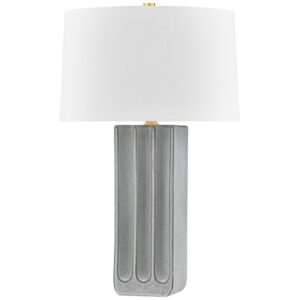
The horse has been the most consistent subject in Western sculpture for two thousand years. Roman emperors commissioned equestrian bronzes as monuments to their power. Frederic Remington built his reputation on cast bronze horses frozen in mid-gallop. Contemporary sculptors continue to work with the horse because the animal’s combination of muscular power, fluid grace, and formal complexity makes it one of the most technically demanding and most rewarding subjects in three-dimensional art. Horse sculptures and equine sculpture remain the animal sculpture subjects most closely associated with the American interior — in a ranch house, a study, a living room with traditional furniture, or a home office where strength and performance matter, a sculpture reads immediately as intentional and right. The sculptural table lamp beside it creates the warm metallic continuity that the best equine bronze demands.
This guide covers the main styles of sculpture, from the formal academic tradition of Remington-style bronze casting to the more expressive contemporary approaches in wood, metal, and ceramic. It covers how to choose the right equine sculpture for your room, how to scale it correctly, and how to pair it with the lamp and surface composition that shows it at its best. A sculpture handled well is one of the most powerful single-object interior design decisions available, and the Aged Brass Ceramic Granite Table Lamp ($239–$359) in warm granite-textured ceramic is the natural lamp companion that grounds the composition at table level.
The Tradition of Horse Sculpture in Art
The equestrian bronze is one of the oldest and most prestigious sculpture formats in Western art — the Marcus Aurelius in Rome, the Gattamelata by Donatello, the condottiere bronzes of the Italian Renaissance, and the grand equestrian monuments of the 18th and 19th centuries all belong to the same formal tradition. In American art, the tradition took a specifically western turn with Frederic Remington, whose cast bronze sculptures of horses and riders in action — the Bronco Buster, Coming Through the Rye — captured the movement and drama of the American West in a way that made equine sculpture a uniquely American art form. These Remington sculpture works set the template for American horse art: dynamic, action-oriented, proud. The Aged Brass and Ceramic Affogato Table Lamp ($289–$439) in aged brass and ceramic Affogato creates the warm transitional quality that suits a Remington-inspired sculpture in a study or library.
Contemporary sculpture has expanded well beyond the Remington tradition into abstract and semi-abstract equine forms — horses reduced to essential gesture, horses in painted resin, horses in twisted metal, horses as conceptual investigations of power and movement. These contemporary approaches suit a wider range of interiors than the traditional academic bronze, but they require more careful consideration of the room’s existing design language. A Remington-style bronze horse reads correctly in almost any traditional or transitional room. An abstract horse in welded steel reads best in a contemporary or industrial room where geometric form and raw material are already the primary design vocabulary. The Aarna Black Table Lamp ($269–$409) in matte black creates the dark, contemporary material register that suits abstract metal equine sculpture.
How to Choose Horse Sculpture for Your Home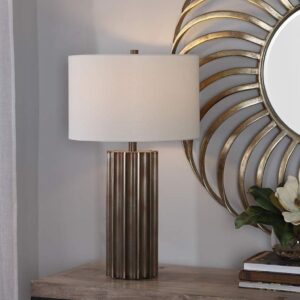
The first decision in choosing a horse sculpture for your home is posture: standing, walking, trotting, cantering, or rearing. A standing horse at rest — all four hooves on the ground, head lowered — is the most stable form both physically and visually. It suits formal rooms and traditional settings where stillness and dignity are the qualities being expressed. A horse in motion — cantering, rearing, or mid-gallop — creates dynamic energy that suits larger rooms where the sculpture can be seen from a distance. A rearing horse in particular requires careful placement: the visual upward energy needs open space above and to the sides, or the composition feels cramped. The Aged Brass Ceramic Meadow Ombre Table Lamp ($289–$439) in warm ombre ceramic gives the calm, grounded lamp presence that balances a dynamic rearing sculpture on the same surface.
Material choice for sculpture follows the same principle as for all animal sculpture: match the material to the room’s existing material palette and the emotional register you are trying to create. A traditional mahogany-paneled study calls for a warm dark bronze. A contemporary white-walled living room might call for a pale ceramic or an abstract metal horse. A transitional room with warm wood and brushed brass hardware calls for a warm brass or aged gold equine form. The Aged Gunmetal Fluted Table Lamp ($299–$449) in aged gunmetal creates the precise material register for a contemporary room where the sculpture is in brushed steel or dark resin.
Scale and Placement for Horse Sculpture
Horse sculpture is subject to the same 2/3 rule as all decorative objects: the piece should be sized in proportion to the surface it occupies. A large horse sculpture on a 48-inch console should be 16 to 24 inches in its primary dimension. A small horse figure on a bookshelf works at 6 to 10 inches. The error most buyers make is choosing a horse that is too small for the surface — a 6-inch horse on a 48-inch console looks incidental rather than intentional. A sculpture stand or plinth can elevate a smaller horse to the right visual height when the piece is worth displaying but lacks the scale for freestanding placement. The Aged Brass Metal Modern Accent Table Lamp ($339–$509) beside the horse sculpture should be proportionate to the horse’s height, not the surface width.
A study or home office is the most congruent interior position for a horse sculpture. The associations of the horse — strength, performance, discipline, movement — are precisely the qualities that suit a workspace where those values are being invoked and reinforced. A bronze horse on a desk corner or a shelf behind the desk creates a visual anchor that says something specific about the person who works there, in a way that a generic decorative object never can. The Aged Brass Dome Adjustable Desk Lamp ($269–$409) on the desk with its adjustable arm is the practical companion for a study horse sculpture: it lights the work surface and the sculpture simultaneously from the same position.
Caring for Bronze Horse Sculptures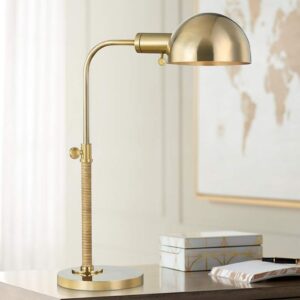
Bronze horse sculpture requires minimal maintenance but benefits from occasional attention. Dust regularly with a dry microfiber cloth. If the piece is displayed indoors away from humidity and direct sunlight, the existing patina is stable and requires no treatment. If the piece has been exposed to humidity or shows areas of active corrosion (green powdery spots rather than stable dark green patina), clean gently with a damp cloth and apply a thin coat of paste wax to seal the surface. Never use abrasive cleaners on bronze — even mild abrasives will scratch the surface and disrupt the patina layer. Wooden sculpture and ceramic animal sculpture require similarly gentle care: dust and occasional damp-cloth cleaning, kept away from direct heat sources and humidity extremes. The Adobe Brown Chisel Ceramic Table Lamp ($269–$409) in earthy adobe brown creates the same warm, grounded presence as a well-maintained traditional bronze — an object that gains character with age.
Browse our table lamps collection for sculptural lamps that complement horse and equine sculpture. See our complete
Frequently Asked Questions
What is equine sculpture?
Equine sculpture is any three-dimensional artwork depicting a horse. The term “equine sculpture” tends to be used in the context of fine art and collector markets, while “horse sculpture” is the broader and more common term in home decor and gifting contexts. Equine sculpture encompasses the formal academic bronze tradition (Remington, Western art) as well as contemporary abstract and semi-abstract horse forms in metal, ceramic, wood, and resin.
What material is best for horse sculpture?
Bronze is the most traditional and most durable material for horse sculpture. It captures muscle detail, surface texture, and the tension of movement better than any other casting material. Ceramic horse sculpture suits more casual and contemporary settings. Wood-carved horses suit farmhouse and folk art contexts. Cast resin provides the visual quality of bronze at a lower price point. For outdoor positions, bronze is by far the most weather-resistant choice.
How do you display a horse sculpture?
The primary indoor positions are a study or home office desk or shelf, a living room console or end table, and a mantelpiece. Choose a posture that suits the room’s character: a standing horse for formal calm, a cantering or rearing horse for dynamic energy. Size the sculpture to the surface — at least 14 inches in a primary dimension for a console statement piece. Place the lamp on the opposite end of the surface to create a balanced bilateral composition.
Who makes the best horse sculpture?
Frederic Remington is the most famous American equine sculptor — his cast bronzes established the template for dynamic western horse art. Contemporary equine sculptors working in the academic bronze tradition include artists who show through western art galleries and associations. For home decor, quality horse sculptures are available in cast resin (Remington reproductions and original designs), ceramic, and welded metal at a wide range of price points.