

Michelangelo Sculptures: From the David to the Pietà, A Complete Guide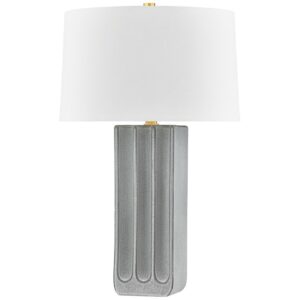
No sculptor in history covers a wider range — in subject, in scale, in emotional register — than Michelangelo. The David is a civic statement of public confidence, 17 feet of marble speaking for an entire city. The Pietà is an intimate religious meditation, a mother cradling her dead son with a grief so restrained it becomes universal. Moses radiates Old Testament authority from his marble seat. The Rondanini Pietà, left unfinished at his death, is the most moving of all: an old man’s final reckoning with the human condition in stone. Michelangelo sculptures span the full range of what figurative art can do, and understanding them is understanding what the greatest sculpture achieves. The Aged Brass Ceramic Granite Table Lamp ($239–$359) in aged brass and granite ceramic creates the warm, formal lamp presence that a room with serious art requires.
This piece covers the key Michelangelo sculptures, their technical achievements, their symbolic content, and what the principles they embody mean for a contemporary interior that aspires to the same quality of considered, intentional design. Browse our table lamps collection for lamp designs that bring this quality to any room.
The Pietà: Michelangelo’s Marble Meditation on Loss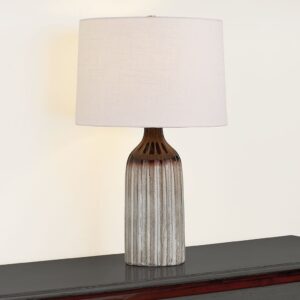
The Pietà (1498–1499) was Michelangelo’s first major commission and, in some ways, his most perfect achievement. The 23-year-old Florentine carved a marble group of the Virgin Mary cradling the body of Christ that solved an impossible formal problem: how to show a grown man’s body lying across a seated woman’s lap in a way that is compositionally stable, anatomically plausible, and emotionally overwhelming simultaneously. His solution — the pyramidal composition, the spreading folds of the Virgin’s robe, the diagonal of Christ’s body — remains the most formally resolved solution to this subject that statue of david sculpture has produced. In St. Peter’s Basilica, where it now stands behind bulletproof glass after a 1972 attack, the Pietà draws sustained, reverent silence from visitors of every background. The Aged Brass and Ceramic Affogato Table Lamp ($289–$439) in warm aged brass and ceramic Affogato creates the quiet, warm lamp presence that belongs in a room where art is taken this seriously.
The Rondanini Pietà, begun late in Michelangelo’s life and left unfinished at his death in 1564, is the opposite of the St. Peter’s version in almost every way. Where the early Pietà is polished, resolved, and emotionally contained, the Rondanini is rough, incomplete, and emotionally raw. The figures are elongated and abstracted — more Giacometti than Renaissance — and the roughness of the unfinished marble surfaces becomes part of the work’s meaning: this is what the interior of a block of marble looks like when someone has been reaching toward something they couldn’t quite grasp. The Adorno Natural and Beige Table Lamp ($239–$359) in natural beige creates the quiet, unhurried presence that the Rondanini Pietà’s quality of patient searching requires.
Moses and the Slaves: Michelangelo Sculptures in Rome
The Moses (1513–1516) in the San Pietro in Vincoli church in Rome is, with the David, the most physically commanding of Michelangelo’s sculptures. Intended as part of a monumental tomb for Pope Julius II that was never completed, the Moses sits in a smaller architectural frame than Michelangelo designed, but fills it with extraordinary authority. The figure is larger than life, the drapery complex and precisely carved, the face radiating the ferocity of a prophet who has just returned from speaking with God. The horns on Moses’s head — a traditional iconographic detail based on a translation error in the Latin Bible — are one of the most frequently remarked-upon details in all of art history. The Possini Euro Zeus Gold Leaf Modern Table Lamp ($319–$479) in warm gold leaf creates the weight and authority that belongs beside a room’s primary statement piece.
Michelangelo Sculptures and the Design of Classical Rooms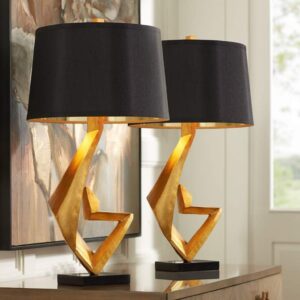
A room designed in the spirit of Michelangelo sculptures classical aesthetic — warm marble or stone surfaces, formal scale, the presence of natural materials handled honestly, deliberate negative space — achieves a quality that no amount of decorative complexity can replicate. The principle is always the same: choose the right material, handle it honestly, get the scale correct, and include only what earns its place. One warm lamp, one art object with genuine presence, clear surfaces. Browse our sculptural table lamps for the sculptural lamp designs that anchor a classically inspired room.
For the complete guide to the world’s most famous bernini sculptures across all eras and their design legacy, see our famous sculptures guide.
Frequently Asked Questions
What are Michelangelo’s most famous sculptures?
Michelangelo’s most famous sculptures are the David (1501–1504, Accademia Gallery Florence), the Pietà (1498–1499, St. Peter’s Basilica Rome), Moses (1513–1516, San Pietro in Vincoli Rome), and the Rondanini Pietà (begun circa 1552, Castello Sforzesco Milan). He also created the four Prisoners (unfinished slave figures) now in the Accademia Gallery alongside the David, and numerous other religious commissions throughout his career.
How many sculptures did Michelangelo make?
Approximately 40 sculptures are confidently attributed to Michelangelo, though many of his most ambitious commissions were never completed or survive only in fragmentary form. The tomb of Pope Julius II was intended to include over 40 figures; only Moses and two Prisoners were completed to Michelangelo’s satisfaction. He also worked as an architect and painter (the Sistine Chapel ceiling), making sculpture only one dimension of an extraordinary output that spanned 70 years of active work.
What material did Michelangelo use for his sculptures?
Michelangelo worked almost exclusively in marble, specifically white Carrara marble from the quarries in Tuscany. He had an unusually personal relationship with his marble — he visited the quarries himself to select blocks, and famously described his method as liberating the figure already present in the stone. His surfaces ranged from the extraordinarily high polish of the Pietà to the deliberately rough surfaces of the unfinished Prisoners, both of which he used expressively.
Where is the Michelangelo Pietà located?
The most famous Pietà (1498–1499) is in St. Peter’s Basilica in Vatican City, where it is displayed behind bulletproof glass in the first chapel on the right after the main entrance. It was moved behind protective glass after an attack in 1972. The Rondanini Pietà (begun circa 1552, left unfinished) is in the Museo d’Arte Antica in the Castello Sforzesco in Milan. A third Pietà, the Bandini Pietà, is in the Museo dell’Opera del Duomo in Florence.