

Oversized Table Lamps for Living Rooms: When to Go Big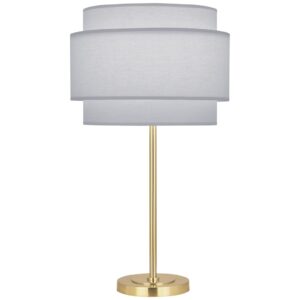
Oversized table lamps are among the most frequently misapplied purchases in American home furnishings — bought for a room they overwhelm, or avoided for rooms that genuinely need them. The rule for living room lamp sizing is simpler than it appears: lamp scale must match surface scale, surface scale must match room scale, and room scale is determined by ceiling height and furniture footprint. In a large living room with 11-foot ceilings and a wide console, a standard 26-inch lamp reads as a decorative accent rather than an architectural element — it disappears. At Exotic Decor USA, our large and statement table lamps collection includes several pieces designed for exactly these large-surface, high-ceiling applications. This guide tells you exactly when you need them.
The Proportionality Principle: Why Scale Matters More Than Style
Before selecting any oversized table lamp, understand the proportionality cascade: the lamp’s scale must be proportional to its surface, the surface’s scale must be proportional to the room, and the room’s scale is defined by its ceiling height and largest furniture piece. A lamp that is correctly proportioned to its surface in a large room automatically reads as correctly scaled within the room.
- The lamp-to-surface rule: The shade diameter (at its widest point, typically the bottom) should not exceed the surface width. On a 36-inch-wide console, a shade bottom diameter of 20 inches or less maintains proportion. On a 48-inch-wide sideboard, a 24-inch shade diameter is acceptable.
- The surface-to-room rule: A console or end table with a total height (furniture plus lamp) below 60% of the ceiling height reads as correctly scaled. In a 10-foot ceiling room (120 inches), a console-plus-lamp total of up to 72 inches is proportional.
- The lamp-to-furniture rule: When a sofa runs more than 90 inches wide, a single end table lamp reads as inadequate — the lamp must be taller, or the sofa needs two lamp positions (one at each end) to feel properly anchored.
Six Scenarios Where Oversized Table Lamps Are the Right Choice
1. High-Ceiling Living Rooms (10 Feet and Above)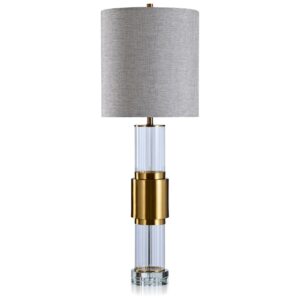
The clearest case for oversized table lamps: rooms with ceilings 10 feet or higher where standard lamps read as small and decoratively insufficient. A standard 26-inch lamp in a 12-foot-ceiling room occupies approximately 18% of the vertical space between the table surface and the ceiling. A 36-inch table lamps tall option occupies 25% — closer to the proportional relationship that creates visual balance. The practical target: the lamp should occupy between 20–30% of the ceiling-to-surface vertical space.
The Aged Brass Metal Modern Accent Table Lamp ($339–$509) at its taller specification is the correct architecturally slim large lamp for high-ceiling contemporary and transitional living rooms — it provides the vertical presence required without the wide base footprint that would overwhelm the surface.
2. Wide Console Tables and Sideboards
A console table lamp flanking a 60-inch-wide mirror above a wide console must be tall enough to relate to the mirror proportionally. The lamp column should reach at least two-thirds of the mirror height above the console surface. On a 48-inch console with a 48-inch mirror, the correct buffet table lamp height is 30–36 inches — territory that begins at the upper end of the standard lamp range and extends into the oversized table lamps category.
For a dining room sideboard or hallway console: buffet table lamps in matched pairs are the traditional format for this placement. The Possini Euro Zeus Gold Leaf Modern Table Lamps ($319–$479) — sculptural gold leaf resin, substantial visual presence — suit the wide sideboard position in a maximalist or glam living room or dining room where the lamp must hold its own beside a large mirror.
3. Large Sectional Sofas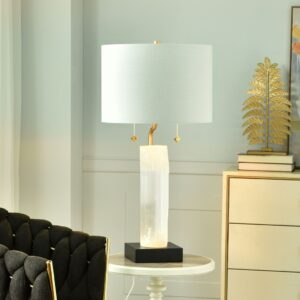
A sectional sofa running 110–140 inches wide requires end table lamps that are visually substantial enough to anchor the sofa ends. A standard 24-inch lamp on a side table beside a 140-inch sectional reads as an afterthought. The correct approach: oversized table lamps at 30–34 inches on end tables at each sofa end, or a combination of floor table lamps at one end and a tall table lamp at the other. The combined visual weight of large lamps at both ends brackets the sectional and gives the room a composed, designed quality rather than a furnished one.
4. Open-Plan Living Spaces
In an open-plan living space where the living area merges with dining and kitchen zones, standard-height lamps can read as too small relative to the combined space volume. Oversized table lamps on the living room console, sideboard, or end table help define the living zone within the larger open space — they create a visual boundary between the living area and the adjacent spaces by anchoring the room’s focal surfaces with objects that have sufficient visual weight to hold the zone.
For an open-plan living room: floor and table lamp sets in coordinated finishes are the most effective approach — the floor lamp defines the seating zone’s perimeter, while the oversized table lamp anchors the primary surface. Both in the same hardware finish (aged brass, gunmetal, or matte black) creates the coordinated set that defines the zone as intentionally designed.
5. Formal Entryways and Grand Foyers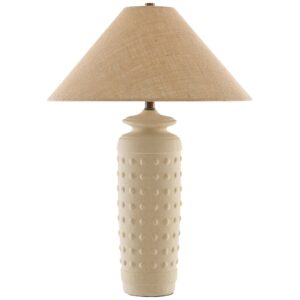
An entryway console with a lamp is one of the most important lamp positions in a home — it is the first impression. In a grand foyer with a double-height ceiling, a standard 26-inch lamp reads as inadequate. Oversized table lamps at 34–40 inches beside a tall mirror or a large piece of artwork create the architectural authority that a formal entry requires. A luxury table lamp in marble, gold leaf, or sculptural metal in a statement size suits the formality and scale of a grand entry — this is where the most dramatic lamp in the house belongs.
A lantern table lamp or art deco table lamp in a tall format suits the formal entryway aesthetic precisely — period-specific form, sufficient height, and the right material quality (aged iron, geometric brass, sculptural resin) to create a strong first impression.
6. Reading Corners with High-Back Chairs
A high-back chair — wing chair, high-backed armchair, or a chair with a tall headrest — requires a taller lamp than a standard low-backed sofa. A standard 26-inch lamp beside a 44-inch chair back places the shade below the chair’s top rail, which reads as visually subordinate and ineffective for reading. A table lamps tall option at 30–34 inches positions the shade above the chair back at the correct reading height, and creates the visual balance that a high-backed chair requires from its adjacent lamp.
When Oversized Is Wrong: The Four Mistakes
- On a small or narrow surface: A 34-inch
- In a room with standard 9-foot ceilings: A 40-inch
- When it dominates a small room: In a room under 200 square feet, an
- Without considering the shade diameter: Lamp height alone does not determine whether a lamp reads as oversized. A tall lamp with a small shade can suit a standard room; a standard-height lamp with a 22-inch shade bottom diameter is effectively oversized. Always check both the total height and the shade diameter when evaluating an
Oversized Table Lamp Sizing: Quick Reference Guide
| SCENARIO | LAMP TYPE | HEIGHT | MATERIAL | WHY IT WORKS |
| 10+ ft ceiling room | Table lamps, tall, architectural, slim column | 34–40″ | Brass, metal, stone | Vertical proportion fills the ceiling-to-surface gap |
| Wide 48″+ console | Buffet table lamp — tall slim column pair | 30–36″ | Brass, ceramic, glass | Relates correctly to the mirror height above the console |
| 140″ sectional sofa | Oversized ceramic or brass end table lamp | 30–34″ | Ceramic, brass, marble | Visual anchor at the sofa ends in proportion to the sofa width |
| Open-plan living zone | Statement lamp + floor lamp set | 30–36″ table lamp | Brass, metal, wood | Defines a living zone within a larger open-plan space |
| Grand foyer entry | Luxury statement lamp — sculptural or marble | 36–44″ | Gold leaf, marble, stone | Creates architectural authority at first impression |
| High-back reading chair | Table lamps tall beside a tall chair | 30–34″ | Adjustable dome, brass | Shade above the chair back for the correct reading height |
Browse our large and statement table lamps at Exotic Decor USA. For the complete living room lamp guide covering all sizes and styles, read our cordless table lamps for living room pillar guide. For ceiling-height and proportion calculations, read our table lamps tall guide. Email info@exoticdecor.us Monday–Saturday, 10:00 AM–8:00 PM for personalized large lamp recommendations.
Frequently Asked Questions About Oversized Table Lamps
How tall should a table lamp be for a living room?
For a standard living room end table beside a sofa, a lamp with a total height of 24 to 28 inches is correct — this positions the shade bottom at approximately 58 to 62 inches from the floor, which is the correct eye level for a lamp viewed from a sofa. For a console table in a room with 9-foot ceilings, 28 to 32 inches suits most surfaces. For rooms with 10-foot or higher ceilings, 32 to 40 inches begins the oversized table lamp territory. The rule is that the lamp should occupy 20 to 30 percent of the vertical space between the table surface and the ceiling.
What qualifies as an oversized table lamp?
An oversized table lamp typically measures 30 inches or more in total height (base plus shade), with a shade bottom diameter of 18 inches or more. These dimensions exceed the standard living room end table lamp specification (24 to 28 inches total height, 14 to 16 inch shade diameter) and require large surfaces, high ceilings, and deliberate placement to work correctly. At 36 to 44 inches, an oversized table lamp approaches floor lamp territory and should be placed on wide, stable surfaces.
Can I use two oversized table lamps in the same room?
Yes — in fact, two oversized table lamps in matched pairs are the correct configuration for bilateral console, sideboard, or wide end table arrangements. The key is that both lamps must be identical or from the same coordinated collection, and both placements must be appropriately scaled surfaces. Two oversized lamps at different heights or in different positions (one on a console, one on an end table) can work if they share the same hardware finish and shade color, creating visual coordination without requiring identical height.
What materials work best for large table lamps in living rooms?
For large table lamps in living rooms, the material must read well from a greater distance than a bedside lamp. Brass and aged metal columns suit formal and transitional living rooms — their warm metallic quality reads clearly across the room. Marble and stone bases suit luxury and maximalist rooms where the lamp is expected to be a statement material object. Ceramic in a bold glaze (deep green, cobalt, warm amber) suits eclectic and organic modern rooms where the color is the statement. Glass — cobalt, mercury, or clear — creates the most dynamic large lamp effect, projecting light and color onto surrounding surfaces.