

Traditional Table Lamps for Classic Living Room Decor
Traditional table lamps have anchored the American living room for more than a century — and the reason is not sentiment but design logic. The traditional lamp aesthetic — brass table lamp hardware, cream empire shades, crystal table lamp bases in prismatic glass, marble table lamps in white Carrara — delivers the material quality, the formal proportion, and the warm light atmosphere that the classic living room requires. At Exotic Decor USA, our traditional table lamps collection spans the full range of classic American lamp styles. This guide covers every sub-style and how to deploy them.
What Defines a Traditional Table Lamp
A traditional table lamp is defined by four consistent design elements that appear across its many sub-styles:
- Formal proportions: A traditional lamp base occupies a specific proportion of the shade — typically, the base height equals approximately 60–70% of the total lamp height, with the remaining 30–40% being the shade. This formal proportioning creates a composed, hierarchical silhouette that reads as intentional and considered rather than casual.
- Warm precious materials: Traditional lamps are made from materials with established decorative histories — brass, crystal, ceramic in classical glazes, marble, alabaster, and carved wood. A
- Empire or tapered shade: The empire shade — wider at the bottom, narrower at the top — is the defining traditional shade form. It directs light downward and outward, creating the warm reading pool that traditional living rooms require. A cream or ivory fabric empire shade on a brass or crystal base is the most classically correct traditional lamp configuration in American interior design.
- Bilateral symmetry: Traditional living rooms use matched pairs of lamps — on identical end tables flanking a sofa, or on a console flanking a mirror. The matched pair communicates formal design intention and creates the resolved, bilateral composition that is the hallmark of the traditional interior.
The Six Traditional Table Lamp Sub-Styles
1. Crystal Table Lamps: The Formal Classic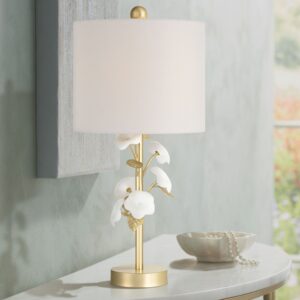
A crystal table lamp or antique crystal table lamps pair is the most formal expression of the traditional lamp category — historically associated with grand European interiors and translated into American traditional design through the Federal and Colonial Revival periods. Hand-cut crystal bases catch and scatter warm LED light in prismatic patterns across the surrounding walls and ceiling, creating an animated quality that ceramic or brass cannot replicate. A pair of crystal lamps on identical end tables flanking a sofa is among the most-purchased traditional living room lamp configurations in America.
Crystal table lamps work best in formal traditional rooms with cream or ivory walls, mahogany or cherry furniture, and rich textiles. Pair with cream empire shades and polished or aged brass hardware for the most classically resolved configuration.
2. Brass and Ceramic Column Lamps
The brass table lamp category — specifically aged brass hardware on a ceramic or glass body — is the workhorse of the American traditional living room. Where crystal is formal and prismatic, a lamps brass table ceramic combination is warm, resolved, and suitable for both formal and transitional traditional rooms. The aged brass hardware provides the warm metallic note that traditional interiors require; the ceramic body provides the material depth and artisan quality that a simple metal column cannot.
Our Aged Brass and Ceramic Affogato Table Lamp ($289–$439) is the definitive traditional living room lamp in this category — aged brass hardware, warm ceramic body, correct proportions for both end table and console placement. Pair with a cream empire shade for the most traditional expression, or a white drum shade for a transitional read.
3. Tiffany Style Lamps: The Artistic Traditional
The tiffany table lamps category — stained glass shades in geometric, floral, or landscape patterns — occupies a specific position in the traditional lamp landscape: it is simultaneously traditional in its history and artistic in its expression. A tiffany style table lamp or table tiffany style lamps piece in amber, green, and ruby glass projects warm colored light that transforms the room around it — the shade is not just a light diffuser but a piece of decorative art.
Tiffany lamps suit traditional living rooms with warm, richly toned palettes — mahogany furniture, deep-colored upholstery, warm ochre or cream walls. They are particularly effective in a reading corner beside a leather armchair or as the single statement lamp on an otherwise neutral console. A stained glass table lamp in amber and green glass beside warm walnut furniture creates the most classically American traditional reading corner available.
4. Alabaster and Marble Lamps: The Luxury Traditional
The alabaster table lamp and marble table lamps category represents the highest level of material investment in the traditional lamp hierarchy. Alabaster — a form of translucent gypsum — has been used in decorative objects since antiquity; when lit from within, an alabaster lamp shade glows with a warm, diffuse, honey-colored light that no other material can replicate. A marble table lamps base in white Carrara or grey-veined marble communicates the same level of material permanence that marble architectural elements have communicated since ancient Rome.
These luxury table lamps suit the grandest traditional living rooms — formal dining rooms, high-ceiling drawing rooms, and primary living spaces in architecturally significant homes. They are investment pieces rather than replaceable accessories, and they communicate that intention through their material quality alone.
5. Gold and Black-and-Gold Lamps
The gold table lamps and black and gold table lamp category in a traditional context — specifically gold leaf resin, gilded ceramic, or polished gold hardware on a black base — suits the most formally glamorous end of the traditional spectrum. Art deco traditional living rooms, Hollywood Regency-inflected classic interiors, and high-gloss formal rooms all call for the gold lamp as the primary statement piece.
The Possini Euro Zeus Gold Leaf Modern Table Lamps ($319–$479) bridges the traditional and glamorous — gold leaf resin with sculptural presence, suited for a formal living room console where the lamp is the primary design statement. Pair with a white drum shade for a contemporary-traditional hybrid; with a cream empire shade for the full formal expression.
6. Wood and Natural Column Lamps
At the warmer, less formal end of the traditional spectrum: a wooden table lamp or wood base table lamps in turned wood — walnut, cherry, mahogany — suits traditional American country, Colonial Revival, and Federal style living rooms. The turned wood column has been a standard lamp base form in American furniture design since the eighteenth century. A wooden table lamps with a linen or cream shade suits any warm-wood traditional room where the lamp should echo the room’s primary material rather than contrast with it.
The Traditional Living Room Lamp Formula
Applying these elements correctly creates the most resolved traditional living room lamp arrangement:
- Two matched lamps on end tables flanking the sofa: Identical lamps — same base, same shade, same hardware — at the correct height (shade bottom at 58–62 inches from the floor). The bilateral symmetry is non-negotiable in a traditional room.
- One lamp pair on the console: A
- Cream empire shades throughout: All lamps in a traditional living room should share the same shade color and form. Cream empire shades on all pieces create the uniform light quality and visual continuity that defines the traditional interior.
- One accent lamp: A
Traditional Table Lamp Style Reference
| STYLE | LAMP TYPE | MATERIAL | SHADE | HARDWARE |
| Formal Traditional | Crystal column lamp | Hand-cut crystal | Cream empire | Polished or aged brass |
| Transitional Traditional | Brass ceramic column | Aged brass + ceramic | Cream or white empire | Aged brass |
| Artistic Traditional | Tiffany stained glass | Stained glass shade | Shade is decorative | Bronze or aged brass |
| Luxury Traditional | Alabaster or marble | Alabaster, marble, stone | Cream empire or none | Polished brass or gold |
| Glamour Traditional | Gold leaf sculptural | Gold leaf resin or gilded | White drum or cream empire | Polished gold |
| Country Traditional | Turned wood column | Walnut, cherry, mahogany | Natural linen or cream | Brass or antique gold |
Browse our full traditional table lamps collection at Exotic Decor USA. For complete living room lamp placement guidance, see our cordless table lamps for living room pillar guide. Email info@exoticdecor.us Monday–Saturday, 10:00 AM–8:00 PM for personalized traditional lamp recommendations.
Frequently Asked Questions About Traditional Table Lamps
What makes a table lamp traditional in style?
A traditional table lamp has four defining characteristics: formal proportions (base height approximately 60 to 70 percent of total lamp height), warm precious materials (brass, crystal, marble, alabaster, or turned wood), an empire or tapered shade in cream or ivory fabric, and warm metallic hardware (aged or polished brass, antique gold, or bronze). The traditional lamp aesthetic is defined by material quality and historical authority — these are design objects with established lineage in European and American decorative arts, not trend-dependent pieces.
What shade shape is correct for a traditional table lamp?
The empire shade is the definitive traditional shade form — wider at the bottom, narrower at the top, with slightly angled sides. This shape directs light downward and outward, creating the warm reading pool that traditional rooms require. The shade material should be cream or ivory fabric — neither pure white (too contemporary) nor strongly colored (too distinctive for a traditional base that must suit multiple room palettes). A cream empire shade on a brass or crystal base is the most classically correct traditional American living room lamp configuration.
Should traditional table lamps be identical in a living room?
Yes — for the primary sofa end table positions, matched identical traditional table lamps are the correct choice. The bilateral symmetry of matched pairs communicates formal design intention, which is the hallmark of the traditional interior. On the console, the same material family (same hardware finish, same shade color) is required, but the specific lamp design can differ slightly from the end table lamps to create visual interest. The reading corner or accent lamp can differ more significantly — a Tiffany stained glass lamp as a deliberate artistic counterpoint to the matched pairs is a classic traditional living room arrangement.
What is the difference between a traditional and a transitional table lamp?
A traditional table lamp has fully resolved period-specific design elements — formal proportions, crystal or brass base, cream empire shade, symmetrical placement. A transitional table lamp shares the same material quality (brass hardware, ceramic or glass base, cream shade) but applies it with slightly more contemporary proportions — a rounder base, a drum shade instead of an empire, or a simplified column form without the decorative details of a purely traditional piece. Transitional lamps suit rooms that are warm and quality-focused but not formally historical — they work beside both traditional and contemporary furniture.