

Getting table lamp wattage right is the final step that separates a lamp that looks beautiful from one that also functions beautifully. Too little wattage and a reading lamp becomes a mood lamp; too much and a bedside lamp becomes uncomfortable to look at. The good news: table lamp wattage selection is straightforward once you understand the three variables — lumens, wattage equivalency, and color temperature. At Exotic Decor USA, every product in our table lamps collection uses an E26 medium-base socket at 120V — the US standard — and this guide gives you exactly the numbers you need for every room type.
Wattage vs Lumens: The Key Distinction
The single most important thing to understand about modern table lamp bulbs is that wattage measures energy consumption, not brightness. Brightness is measured in lumens. This distinction matters because a 9W LED produces the same 800 lumens as a 60W incandescent bulb — the same brightness at one-seventh the energy cost.
When a table lamp’s maximum wattage rating is listed — typically 40W, 60W, or 150W — this refers to the maximum heat load the socket can handle safely, not a brightness recommendation. A 40W maximum-rated lamp can safely run an 8W LED (which produces the same light as a 60W incandescent) because the heat generated by the LED is far lower than what the socket is rated for. You will never damage a lamp by using a lower-wattage bulb; you can damage a socket by exceeding its maximum rating.
The practical rule: always check the maximum wattage rating on the socket label, then choose a bulb by its lumen output — not its wattage.
Color Temperature: The Most Overlooked Variable
Color temperature — measured in Kelvin (K) — determines whether a bulb’s light reads as warm or cool. It has a larger impact on the atmosphere of a room than wattage alone:
- 2700K (Warm White): The gold standard for residential table lamps. Reproduces the golden warmth of traditional incandescent light. Best for bedrooms, living rooms, and any space where atmosphere and comfort are the priority. This is the color temperature we recommend for every lamp in our collection.
- 3000K (Soft White): Slightly cooler than 2700K but still warm-toned. Suits home offices and desk lamps where slightly more clarity is beneficial without creating a clinical feel.
- 4000K (Cool White): Neutral white, suitable for task-focused environments. Rarely recommended for residential table lamps — too cool for comfortable ambient use.
- 5000K–6500K (Daylight): Clinical and bright. Appropriate for photography, art studios, and specific medical or craft applications. Not appropriate for residential table lamps where warmth and atmosphere are the goal.
A crystal table lamp at 2700K casts warm prismatic reflections that justify the material. The same lamp at 5000K produces harsh, cool reflections that undercut the material’s appeal entirely. A stained glass table lamp or tiffany table lamp shade transmits coloured light — the warmth of a 2700K bulb enriches the jewel tones; a cooler bulb makes them read as flat and commercial.
Table Lamp Wattage by Room: The Complete Reference
Here is the recommended lumen output and LED wattage for every common table lamp placement:
| USE CASE | LUMENS | LED WATT | INC EQUIV | COLOR TEMP |
| Bedside reading | 450–800 lm | 6–9W | 40–60W | 2700K warm white |
| Bedroom ambient | 450–800 lm | 6–9W | 40–60W | 2700K warm white |
| Living room end table | 800–1100 lm | 9–13W | 60–75W | 2700K–3000K |
| Console/entryway | 800 lm | 9W | 60W | 2700K warm white |
| Buffet/sideboard (ambient) | 450–800 lm | 6–9W | 40–60W | 2700K warm white |
| Home office/desk (task) | 1100–1600 lm | 13–20W | 75–100W | 3000K soft white |
| Accent / decorative only | 200–450 lm | 2–6W | 15–40W | 2700K warm white |
| Reading corner (floor lamp) | 1100–1600 lm | 13–20W | 75–100W | 2700K–3000K |
Bedroom Table Lamps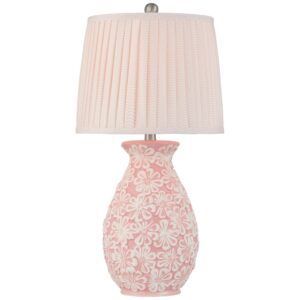
The bedroom is where lower lumen output serves best. A bedside table lamp at 450–800 lumens (6–9W LED) at 2700K provides enough light for comfortable reading without overpowering the calm atmosphere a bedroom requires. The Adobe Brown Chisel Ceramic Table Lamp ($269–$409) is a popular bedside choice — its warm brown ceramic base with a linen shade softens a 6W LED into a beautifully diffused reading light. A mini table lamp on a compact nightstand is best served by a 450-lumen (6W LED) bulb — the smaller shade amplifies the light perception, making a higher output unnecessary and potentially glaring.
Living Room Table Lamps
Living room end table lamps need more output — 800–1100 lumens — to provide useful ambient fill for a larger space. A brass table lamp or ceramic table lamp on a sofa end table at 800–1100 lumens works as an effective ambient layering alongside an overhead fixture. The Aged Brass and Ceramic Affogato Table Lamp ($289–$439) handles this placement perfectly — substantial base, wide drum shade, and a socket rated for up to 60W equivalent output.
Desk and Home Office Table Lamps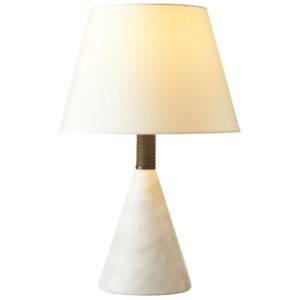
Desk lamps require the highest output in the residential table lamp category — 1100–1600 lumens for comfortable task work without eye strain. Use a 3000K soft white bulb rather than 2700K for slightly better task clarity. An industrial table lamp with an adjustable arm and a directional shade is the most efficient format for desk use — it directs the full lumen output onto the work surface rather than dispersing it into the room. The Aged Gunmetal Fluted Table Lamp ($299–$449) handles both task and ambient roles well — its architectural form suits a home office surface, and its socket accommodates up to 100W equivalent LED output.
Accent and Decorative Table Lamps
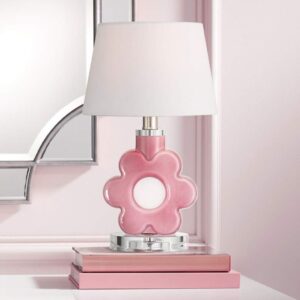
A purely decorative table lamp — placed on a console, sideboard, or bookshelf for visual warmth rather than practical illumination — requires only 200–450 lumens. Luxury table lamps used as accents, marble table lamps as sculptural focal points, and stained glass table lamps used for atmospheric effect all benefit from lower output — the beauty of the lamp is the feature, not the light intensity. At 200–450 lumens, the bulb’s glow illuminates the base and shade without producing distracting brightness from the fixture itself.
How Your Lamp Shade Affects Perceived Brightness
The shade material significantly affects how much of the bulb’s lumen output actually reaches the room. A lamp rated for 800 lumens may deliver very different perceived brightness depending on the shade:
| SHADE TYPE | LIGHT OUTPUT EFFECT | WATTAGE IMPLICATION |
| White / cream fabric | Full output — minimal absorption. Most efficient shade for lumen delivery. | Use recommended lumens for room type — no adjustment needed. |
| Dark/colored fabric | Absorbs 30–70% of light output depending on the depth of color. | Increase by one step: use 800 lm where you would use 450 lm. |
| Stained glass / Tiffany | Projects colored light; it significantly reduces white light output. | Use primarily as an accent. Supplement with a separate brighter source. |
| Paper/washi | Diffuses light evenly but reduces peak brightness significantly. | Increase by one step. Paper shades suit ambient, not task, use. |
| Rattan/woven | Passes light through gaps; directional rather than diffused. | Output is uneven — pools of bright light between shadow areas. |
| Alabaster stone | Warm amber diffusion — reduces output, enriches color temperature. | Use only as an accent or bedside — not suitable for a task light. |
This is why a green table lamp shade at 800 lumens may feel considerably dimmer than a white shade at the same output — the green fabric absorbs a significant portion of the transmitted light. For reading under a green table lamps shade, step up to 1100 lumens to compensate. The same principle applies to a dark modern black table lamp shade — go higher on lumen output to achieve the same effective room brightness as a neutral shade.
Five Practical Rules for Choosing Table Lamp Bulbs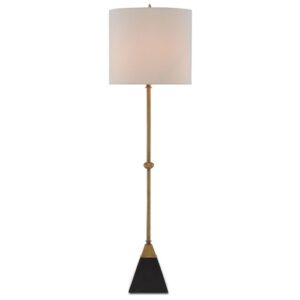
- Check the maximum wattage rating
- Buy by lumens, not watts
- Choose 2700K for most residential use
- Adjust for dark shades
- Use dimmable LEDs for bedside lamps
Every lamp in our table lamps collection lists the socket type and maximum wattage in the product specifications — giving you the technical confirmation you need before purchasing a bulb. Our floor lamps collection uses the same E26 socket standard, and these same wattage principles apply on a larger scale. For help choosing the right lamp and bulb combination, email info@exoticdecor.us Monday–Saturday, 10:00 AM–8:00 PM.
Frequently Asked Questions About Table Lamp Wattage
What wattage bulb should I use in a table lamp?
Most residential table lamps need an LED bulb producing 450–1100 lumens. For bedside reading, use 450–800 lumens (a 6–9W LED). For a living room end table lamp used for ambient light, use 800–1100 lumens (9–13W LED). For a desk lamp used for task work, use 1100–1600 lumens (13–20W LED). Always check the maximum wattage rating on the socket label before choosing a bulb — never exceed this rating regardless of the bulb type.
What is the difference between watts and lumens in a table lamp bulb?
Watts measure energy consumption; lumens measure brightness. With modern LED bulbs, wattage and brightness are not directly proportional — a 9W LED can produce the same 800 lumens as a 60W incandescent bulb. Always choose a bulb by its lumen output (brightness), not its wattage number. The wattage rating on your lamp socket is a maximum heat safety limit, not a brightness recommendation.
What color temperature should I use for a bedroom table lamp?
Use a warm white LED rated 2700K for bedroom table lamps. This color temperature produces the golden warmth associated with incandescent light — calm, flattering, and ideal for the atmosphere a bedroom requires. Avoid cool white (4000K) or daylight (5000K–6500K) bulbs in residential table lamps unless the specific function requires it. For a home office desk lamp, 3000K soft white provides slightly more task clarity while remaining warm enough for a comfortable working environment.
Does the lamp shade affect how bright the lamp appears?
Yes — significantly. A white or cream fabric shade delivers the full lumen output of the bulb to the room. A dark or colored shade absorbs 30–70% of the light output, depending on the depth of color. A stained glass shade projects coloured light and reduces white light output significantly. A paper or washi shade diffuses light evenly but reduces peak brightness. If your shade is dark or colored, step up one lumen tier from the baseline recommendation to achieve comparable effective brightness.
Can I use a higher wattage LED bulb than the lamp’s maximum wattage rating?
In terms of heat safety, LED bulbs generate far less heat than incandescent equivalents at the same light output — a 9W LED producing 800 lumens generates a fraction of the heat of a 60W incandescent. However, the maximum wattage rating is an electrical safety specification for the socket, not just a heat rating. Do not exceed the maximum wattage rating listed on the socket label with any bulb type. If the socket is rated for 40W maximum, use LED bulbs rated 40W or below at their nominal wattage figure.
One thought on “Table Lamp Wattage Guide: How Bright?”